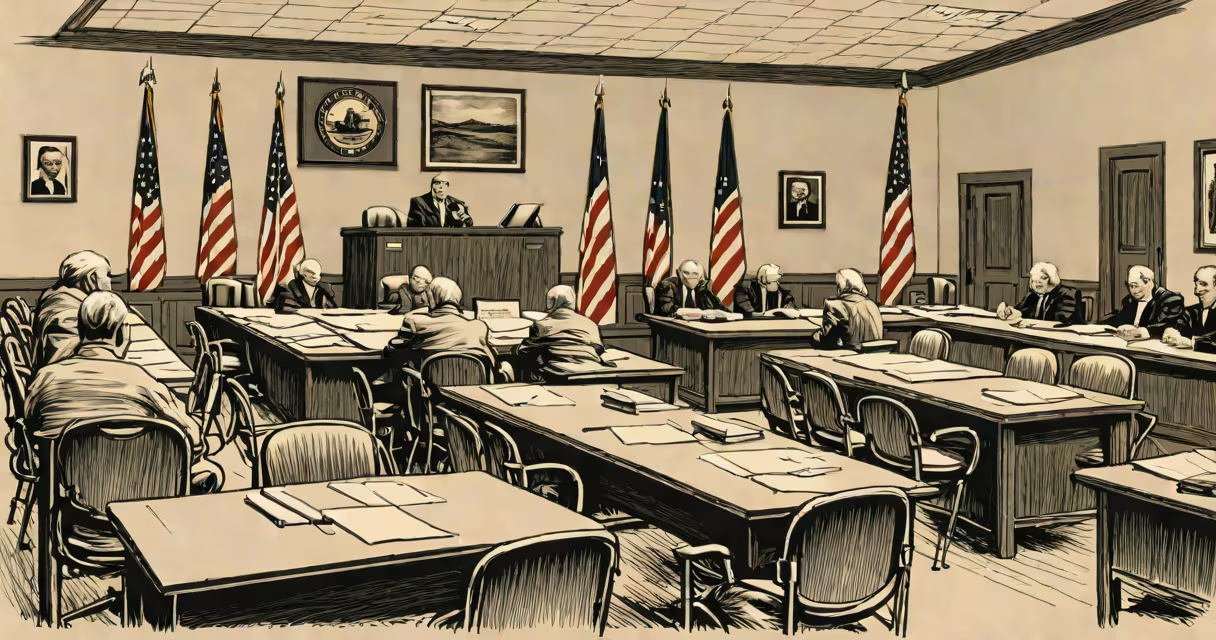
The Lee County Board of Education is the governing body responsible for public K-12 education in Lee County, Florida. It sets district-wide policies, approves budgets, hires the superintendent, and ensures compliance with state and federal education laws.
As a local school board, it operates under Florida's statutory structure for public education. The board consists of five elected members who serve four-year terms, representing geographic districts within Lee County. Their decisions affect curriculum choices, staffing, facility planning, and student achievement goals across more than 160 schools.
Each member is accountable to voters in their district. Elections occur during even-numbered years, with candidates required to reside in the district they seek to represent. The board meets monthly in Fort Myers, with public comment periods and live-streamed sessions available online.
The board's authority stems from Florida Statutes §1001.01, which grants local control over public education. While the Florida Department of Education sets statewide standards, the Lee County Board implements them locally through policy and oversight.
Key responsibilities include approving annual budgets, adopting instructional materials, establishing graduation requirements, and reviewing performance data. For example, in 2023, the board adopted a new math curriculum aligned with Florida's B.E.S.T. Standards, replacing older textbooks used since 2015.
Board meetings follow Robert's Rules of Order. Agendas are posted seven days in advance, and minutes are archived on the district's official website. Citizens may submit written testimony or speak during public comment periods, though time limits apply (three minutes per speaker).
Members are elected via nonpartisan ballots. They serve staggered terms, with one seat up for election every two years. This structure prevents complete turnover and maintains institutional continuity.
Current board members are selected based on residency, not political affiliation. Vacancies are filled by appointment until the next general election. The board elects a chair and vice chair annually, roles that rotate among members.
| District | Representative | Term Expires | Website |
|---|---|---|---|
| 1 | Dr. Maria Lopez | 2026 | District 1 |
| 2 | Mr. James Reed | 2024 | District 2 |
| 3 | Ms. Diane Bell | 2026 | District 3 |
| 4 | Mr. Thomas Kim | 2024 | District 4 |
| 5 | Ms. Elena Torres | 2026 | District 5 |
Meetings are held at the Lee County School District Administration Center, located at 11000 S. Tamiami Trail, Fort Myers, FL 33913. Attendance is open to the public, and recordings are available on the district's YouTube channel.
Many assume the board directly manages classrooms or assigns teachers. That role belongs to the superintendent and central administration. The board sets direction, not daily operations.
Another error is equating the board with the school district itself. The Lee County Board of Education is a separate legal entity from Lee County Schools, which is the operational arm. The board governs; the district delivers services.
A lesser-known fact: the board cannot override state-mandated assessments. Florida requires annual standardized testing in grades 3-10. The board can recommend changes to test formats, but implementation rests with the Florida Department of Education.
In 2023, the board approved a $1.2 billion operating budget for the 2023-2024 school year. The process began with a draft from the superintendent's office, including projected enrollment growth (1.8% increase), rising health insurance costs (+12%), and new funding from the state's Student Success Act.
After public hearings in January and February, the board voted 4-1 to approve the budget. Dissenting member Ms. Torres cited concerns about teacher retention and proposed increasing salaries by 5%-a recommendation later adopted in a supplemental resolution.
Once approved, funds were allocated across departments: 62% to instruction, 18% to operations, 10% to transportation, and 10% to capital projects. The board also authorized $2.1 million for mental health counselors in high-need schools, following a 2022 survey showing 37% of students reported anxiety symptoms.
While similar in function, boards differ by region. For example, the Webster County Board of Education in West Virginia operates under a different state constitution and faces rural challenges such as low population density and limited broadband access. Its board has fewer staff resources and relies heavily on state grants.
By contrast, the Orange Board of Education in Florida serves a larger urban district with higher student diversity and greater fiscal complexity. It manages over 200 schools and employs more than 10,000 staff. The Lee County Board, while significant, serves a smaller geographic area with a lower student count (approximately 135,000 in 2023).
Despite differences, all local boards share core duties: ensuring equitable access to education, maintaining accountability, and responding to community needs. The Lee County Board's focus on literacy and STEM initiatives reflects regional priorities shaped by workforce development goals in Southwest Florida.
I observed a board meeting in March 2023 during a public forum on school safety. A parent presented data showing a 22% rise in bullying incidents over two years. The board responded by allocating $350,000 to expand peer mediation programs in middle schools-a decision that directly influenced programming in 15 schools.
The Lee County Board of Education is not a single person or a school. It is a collective decision-making body that shapes the educational environment for hundreds of thousands of students. Its actions influence everything from classroom supplies to graduation rates. Understanding it clarifies how local policy affects real-world learning outcomes.