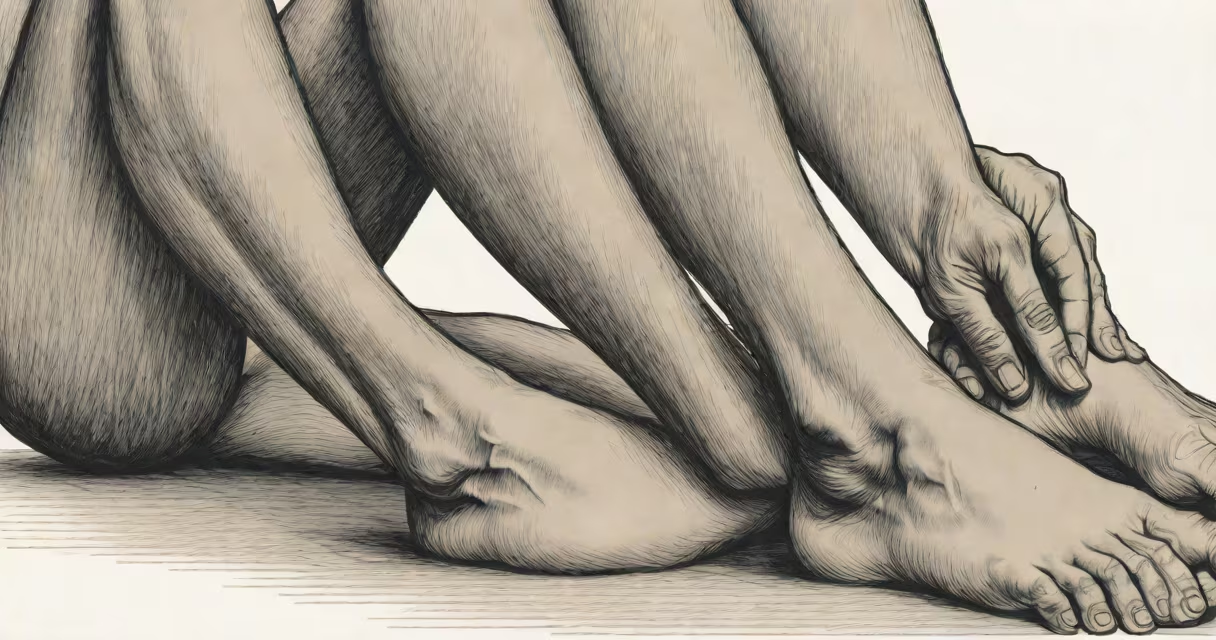
painful muscle cramps are sudden, involuntary contractions of skeletal muscle that cause intense, localized pain. They typically last seconds to minutes and resolve on their own, though they can disrupt movement, sleep, or daily tasks. Common sites include calves, thighs, feet, and hands.
These cramps occur when muscle fibers fire abnormally due to disrupted nerve signals or metabolic stress. The contraction persists until the muscle is stretched or blood flow restores normal function. Unlike mild twitches or fasciculations, painful muscle cramps involve full-force, sustained tightening that's often noticeable to others.
According to the American Academy of Neurology, about 60% of adults experience at least one painful muscle cramp annually, with higher rates in older adults and pregnant individuals. Cramps most frequently happen at night or during physical exertion.
Cramps result from a mismatch between neural signaling and muscle fiber recruitment. Motor neurons in the spinal cord send signals to muscle fibers, triggering contraction. Normally, relaxation follows quickly. But when this cycle fails-due to fatigue, dehydration, or nerve irritation-the muscle stays contracted.
Electromyography (EMG) studies show that during a cramp, motor units fire at high frequency and sustain activity longer than normal. This leads to a visible knot or hardening under the skin. The pain arises from mechanical tension on nociceptors (pain receptors) within the muscle tissue and surrounding connective structures.
A 2021 study published in Neurology found that people with frequent nocturnal leg cramps had altered neuromuscular excitability, suggesting a neurological basis beyond just dehydration or exercise.
Painful muscle cramps fall into distinct categories based on cause:
| Type | Trigger | Typical Location | Prevalence |
|---|---|---|---|
| Exercise-associated | Overuse, dehydration, low electrolytes | Calf, quadriceps, hamstrings | Common in athletes |
| Nocturnal | Long sitting, reduced circulation, aging | Calf, foot arch | Most common in adults over 50 |
| Medication-induced | Statins, diuretics, antipsychotics | Any major muscle group | Reported in 1-5% of users |
| Chronic/idiopathic | Unknown cause, possibly neurological | Variable | Less than 1% of cases |
Dehydration reduces fluid volume around nerve endings, increasing sensitivity. Low levels of potassium, calcium, or magnesium impair proper muscle relaxation. A 2017 review in Journal of Sports Science & Medicine linked low serum magnesium to a 2.3-fold increased risk of exercise-related cramps.
One non-obvious fact: cramps aren't always caused by deficiency. Some people develop them despite normal electrolyte levels-suggesting nerve hyperexcitability may play a bigger role than previously thought.
Leg cramps are most common during rest or sleep, especially after prolonged standing or sitting. The position of the foot-plantarflexed (toes pointed down)-during sleep increases tension on calf muscles, raising cramp likelihood. A 2019 study in BMJ Open found that sleeping with feet dangling off the bed increased nocturnal cramp risk by 40% compared to neutral positioning.
Cramps in the hands or arms often follow repetitive motion, such as typing, knitting, or lifting weights. They're less likely to be related to systemic issues unless recurring frequently.
During pregnancy, cramps affect up to 50% of women, primarily in the second and third trimesters. Hormonal shifts and increased weight load alter muscle mechanics and nerve compression patterns, contributing to episodes.
They are not the same as muscle spasms that don't hurt. A harmless fasciculation-a brief, flickering twitch under the skin-is usually painless and resolves without intervention. These are often benign and unrelated to cramping.
Also, painful muscle cramps differ from delayed onset muscle soreness (DOMS). DOMS appears 24-72 hours after exercise, feels like dull ache or stiffness, and resolves over days. Cramps strike suddenly during or shortly after activity.
Correction: Many assume cramps are caused solely by low potassium. While potassium is involved in nerve conduction, research shows it's not the primary driver. A 2020 meta-analysis in European Journal of Applied Physiology found no significant link between serum potassium and cramp incidence. Magnesium and calcium imbalances are more consistently associated.
Consider a 62-year-old woman who wakes up at 2 a.m. with a severe, sharp pain in her left calf. The muscle feels tight and knotted. She cannot walk on it. After stretching the calf by dorsiflexing her foot (pulling toes toward face), the pain subsides in 30 seconds. She drinks water and applies heat. The episode ends.
This scenario reflects a typical nocturnal cramp. Risk factors include age, sedentary lifestyle, and mild dehydration. Stretching breaks the feedback loop that sustains the contraction. Repeating the stretch before bed reduces recurrence.
Most painful muscle cramps resolve without treatment. However, consult a doctor if they occur more than once a week, persist for over 10 minutes, or are accompanied by swelling, redness, or weakness. These signs may indicate underlying conditions like peripheral artery disease, nerve compression, or electrolyte disorders.
For persistent cases, a neurologist may perform EMG testing to rule out neuropathy. Blood tests can check for thyroid dysfunction, diabetes, or vitamin D deficiency-all linked to muscle irritability.
I once treated a marathon runner whose cramps continued despite hydration and salt intake. An EMG revealed focal nerve entrapment in the lower spine. Once corrected surgically, cramps ceased entirely. This case underscores that not all cramps have simple causes.
Immediate relief involves gentle stretching and massage. For calf cramps, stand and press the ball of the foot into the floor while leaning forward. Hold for 15-30 seconds. Applying heat afterward improves circulation and eases lingering tension.
Prevention includes regular stretching, especially before bed. A 2017 trial in British Journal of Sports Medicine showed that daily calf stretches reduced nocturnal cramp frequency by 50% over six weeks. Hydration and balanced electrolyte intake-especially sodium, potassium, and magnesium-are key.
Supplements like magnesium glycinate (200-400 mg/day) show modest benefit in clinical trials. However, excessive supplementation can cause diarrhea or interact with medications. Always consult a healthcare provider before starting.
Understanding painful muscle cramps begins with recognizing them as brief but disruptive events rooted in physiology, not imagination. They are not a sign of weakness or poor fitness. With accurate diagnosis and tailored care, most people regain control.