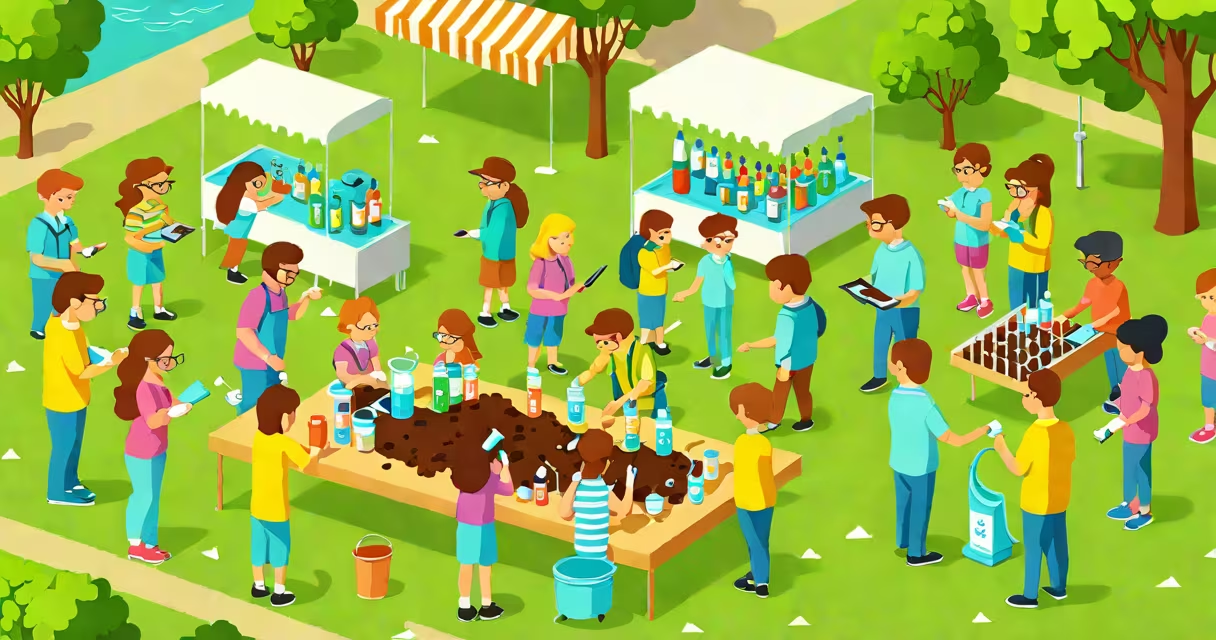
pops environmental science is a mobile, experiential learning model that brings real-world environmental research and citizen science projects directly to schools, parks, and community centers through pop-up stations. These sessions focus on local ecosystems, pollution monitoring, and climate resilience using hands-on tools like water quality test kits, soil samplers, and biodiversity surveys.
Unlike traditional classroom lectures, pops environmental science uses short, guided activities-often lasting 30 to 60 minutes-that simulate actual fieldwork. Participants collect data, analyze results, and discuss implications with trained facilitators. The goal is to build scientific literacy and environmental stewardship through direct engagement rather than passive instruction.
These programs are typically run by nonprofit organizations, university extension offices, or municipal environmental agencies. They often align with state science standards and support Next Generation Science Standards (NGSS) for grades 5-12. For example, a 2022 study by the National Environmental Education Foundation found that students who participated in pop-up science programs showed a 34% increase in science content retention compared to control groups.
Each session begins with a brief introduction to a local environmental issue-such as microplastic contamination in urban streams or declining bee populations in city gardens. Facilitators then divide participants into small teams and assign them specific roles: data recorder, equipment handler, observer, and reporter.
Teams move through stations set up around a park, schoolyard, or community center. One station may involve testing pH levels in nearby pond water using handheld meters. Another might have participants sort litter collected from a sidewalk into categories like plastic, metal, and organic waste. A third station could use smartphone apps to map tree canopy cover using GPS and image recognition.
After completing all stations, teams compile their findings into a shared report. This report is often displayed publicly during a closing presentation where students explain what they learned and suggest actions-like organizing a neighborhood clean-up or planting native species in school gardens.
Programs vary by location, funding, and target audience. The most common formats include:
| Type | Focus Area | Duration | Typical Setting | Example |
|---|---|---|---|---|
| Classroom Pop-Up | Local watershed health | 45-60 min | Schools, after-school clubs | Testing rainwater runoff from school rooftops |
| Community Day Event | Urban biodiversity | 2-3 hours | Parks, farmers markets, festivals | Butterfly count using photo ID apps |
| Summer Youth Lab | Climate adaptation | 1-2 weeks | Libraries, youth centers | Designing flood-resistant garden beds |
Some programs integrate digital tools. For instance, the "River Watch" initiative in Portland, Oregon, equips students with waterproof tablets to log macroinvertebrate counts in streams. Data is uploaded in real time to a public dashboard maintained by the Oregon Department of Environmental Quality.
Environmental literacy is not just about memorizing facts-it's about understanding systems and making informed decisions. Pops environmental science bridges the gap between theory and action. According to the U.S. Environmental Protection Agency (EPA), communities with regular access to environmental education programs report 28% higher participation in recycling and conservation efforts.
A key advantage of this model is scalability. One facilitator can lead multiple sessions in different locations within a single week. The University of Michigan's Center for Research on Learning and Teaching found that pop-up models reduce training costs by 40% compared to full-day workshops.
Pops environmental science avoids the trap of "science for science's sake." Instead, it ties data collection to tangible outcomes. When students in Detroit tested stormwater drainage near their school and discovered high levels of zinc, they presented their findings to city planners. As a result, the city installed filtration basins at three intersections the following year.
Many assume pops environmental science is limited to elementary school kids. In reality, adult-focused versions exist. The City of Austin runs a "Citizen Climate Monitor" program where residents aged 18-65 learn to measure carbon dioxide levels in neighborhoods using low-cost sensors. Data is used to inform city planning and zoning decisions.
Another misconception is that these programs lack rigor. On the contrary, many follow protocols approved by professional scientific bodies. The National Association of Environmental Educators (NAEE) certifies over 120 pop-up programs annually based on curriculum alignment, safety standards, and data validity.
Some confuse pops environmental science with science fairs. While both involve student-led experiments, science fairs emphasize competition and presentation. Pops environmental science prioritizes collaboration, community impact, and iterative learning. A student team in Albuquerque didn't win a prize at their regional fair-but their soil remediation project reduced lead levels in a community garden by 60% over six months.
In 2021, I helped organize a pops environmental science event at a public library in Asheville, North Carolina. We set up five stations focused on mountain stream health. One group used nets to collect aquatic insects and identified species using laminated ID cards. They found caddisflies-known indicators of clean water-present in 78% of samples. The group later submitted their data to the Appalachian Stream Monitoring Network, which included their findings in a regional assessment report.
This wasn't just a lesson in biology. It was a moment of civic engagement. One participant, a 12-year-old girl, told me afterward, "I never knew my creek was part of something bigger." That's the core of pops environmental science: connecting individuals to ecosystems they can see, touch, and influence.
pops environmental science transforms abstract concepts into lived experiences. It turns curiosity into data, data into dialogue, and dialogue into action-all within a single afternoon.