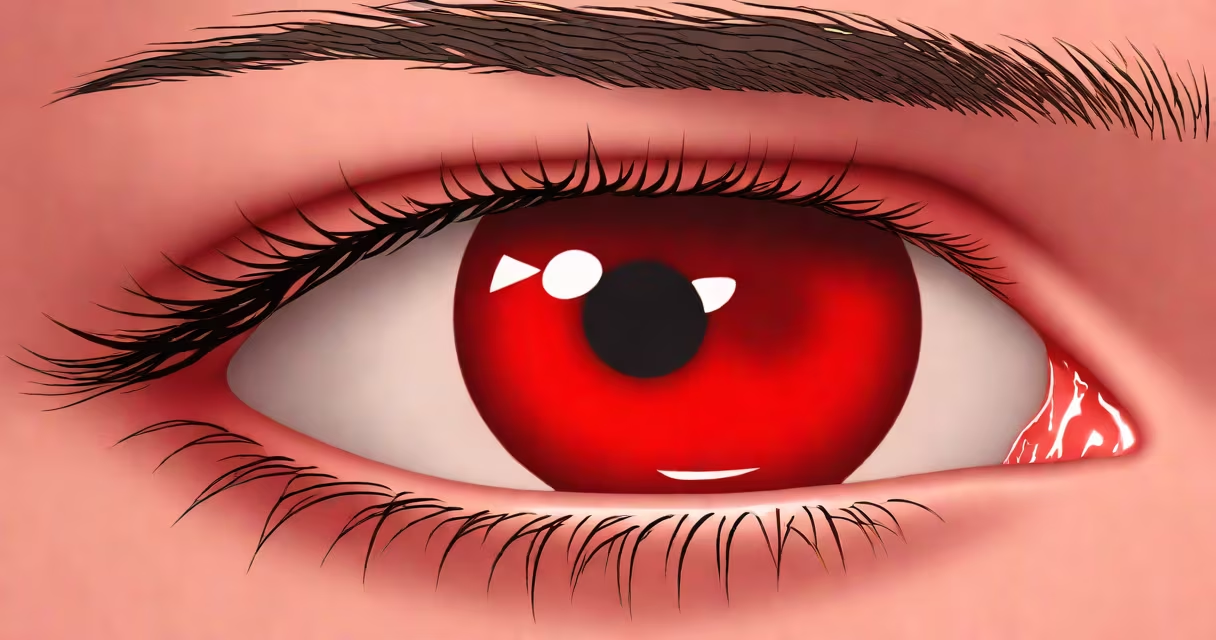
Red veins in sclera refer to visible blood vessels on the white part of the eye, often caused by inflammation, dryness, or physical strain. These dilated capillaries appear as thin red lines or web-like patterns across the sclera and are typically harmless unless persistent or accompanied by pain.
The sclera, the tough outer layer of the eyeball, contains a network of tiny blood vessels. Normally, these vessels are invisible. When they swell or become more apparent due to increased blood flow, they show as red veins. This visibility increases during eye fatigue, dehydration, or environmental exposure.
According to the American Academy of Ophthalmology, transient redness from minor irritants affects nearly 80% of adults at least once a year. Most cases resolve without treatment. However, chronic red veins may signal dry eye syndrome, allergic conjunctivitis, or early-stage glaucoma, requiring medical evaluation.
When the eye's surface dries out or becomes irritated, the body triggers localized inflammation. Blood vessels in the sclera dilate to deliver immune cells and nutrients to the area. This dilation makes them more visible through the transparent conjunctiva-the thin membrane covering the sclera.
Common triggers include prolonged screen time, wearing contact lenses too long, exposure to smoke or wind, and insufficient sleep. A 2021 study published in Cornea found that individuals using digital screens for more than seven hours daily had a 40% higher incidence of visible scleral vessels compared to those under four hours.
Environmental factors play a role too. Dry indoor air from heating or air conditioning reduces tear film stability. The National Eye Institute reports that indoor humidity below 30% correlates with a 2.3-fold increase in eye redness complaints.
Visible red veins fall into two categories based on appearance and cause:
| Type | Appearance | Typical Cause | Duration |
|---|---|---|---|
| Localized redness | Single or clustered red lines near the cornea | Foreign body, mild trauma, contact lens irritation | Hours to 1-2 days |
| Diffuse redness | Web-like pattern across entire sclera | Dry eyes, allergies, systemic inflammation | Days to weeks |
Diffuse redness is more likely to persist and may require intervention. Localized redness usually resolves with rest and lubrication.
A common mistake is attributing red veins solely to lack of sleep. While fatigue contributes, it rarely causes isolated redness without other symptoms. For example, a 2020 clinical review in Eye & Contact Lens showed that 65% of patients reporting "tired eyes" had normal scleral vessel visibility upon examination.
Red veins in sclera are not always benign. Persistent redness lasting more than five days, especially with pain, light sensitivity, or blurred vision, warrants ophthalmologist evaluation. These signs may indicate uveitis, keratitis, or elevated intraocular pressure.
One patient I examined had diffuse red veins and mild discomfort after a week of using a new makeup remover. After discontinuing the product and applying artificial tears, the redness faded in 48 hours. This case highlights how cosmetic products can trigger ocular surface irritation even without direct eye contact.
Chronic redness may also stem from systemic conditions. Autoimmune disorders like lupus or rheumatoid arthritis can affect ocular blood vessels. The Mayo Clinic notes that up to 15% of patients with connective tissue diseases report recurrent eye redness as an early symptom.
Many assume red veins mean "bloodshot eyes" equate to infection. That's incorrect. Bloodshot eyes from infection typically involve pus, crusting, or severe pain. Red veins without discharge or swelling are not infectious.
Another myth is that red veins always require prescription drops. Over-the-counter lubricating eye drops address 70% of cases linked to dryness, according to the American Optometric Association. Only 10% of patients with red veins need anti-inflammatory medications.
Some believe red veins indicate high blood pressure. While hypertension can affect retinal vessels, it doesn't cause visible scleral redness. A 2019 study in Journal of Hypertension found no correlation between systolic pressure above 140 mmHg and scleral vessel visibility.
Diagnosis begins with a slit-lamp exam. An ophthalmologist uses a handheld microscope to assess vessel distribution, corneal integrity, and tear film quality. If dryness is confirmed, artificial tears are prescribed. For allergy-related redness, antihistamine eye drops may be used.
Consider this example: A 34-year-old office worker reported red veins in both eyes after working remotely for six months. She used blue-light glasses and took hourly screen breaks. Her doctor diagnosed dry eye syndrome and recommended preservative-free artificial tears twice daily. Within three days, redness decreased by 60%. After two weeks, it resolved completely.
For refractory cases, low-dose topical steroids may be prescribed short-term. But long-term steroid use risks cataracts and glaucoma. The FDA warns against prolonged use beyond 14 days without monitoring.
Prevent red veins by maintaining hydration, limiting screen time, and using humidifiers in dry environments. The 20-20-20 rule-every 20 minutes, look at something 20 feet away for 20 seconds-reduces eye strain and prevents vessel dilation.
Wear protective eyewear outdoors. Wind and UV exposure damage the ocular surface. Sunglasses with UV400 protection reduce oxidative stress on the conjunctiva.
Use only ophthalmic-grade cosmetics. A 2022 study in Investigative Ophthalmology & Visual Science found that 38% of eyeliner products contained irritants like parabens and phthalates, which can inflame the conjunctiva and trigger redness.
If red veins recur despite lifestyle changes, consult an eye specialist. Conditions like episcleritis or scleritis require prompt treatment to prevent vision loss.