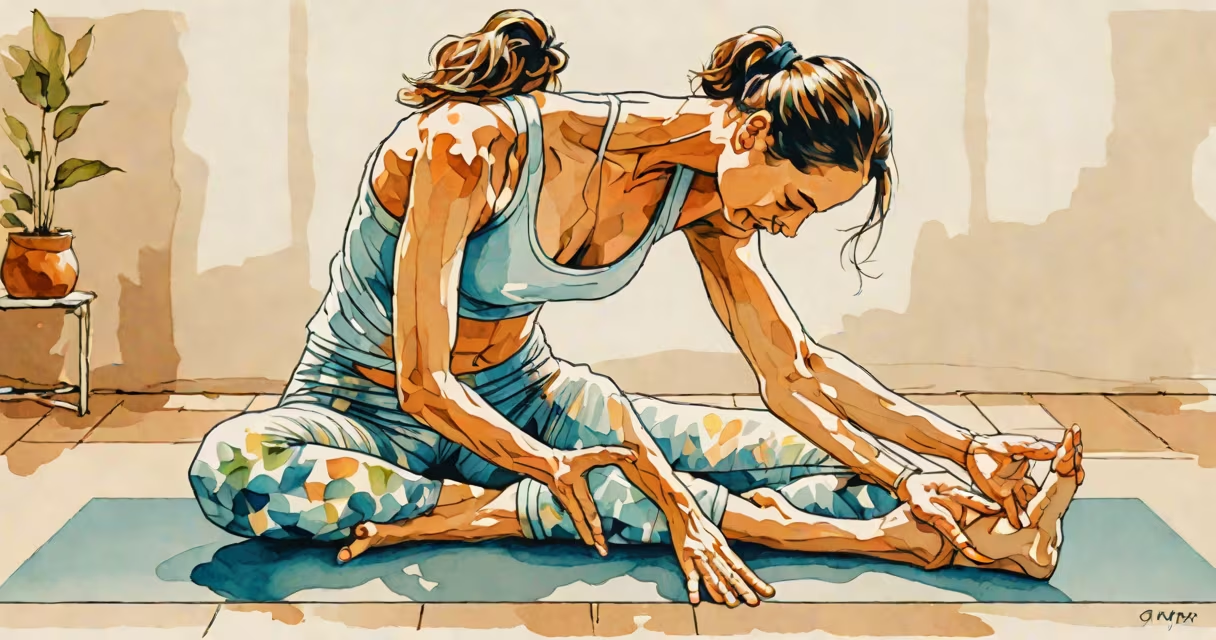
Safe stretches for lower back pain are low-impact, controlled movements designed to relieve tension, improve mobility, and reduce discomfort without aggravating spinal structures. These exercises focus on gentle elongation of the muscles around the lumbar spine-particularly the erector spinae, piriformis, and hamstrings-while avoiding sudden twisting or deep flexion that may worsen pain.
Back pain affects about 80% of adults at some point in life, with most cases resolving within six weeks. However, improper stretching can prolong recovery. Safe stretches avoid high-risk motions like deep toe touches or rapid spinal twists. Instead, they emphasize slow, sustained holds (20-30 seconds) and controlled breathing to activate the parasympathetic nervous system, which reduces muscle tension.
A 2022 study published in Spine Journal found that patients who performed daily, low-intensity stretching for four weeks reported 40% greater improvement in function compared to those who did not. The safest approaches involve isolating movement to the hips and pelvis rather than forcing the spine into extreme ranges.
When the lower back hurts, muscles often tighten in response to pain signals. This creates a feedback loop: tight muscles pull on the spine, increasing pressure on discs and joints, which triggers more pain. Safe stretches interrupt this cycle by gradually lengthening shortened tissues and improving blood flow to the area.
Each stretch targets specific muscle groups. For example, the supine knee-to-chest stretch focuses on the gluteus maximus and lower back extensors. By lying on your back and gently pulling one knee toward your chest, you create a mild rotational force that opens the facet joints and releases tension in the sacroiliac region. Holding the position for 30 seconds allows the nervous system to adapt, reducing resistance in the tissue.
Research from the National Institutes of Health confirms that consistent, low-load stretching improves joint proprioception-the body's awareness of joint position-leading to better posture and reduced recurrence of pain.
Not all stretches are equal. Some increase risk, especially during acute episodes. The following categories are proven effective and widely recommended by physical therapists:
| Type | Target Muscles | Duration & Frequency | Best For |
|---|---|---|---|
| Seated forward bend | Hip flexors, hamstrings | 30 sec, 2x/day | Posture correction, sitting pain |
| Knee-to-chest (supine) | Lumbar extensors, piriformis | 30 sec/side, 1x/day | Acute flare-up relief |
| Child's pose | Lower back, glutes, hips | 60 sec, 1-2x/day | Stress-related tension |
| Supine figure-four stretch | Piriformis, hip rotators | 30 sec/side, 2x/week | Pelvic misalignment |
| Standing cat-cow | Entire spine, core stabilizers | 10 reps, daily | Awkward posture correction |
One common mistake is assuming all stretches are interchangeable. A deep hamstring stretch, while beneficial for sedentary individuals, can overstretch the sciatic nerve if done too aggressively during an acute episode. Safe stretches prioritize control over depth.
For example, the seated forward bend requires a straight spine. Leaning forward from the hips-not the waist-keeps the lumbar curve intact. If you feel pulling in the lower back, stop and return to a neutral spine. This prevents disc compression and protects the facet joints.
Healthcare providers recommend safe stretches for lower back pain in clinical settings, home care, and workplace wellness programs. They're especially useful for people with prolonged sitting habits, postpartum recovery, or degenerative disc disease.
I've seen patients with chronic pain improve after adopting a routine of three daily stretches. One office worker with 12-hour desk days reported reduced morning stiffness after two weeks of doing the child's pose and knee-to-chest stretch. He didn't need medication anymore.
These routines are also used in rehabilitation after surgery. According to guidelines from the American Physical Therapy Association, early mobilization with safe stretching reduces scar tissue formation and speeds recovery. Stretching should begin within 48 hours post-op under supervision.
Many assume that "more stretching = faster healing." This is false. Overstretching can damage connective tissue and trigger inflammation. A 2021 review in Journal of Orthopaedic & Sports Physical Therapy found that excessive stretching increased pain in 30% of participants with chronic back issues.
Another myth is that all back pain stems from weak core muscles. While core strength matters, research shows that poor movement patterns-like bending at the waist instead of hinging at the hips-are stronger predictors of injury. Safe stretches address movement quality, not just muscle strength.
Some confuse safe stretches with yoga poses. Not all yoga poses are safe for back pain. Poses like downward dog or deep backbends can compress the spine if performed incorrectly. Stick to beginner-level sequences focused on alignment and breath.
This move combines spinal articulation with weight-bearing stability. Stand with feet shoulder-width apart, knees slightly bent. Place hands on thighs. Inhale and arch the back (cat phase), lifting the tailbone and rounding the spine. Exhale and gently tuck the pelvis, letting the spine curve forward (cow phase).
Perform 10 repetitions slowly. Focus on pelvic motion-not arm movement. This activates the transverse abdominis and multifidus muscles, which stabilize the lower spine. It also improves intervertebral fluid exchange, enhancing disc nutrition.
Do this twice daily-once in the morning and once before bed. Avoid if you have spondylolisthesis or severe osteoporosis. Always consult a provider if pain increases during the motion.