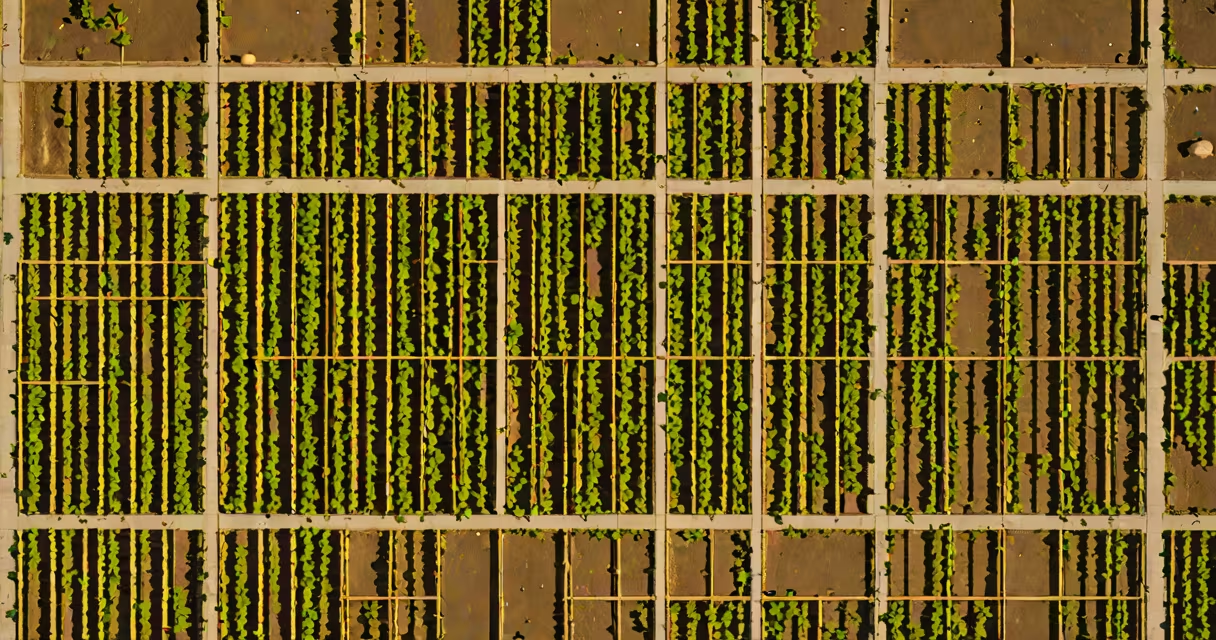
One acre equals exactly 43,560 square feet. This standardized unit of area is used globally in land measurement, especially in the United States, Canada, and parts of the UK.
The acre originated in medieval England as the amount of land a yoke of oxen could plow in one day. Today, it's a fixed measure based on the international yard and pound agreement of 1959, which defined the yard as exactly 0.9144 meters. This definition ensures consistency across countries using imperial units.
For context, an acre is roughly the size of a football field without the end zones-about 90.7% of a standard American football field (which measures 100 yards long and 53.3 yards wide). The field itself covers about 48,000 square feet, making it slightly larger than an acre.
The acre is derived from the square rod, a historical unit. One rod is 16.5 feet. A square rod is therefore 16.5 × 16.5 = 272.25 square feet. An acre is defined as 160 square rods, so:
160 × 272.25 = 43,560 square feetThis calculation remains unchanged since the 19th century, even as metric systems have spread. The U.S. National Institute of Standards and Technology (NIST) confirms this figure in its Handbook 44, which governs commercial weights and measures.
When converting from acres to square feet, multiply the number of acres by 43,560. To go backward, divide square feet by 43,560. For example:
Land developers, surveyors, and real estate agents rely on the square feet in acre conversion daily. It's critical for pricing, zoning, and planning. A residential lot of 0.25 acres is common in suburban neighborhoods-this equals 10,890 square feet, or about 100 ft × 109 ft.
Many people assume an acre is a perfect square. It is not. An acre can be any shape-rectangle, circle, irregular polygon-as long as the total area is 43,560 square feet. A square acre would measure approximately 208.71 feet per side, but most plots aren't shaped this way.
A common error is confusing acres with hectares. One hectare equals 10,763.9 square feet, or about 2.471 acres. This difference causes confusion in international real estate transactions. For example, a 5-acre property in the U.S. is about 2.02 hectares-but not quite the same.
| Unit | Square Feet | Equivalent in Acres |
|---|---|---|
| 1 acre | 43,560 | 1.000 |
| 0.5 acre | 21,780 | 0.500 |
| 10,000 sq ft | 10,000 | 0.2296 |
| 1 hectare | 107,639 | 2.471 |
I once surveyed a 3.5-acre farm in rural Texas. Using a laser rangefinder and GPS, I measured the boundary lines. When I converted the total area to square feet-3.5 × 43,560-I got 152,460 square feet. That's enough space for four standard-sized tennis courts (each ~2,700 sq ft) or nearly 100 average-sized homes (each ~1,500 sq ft).
Another example: a developer plans to build 12 houses on a 2-acre parcel. Each house requires a minimum of 8,000 square feet of land. Total needed land: 12 × 8,000 = 96,000 sq ft. Since 2 acres = 87,120 sq ft, the project falls short by 8,880 square feet. The developer must either reduce lot size or acquire more land.
One non-obvious fact: the acre is not part of the International System of Units (SI). It's a legacy unit still used in land records, contracts, and maps. The SI unit for area is the square meter. One acre equals 4,046.86 square meters-a precise number derived from the 1959 yard definition.
Smaller land divisions often use fractions of an acre. A "cent" is a unit used in South India and parts of Sri Lanka. One cent equals 435.6 square feet-exactly 1/100 of an acre. So, 100 cents make one acre. This system simplifies land pricing in regions where property is sold by the cent.
Understanding square feet in acre is essential for accurate land assessment. analyzing agricultural yields, knowing this conversion prevents costly miscalculations. Always verify measurements against official survey data when precision matters.
Every acre contains exactly 43,560 square feet. This number is not approximate-it's legally defined and internationally recognized. Use it consistently across calculations, maps, and contracts to avoid errors.