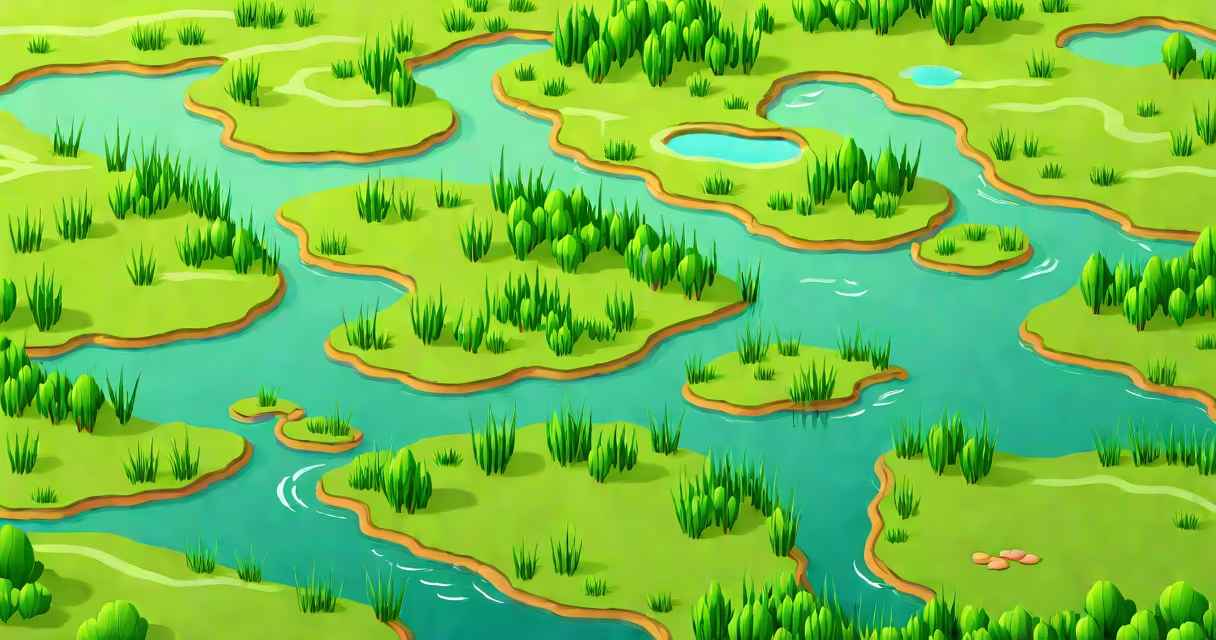
Marshes, swamps, and bogs are the three primary types of wetlands, each defined by water depth, vegetation, soil composition, and hydrology. These ecosystems form where saturated soils persist for extended periods, supporting specialized plant and animal life adapted to low-oxygen conditions.
Wetlands occur where land and water intersect. They are not simply muddy areas-they are changing systems with consistent saturation, high biodiversity, and measurable ecological functions. The U.S. Environmental Protection Agency defines wetlands as lands that are "flooded or saturated by surface or groundwater at a frequency and duration sufficient to support wetland vegetation."
Marshes dominate freshwater environments with shallow standing water. Swamps feature deeper water and woody vegetation such as trees and shrubs. Bogs develop in cooler, acidic conditions with slow decomposition, forming thick layers of peat. Each type plays a distinct role in carbon storage, flood control, and habitat provision.
Each wetland type operates through a feedback loop between water availability, plant growth, and soil development. Water levels fluctuate seasonally or daily depending on tides, rainfall, or snowmelt. These fluctuations determine which plants can survive and how organic material accumulates.
In marshes, emergent plants like cattails and bulrushes grow in shallow water. Their roots stabilize sediment and filter pollutants. During dry seasons, these plants die back and decompose slowly due to low oxygen, contributing to soil buildup. The Mississippi River Delta's marshes remove up to 60% of nitrogen runoff from agricultural drainage, according to the U.S. Geological Survey.
Swamps develop in areas with seasonal flooding or slow-moving rivers. Trees such as bald cypress and black willow thrive here because their roots tolerate prolonged submersion. Their leaf litter feeds aquatic insects and fish. The Okefenokee Swamp in Georgia covers 400 square miles and stores over 1 million tons of carbon in its peat-rich soils.
Bogs form in poorly drained, acidic environments where decomposition is minimal. Sphagnum moss dominates, absorbing rainwater and lowering pH. This acidity prevents most microbes from breaking down dead plant matter, leading to peat accumulation. Over time, peat layers can reach depths of 10 meters, locking away carbon for thousands of years.
The following table compares the three main wetland types based on physical and biological traits.
| Type | Water Source | Vegetation | Soil Type | Acidity (pH) |
|---|---|---|---|---|
| Marsh | Freshwater, seasonal floods | Cattails, reeds, rushes | Silt, clay, organic silt | Neutral to slightly alkaline (6.0-7.5) |
| Swamp | River overflow, groundwater | Bald cypress, black willow, red maple | Peat, muck, silty loam | Mildly acidic (5.0-6.5) |
| Bog | Precipitation, limited inflow | Sphagnum moss, carnivorous plants | Peat, acidic muck | Highly acidic (3.0-5.0) |
These differences affect nutrient cycling and species distribution. For example, bogs host pitcher plants and sundews-species that supplement nutrients by trapping insects due to poor soil fertility. Marshes support large populations of wading birds like herons and egrets, while swamps serve as breeding grounds for amphibians and fish.
A common misconception is that all wetlands are the same. In reality, they differ in function and resilience. Marshes recover quickly after disturbances due to rapid plant regrowth. Bogs, however, take centuries to regenerate because peat forms at about 1 millimeter per year. Losing a bog means losing millennia of carbon sequestration capacity.
Marshes appear along river deltas, lake margins, and coastal estuaries. The Everglades in Florida contain over 10,000 square kilometers of freshwater marsh, acting as a natural filter for runoff from urban and agricultural zones. Without these marshes, nutrient pollution would degrade coral reefs in the Florida Keys.
Swamps exist in humid subtropical and temperate climates. The Darien Gap in Panama hosts one of the largest tropical swamps on Earth, home to jaguars, harpy eagles, and endangered river dolphins. These ecosystems buffer storm surges and reduce flood risk during heavy rains.
Bogs form in boreal and subarctic regions. The Sphagnum-dominated bogs of northern Canada store more carbon per hectare than tropical forests. A single hectare of peatland can hold up to 10,000 metric tons of carbon-equivalent to the emissions from 2,000 cars annually.
One non-obvious fact: not all wetlands are natural. Human-made wetlands, such as constructed treatment ponds, mimic marsh functions. The city of Chicago uses artificial marshes to treat stormwater runoff, reducing sewer overflows by 40% during peak rainfall events.
Many people assume wetlands are wastelands or disease-prone. This belief stems from historical views that saw them as unusable land. In reality, wetlands provide services valued at $47,000 per hectare annually, according to a 2021 study published in Nature Sustainability.
Another confusion is equating swamps with stagnant water. While many swamps have slow flow, others are fed by rivers or tides. The Atchafalaya Basin in Louisiana is a tidal swamp where saltwater mixes with freshwater, creating a rich brackish environment that supports shrimp and blue crab fisheries.
Some believe bogs are rare. In fact, peatlands cover 3% of Earth's land surface but store twice as much carbon as all the world's forests combined. The destruction of just one hectare of bog releases as much CO₂ as burning 100 hectares of tropical forest.
I once observed a restored marsh near the San Joaquin River in California. Before restoration, the area was choked with invasive reeds and had no bird activity. After removing non-native species and reintroducing native cattails, bird counts rose from 12 species to 58 within three years. The project proved that even degraded wetlands can rebound with targeted intervention.
Understanding what are the 3 types of wetlands-marshes, swamps, and bogs-is essential for environmental protection and sustainable planning. Each type performs important ecological functions: filtering water, storing carbon, and providing habitat. Recognizing their differences prevents mismanagement and supports informed conservation.
For example, draining a bog for agriculture releases stored carbon and permanently alters the field. Restoring a degraded marsh requires planting native species and managing water flow. These actions depend on knowing which type of wetland exists on-site.