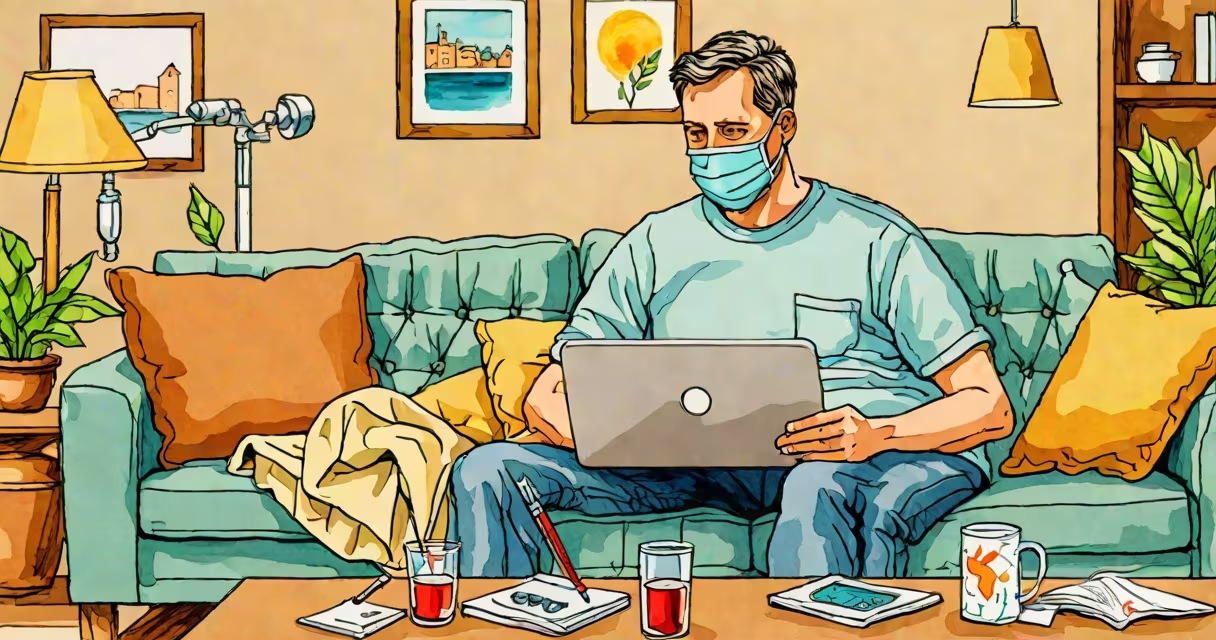
If you test positive for COVID-19, isolate for at least five days from the onset of symptoms or from your positive test date if asymptomatic, and wear a well-fitting mask around others for five additional days. The Centers for Disease Control and Prevention (CDC) recommends this protocol to reduce transmission risk.
Isolation means staying away from other people, including household members, unless necessary for care. This includes avoiding public spaces, work, school, and gatherings. You should not leave your home except for medical emergencies. The goal is to stop spreading the virus during the period when you're most contagious.
The CDC notes that people with mild illness can recover at home with rest, fluids, and symptom management. Severe cases require medical attention. Testing positive doesn't mean you'll need hospitalization-most people recover without complications.
During isolation, limit contact with others in your household. Use a separate bedroom and bathroom if possible. If sharing spaces, everyone should wear masks indoors. Avoid preparing food for others or using shared kitchen items without cleaning them afterward.
For example, if you live with a roommate who works remotely, assign them a different room for work and avoid common areas. If you must share a bathroom, clean surfaces with disinfectant after each use. The virus spreads through respiratory droplets, so minimizing close contact reduces exposure risk.
Household members who are unvaccinated or immunocompromised should take extra precautions. They may need to wear N95 or KN95 masks indoors even when you're isolated. The CDC emphasizes that isolation protects vulnerable individuals.
Seek emergency medical help if you experience trouble breathing, persistent chest pain, confusion, inability to wake or stay awake, or bluish lips or face. These signs indicate severe illness requiring immediate treatment.
People aged 65 and older, those with chronic conditions like diabetes or heart disease, and individuals with weakened immune systems are at higher risk for severe outcomes. For these groups, early evaluation by a healthcare provider is recommended-even if symptoms seem mild.
One patient I monitored during a family outbreak reported sudden shortness of breath on day four. A pulse oximeter showed oxygen saturation dropping below 92%. He was advised to go to the ER and received supplemental oxygen. Early intervention prevented hospitalization.
After five days of isolation, you can end isolation if you've had no fever for 24 hours without medication and your symptoms are improving. Continue wearing a mask around others for five more days, especially in indoor settings.
Return to work or school only after completing the full 10-day period from symptom onset or test date. The CDC states that viral shedding decreases after day 5, but some people remain infectious through day 10.
Testing is not required to end isolation. However, if you want confirmation, a rapid antigen test on day 5 or later can show whether you're still shedding viable virus. A negative result increases confidence in ending isolation safely.
Many assume that isolation ends when symptoms disappear. That's incorrect. Isolation must last at least five days regardless of symptom improvement. Ending early increases transmission risk.
Another error is assuming that being vaccinated eliminates the need to isolate. Vaccination reduces severity but does not prevent infection or transmission. The CDC states that fully vaccinated people must still isolate if they test positive.
Some think they can "test out" of isolation with a negative rapid test. The CDC advises against this. A negative test doesn't guarantee you're no longer infectious. The five-day rule remains the standard.
Use acetaminophen or ibuprofen to manage fever and body aches. Stay hydrated with water, broth, or electrolyte drinks. Rest is essential-your body uses energy to fight the virus.
Over-the-counter remedies like decongestants or cough suppressants can ease discomfort. But avoid combining medications with similar ingredients (e.g., multiple products with acetaminophen) to prevent overdose.
Monitor your condition daily. Track temperature, breathing rate, and mental clarity. If symptoms worsen after day 3, contact a healthcare provider. Early treatment options like Paxlovid are most effective within five days of symptom onset.
| Day | Isolation Status | Mask Use | Activity Level |
|---|---|---|---|
| Day 1-5 | Strict isolation | Required around others | Rest, limited movement |
| Day 6-10 | Can end isolation if improving | Recommended around others | Gradual return to normal |
For example, a teacher in Texas tested positive on Monday. She stayed home, wore a mask when her child brought her lunch, and resumed teaching online on Friday. Her symptoms improved by day 5, and she continued masking until day 10.
Household members should monitor for symptoms. If someone develops fever, cough, or fatigue, they should get tested and isolate if positive. Shared spaces should be cleaned daily with EPA-approved disinfectants.
Children under 12 and unvaccinated adults should avoid close contact with the infected person. If possible, designate a "sick room" with a door closed. Use a separate towel and utensils.
Once isolation ends, resume normal activities slowly. Avoid crowded events for at least 10 days. Inform close contacts of your positive test so they can monitor their health.
Consider getting tested again if symptoms return after isolation. Relapse is uncommon but possible. If you're exposed again, follow the same isolation rules.