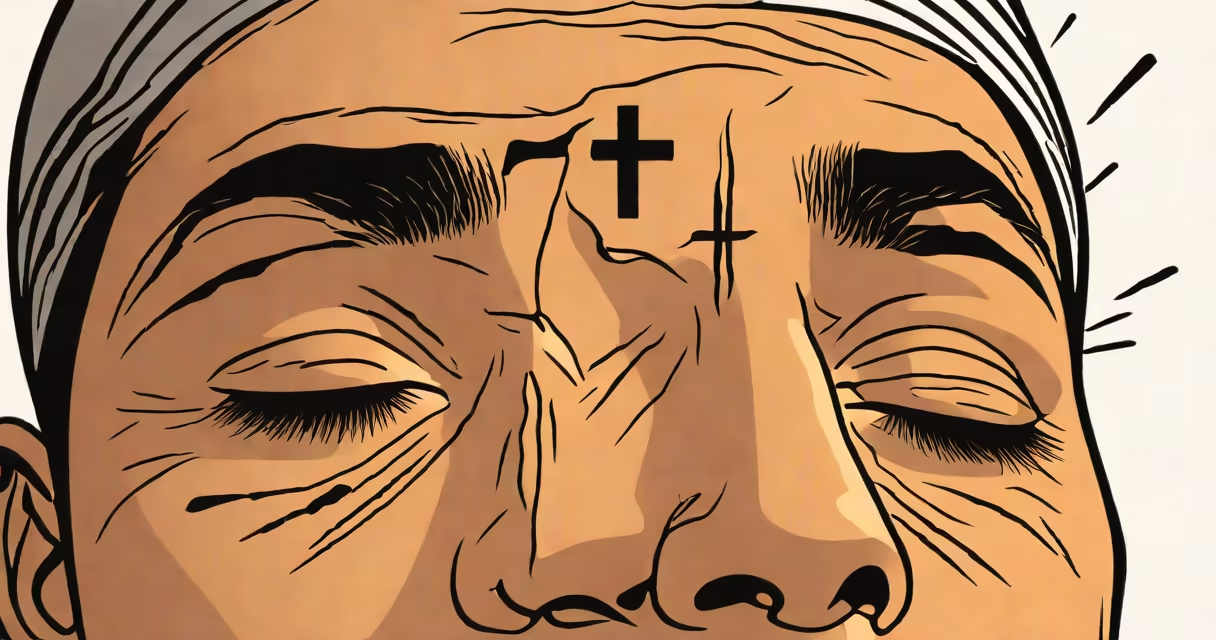
Ash Wednesday is the first day of Lent in the Christian calendar, observed on the seventh Wednesday before Easter Sunday. It marks the beginning of a 40-day season of penance, prayer, and fasting leading up to Easter. The day gets its name from the ritual of placing ashes on worshippers' foreheads in the shape of a cross, symbolizing mortality and repentance.
Christians observe Ash Wednesday with solemn services in churches worldwide. During these services, clergy members apply ashes-made from burned palm branches from the previous year's Palm Sunday-to the foreheads of attendees. The ashes are often mixed with holy water and applied with the words "Remember that you are dust, and to dust you shall return," based on Genesis 3:19. This act serves as a physical reminder of human frailty and the need for spiritual renewal.
Lent, which begins on Ash Wednesday, is rooted in biblical tradition. Jesus spent 40 days fasting in the wilderness before beginning his public ministry (Matthew 4:1-11). Christians emulate this period through acts of sacrifice, such as giving up certain foods, habits, or luxuries. The practice is not about punishment but about creating space for introspection and deeper faith.
The date of Ash Wednesday changes yearly because it's determined by the lunar calendar. It always falls between February 4 and March 10. For example, in 2024, Ash Wednesday was on February 14. The timing helps Lent ends on Holy Saturday, the day before Easter Sunday, which celebrates Christ's resurrection.
Churches hold special liturgies on this day. These services typically include scripture readings, prayers, hymns, and the imposition of ashes. Participants may stand or kneel while the priest or minister traces a cross on their forehead with ash. The gesture is both personal and communal-a shared act of humility before God.
Some denominations, including Roman Catholic, Anglican, Lutheran, and Methodist churches, formally observe Ash Wednesday. Others, like many Protestant groups, may acknowledge it informally or skip it altogether. Still, the observance is widespread across global Christianity, especially in Europe, Latin America, and parts of Africa and Asia.
Traditional ashes used on Ash Wednesday come from palm fronds blessed during the previous year's Palm Sunday. These palms are burned and then mixed with holy water or oil. The resulting ash is dark gray or black and has a powdery texture. The process of burning the palms represents transformation-turning something sacred into a symbol of mourning and renewal.
The cross drawn on the forehead is not a permanent mark. It smudges easily, often washing off during the day. This impermanence reflects the temporary nature of earthly life and the urgency of spiritual preparation. The cross also echoes Christ's crucifixion and the promise of resurrection.
One lesser-known fact: the ashes are not applied to the entire face. They are placed on the forehead, the most visible part of the body. This placement makes the act a public declaration of faith and repentance. It's not meant to draw attention, but the visibility underscores the seriousness of the commitment being made.
Many people assume Ash Wednesday is a Catholic-only practice. While the Catholic Church emphasizes it strongly, other Christian traditions observe it too. The Eastern Orthodox Church does not begin Lent on Ash Wednesday-it starts on Clean Monday, seven weeks before Easter. This difference stems from variations in liturgical calendars and the calculation of Easter dates.
Another misconception is that attending Ash Wednesday services requires confession or participation in communion. That's not true. The imposition of ashes is a symbolic act, not a sacrament. You don't have to be baptized or confirmed to receive ashes. Many churches welcome visitors, children, and non-practicing believers to participate.
Some assume the ashes are a sign of shame or guilt. But they're intended as a call to hope. The phrase "Remember you are dust" is followed by "and to dust you shall return"-but the full message includes the promise of redemption. As Pope Francis stated in 2020, "The ashes are not a curse. They are a sign of God's mercy."
Different Christian traditions interpret Ash Wednesday differently. Below is a comparison of key approaches:
| Denomination | Observance Level | Key Practice | Notes |
|---|---|---|---|
| Roman Catholic | High | Required attendance for Catholics aged 14-60; mandatory fasting on Ash Wednesday | Fast means one full meal and two smaller meals; no meat on Fridays during Lent |
| Anglican/Episcopal | High | Standard liturgy with ashes; optional fasting | Widespread in UK, Canada, USA; many parishes offer Ashes at dawn or evening |
| Lutheran | Moderate | Observed in most congregations; emphasis on repentance and grace | Less formal fasting; focus on worship and teaching |
| Protestant (non-denominational) | Low to moderate | Some churches hold services; ashes not always used | Often seen as symbolic rather than obligatory |
For example, in 2023, St. Patrick's Cathedral in New York City hosted over 5,000 people for Ash Wednesday services. Attendees included tourists, students, and local residents. Many reported feeling a sense of calm and clarity after receiving ashes, even if they weren't regular churchgoers.
In 2022, I attended an Ash Wednesday service at a small Episcopal church in Portland, Oregon. The service lasted 45 minutes. The priest read from Isaiah 58:5-7, emphasizing that fasting should lead to justice and compassion. Afterward, parishioners lined up to receive ashes. I stood in line behind a woman in her 70s who had lost her husband the year before. She said she came not for comfort, but to remember that life is short-and that she still has time to live with purpose.
When the priest touched my forehead with ash, I felt a quiet weight. Not sadness. Not fear. A kind of presence. Later, I learned that the ashes were made from palms collected from the church's own Palm Sunday celebration in 2022. The cycle-from celebration to mourning to rebirth-was complete.
Despite declining church attendance in many Western countries, Ash Wednesday remains a significant cultural and religious marker. In 2023, Pew Research Center found that 34% of U.S. adults identified as Christian, and 15% said they attended church weekly. Among those who did attend, Ash Wednesday was cited as one of the most meaningful days of the year.
It's not just about ritual. The day offers a rare pause in a fast-moving world. The act of marking the forehead with ash forces a moment of stillness. It interrupts routine. It says: "This matters. You matter. And your life is not just about doing, but about becoming."