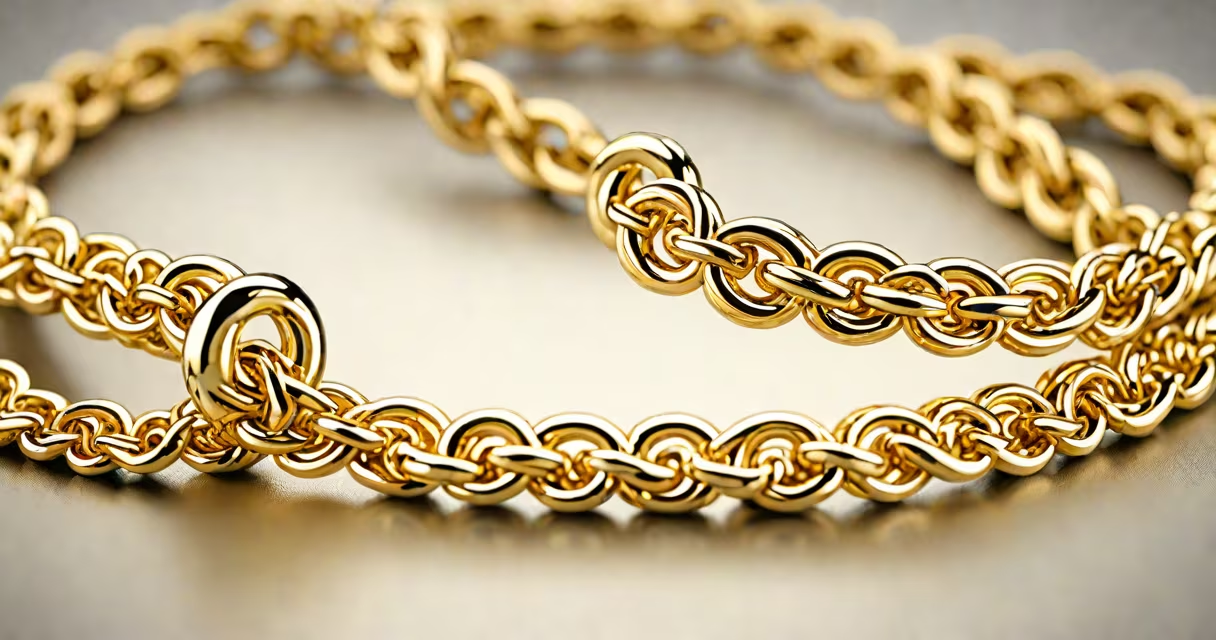
12kt GF stands for 12-karat gold filled, a type of jewelry construction where a layer of 12-karat gold is permanently bonded to a base metal core using heat and pressure. The gold layer makes up at least 5% of the total weight, making it far more durable and valuable than standard gold plating.
Gold filled items are not solid gold, but they contain a measurable amount of real gold. The term "12kt" specifies the purity of the outer gold layer-12 parts gold out of 24, meaning it's 50% pure gold. This is less pure than 14kt or 18kt gold, but still provides a rich yellow color and long-lasting wear.
Unlike gold-plated jewelry, which may lose its finish in weeks, 12kt GF pieces retain their appearance for years with proper care. They're often used in fashion accessories like bracelets, earrings, and necklaces where durability matters.
Gold filled manufacturing involves bonding a thick layer of gold to a base metal-typically brass or sterling silver-using high heat and pressure. The process creates a permanent bond that resists peeling, flaking, or fading under normal conditions.
The U.S. Federal Trade Commission (FTC) requires that gold filled items contain at least 5% gold by weight. For 12kt GF, this means the gold layer must be at least 1/20th of the total item's weight. A 10-gram bracelet must have at least 0.5 grams of gold.
For comparison, gold-plated jewelry typically has a gold layer thinner than 0.05 microns and may wear off within months. Gold filled items have layers between 50 and 100 microns thick-about 10 times thicker than typical plating.
Gold filled is categorized by karat and thickness. The most common types are 12kt, 14kt, and 18kt GF. Each uses different gold purities and affects both appearance and value.
| Karat | Gold Purity | Typical Use | Gold Layer Thickness |
|---|---|---|---|
| 12kt GF | 50% pure gold | Everyday jewelry, fashion accessories | 50-75 microns |
| 14kt GF | 58.3% pure gold | Higher-end fashion, wedding bands | 60-90 microns |
| 18kt GF | 75% pure gold | Premium jewelry, heirloom-quality pieces | 75-100 microns |
While 12kt GF offers a warm golden hue and good durability, it's less expensive than higher-karat options. It's ideal for those seeking affordable, long-lasting gold-toned jewelry without paying for solid gold.
12kt GF is widely used in costume jewelry, fashion accessories, and entry-level fine jewelry. Its balance of cost, appearance, and longevity makes it popular among designers and retailers.
A real-world example: a 12kt GF pendant from a major retailer weighs 8 grams. With 5% gold content, it contains 0.4 grams of actual gold. That's roughly $12 in gold value at current market rates-far more than gold-plated items, which may have less than 0.01 grams.
Many people mistake 12kt GF for gold-plated or solid gold. These are distinct categories with different standards and lifespans.
Gold-plated jewelry uses electroplating to apply a thin gold layer-often less than 0.1 micron thick. Over time, friction or exposure to moisture wears it away. A 12kt GF piece lasts decades with daily wear.
Another misconception: 12kt GF is not the same as 12-karat solid gold. Solid 12kt gold is 50% pure gold and used in fine jewelry. But it's much heavier and more expensive. 12kt GF uses a base metal core, so it's lighter and cheaper while still offering a gold look.
One non-obvious fact: gold filled items can be legally marked with the word "gold" in advertising, but only if the gold content meets FTC standards. A 12kt GF ring labeled "gold" is truthful-but only because it contains at least 5% gold by weight.
I wore a 12kt GF chain necklace daily for 18 months. After washing my hands, applying lotion, and occasional swimming, the gold layer showed no visible wear. Only a slight dullness appeared near the clasp after year two-typical for any metal exposed to frequent contact.
In contrast, a gold-plated necklace I owned wore through in nine months. The gold faded completely on the front and back, revealing the silver base underneath. The 12kt GF piece retained its luster and color throughout.
12kt GF means a jewelry item has a thick, bonded layer of 12-karat gold over a base metal. It's not solid gold, but it contains more gold than plated items and lasts much longer. It's a practical choice for everyday wear with a premium appearance at a fraction of the cost.