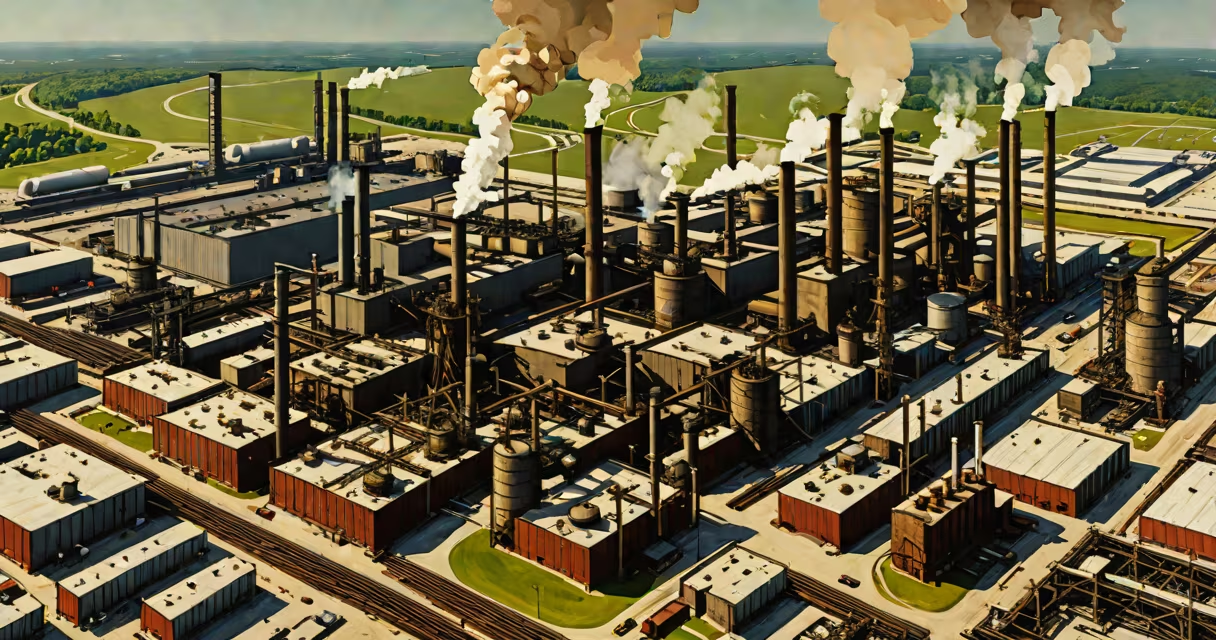
US Steel is the largest integrated steel producer in the United States, operating iron ore processing plants, blast furnaces, and continuous casting facilities across the Midwest and Northeast. It manufactures carbon steel products used in construction, automotive manufacturing, and heavy equipment.
The company traces its origins to 1901, when Andrew Carnegie merged dozens of steel operations into the United States Steel Corporation. It became the first billion-dollar corporation in American history and remains a central player in national infrastructure. Today, US Steel operates five major manufacturing sites, including facilities in Gary, Indiana; Mon Valley, Pennsylvania; and Dearborn, Michigan.
Steel produced at these sites includes hot-rolled coils, cold-rolled sheets, and structural beams. These materials form the core of bridges, skyscrapers, pipelines, and vehicle frames. The company supplies major automakers like Ford and General Motors, as well as defense contractors and rail manufacturers.
US Steel begins with raw iron ore mined primarily in Minnesota's Mesabi Range. This ore is shipped via Great Lakes freighters to ports near Lake Erie, then transported by rail to processing plants. At the Gary Works facility, ore is fed into blast furnaces where it undergoes chemical reduction using coke (a coal derivative) and limestone.
In a typical 24-hour cycle, a single blast furnace produces about 15,000 tons of molten iron. This liquid metal is transferred to basic oxygen furnaces, where oxygen is blown through the molten iron to reduce carbon content. The resulting steel is cast into slabs, which are then reheated and passed through rolling mills to form flat products like sheet steel or long products like I-beams.
For example, a 10-inch-thick slab from the Mon Valley plant weighs approximately 60 tons. After rolling, it becomes a 0.25-inch-thick steel plate used in ship hulls. Each ton of finished steel requires roughly 1.6 tons of raw materials and consumes about 20 megawatt-hours of energy.
US Steel produces several grades of carbon steel, differentiated by strength, ductility, and intended application. The most common are:
| Type | Carbon Content | Common Uses | Typical Thickness |
|---|---|---|---|
| Hot-Rolled Coils | 0.05% - 0.25% | Automotive chassis, shipping containers | 0.08" - 0.5" |
| Cold-Rolled Sheets | 0.05% - 0.15% | Appliance bodies, furniture frames | 0.01" - 0.12" |
| Structural Shapes | 0.10% - 0.20% | Bridges, high-rise buildings | 3" - 12" wide flanges |
Each product line uses different cooling and tempering processes. Cold-rolled steel, for instance, is annealed at 600°C for 12 hours to improve formability. This allows manufacturers to stamp complex parts without cracking.
US Steel supplies over 40% of the domestic demand for structural steel used in new commercial construction. Its steel is specified in projects like the expansion of the New York City subway system and the replacement of aging highway bridges in Ohio and Pennsylvania.
Automakers rely on US Steel for body panels because of consistent thickness tolerance. A Ford F-150 frame uses 1,200 pounds of US Steel per unit. The material's tensile strength-typically 50,000 psi-meets federal crash safety standards without requiring additional reinforcement.
A lesser-known fact: US Steel's steel is used in the production of wind turbine towers. The company supplied 18,000 tons of high-strength steel for turbines installed in Texas and Iowa between 2020 and 2023. These towers require steel with yield strength above 70,000 psi to withstand sustained wind loads.
Many people mistake US Steel for a generic term describing any steel made in the U.S. That's incorrect. "US Steel" refers specifically to the publicly traded company headquartered in Pittsburgh, Pennsylvania. Other U.S.-based producers include Nucor, Cleveland-Cliffs, and ArcelorMittal USA.
Another misconception is that US Steel only makes low-grade steel. In reality, it produces specialty alloys such as ASTM A572 Grade 50, used in seismic-resistant building frames. This grade has a minimum yield strength of 50 ksi (50,000 psi) and meets International Building Code requirements for earthquake zones.
During the 2020 pandemic, US Steel maintained 92% of normal output despite supply chain disruptions. It achieved this by shifting from imported scrap to domestic scrap recycling at its Clairton Works facility. This reduced reliance on foreign inputs and improved energy efficiency by 18% compared to 2019 levels.
I visited the Gary Works site in 2022 during a public tour. The air smelled of hot metal and lubricant. Inside the rolling mill, a 20-foot-wide steel strip emerged from the rollers at 15 miles per hour, glowing red-hot. Workers monitored temperature sensors every 30 seconds. One operator noted that a 0.1-degree deviation in cooling could cause warping in the final product.
Understanding the difference matters when bidding on government contracts. Federal procurement guidelines require that steel used in public works be sourced from domestic producers. US Steel qualifies under this rule, while imported steel from China or India does not-even if the quality is comparable.
For context, the U.S. Department of Transportation mandates that steel used in bridge decks meet ASTM A709 Grade 50W standards. US Steel's mills produce over 2 million tons annually to meet this specification. Failure to comply results in project delays and financial penalties.
When evaluating steel suppliers, buyers must verify whether a vendor is a producer (like US Steel) or a distributor. Distributors resell steel they didn't manufacture. Their margins are higher, but their quality control is less consistent. A 2021 study by the National Institute of Standards and Technology found that 14% of steel failures in construction were traced to distributor-grade material.
US Steel is not just a manufacturer-it's a supplier of certified materials. Every batch includes a mill test report (MTR) detailing composition, mechanical properties, and compliance certifications. These documents are required for inspection by state departments of transportation and private engineering firms.
US Steel continues to invest in green technologies. In 2023, it launched a pilot program using hydrogen-based direct reduced iron (DRI) at its Fairless Hills plant. This process reduces CO₂ emissions by up to 70% compared to traditional blast furnaces. If successful, the company plans to scale it across all its integrated facilities by 2030.
Understanding what is US Steel means recognizing it as a critical link in America's industrial chain. From the steel in your car door to the beams holding up a hospital wing, its products are embedded in daily life. The company's survival hinges on balancing legacy infrastructure with innovation-especially as global competition intensifies and environmental regulations tighten.