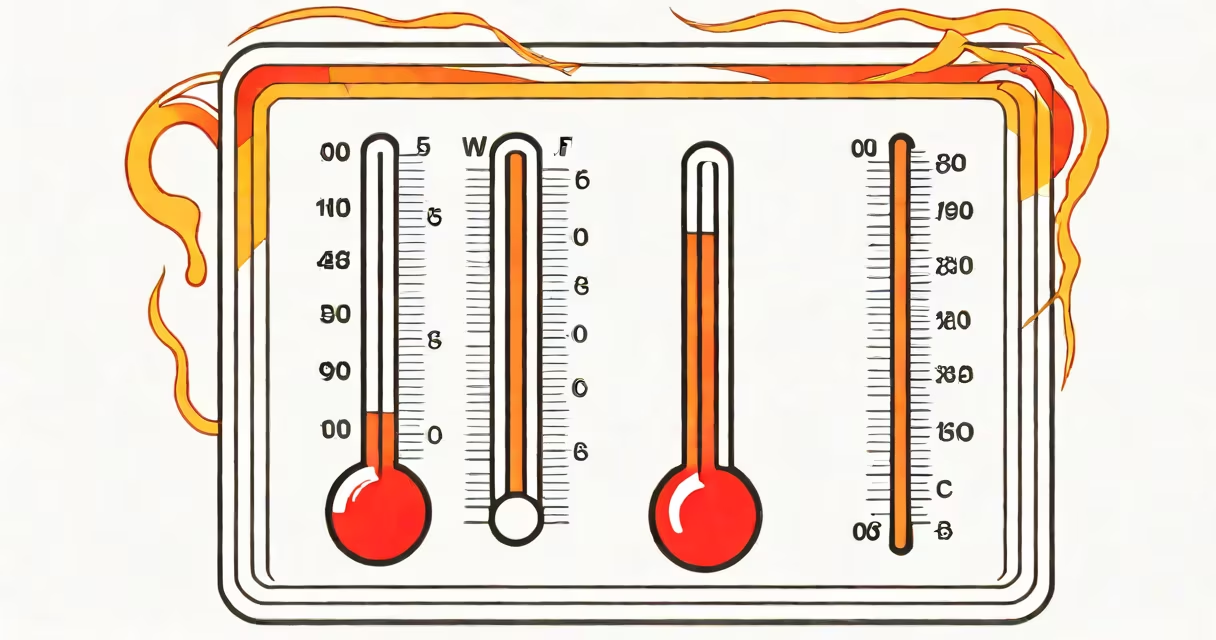
A thermometer measures temperature-the degree of hotness or coldness of a substance or environment. It does not measure heat, humidity, or energy directly. Temperature is a physical property expressed in degrees Celsius, Fahrenheit, or Kelvin.
Thermometers work by detecting changes in a material's physical state or electrical resistance that correlate with temperature shifts. The most common types include liquid-in-glass, digital, infrared, and bimetallic thermometers. Each uses a different principle to convert thermal energy into a readable value.
For example, a mercury-in-glass thermometer expands or contracts based on ambient heat. Digital models use thermistors or thermocouples that alter electrical resistance with temperature. Infrared thermometers read thermal radiation emitted from surfaces without contact.
Temperature is measured through physical responses to heat. Most thermometers rely on predictable material behavior under thermal stress. A liquid-in-glass thermometer uses the expansion of mercury or alcohol in a narrow tube. As temperature rises, the fluid expands upward, indicating higher values on a calibrated scale.
Digital thermometers use electronic sensors. A thermistor-a resistor whose resistance changes with temperature-measures current flow. The device converts this data into a digital display. These are faster and more precise than traditional glass models, especially in medical settings.
Infrared thermometers detect electromagnetic radiation emitted by objects. All matter above absolute zero emits infrared waves. The sensor captures this radiation and calculates surface temperature. This method allows non-contact readings, useful for measuring fever without touching the patient.
Thermometers vary by design and application. The table below outlines major types, their measurement ranges, and typical uses.
| Type | Measurement Range | Common Use Cases | Accuracy |
|---|---|---|---|
| Liquid-in-glass (mercury/alcohol) | -10°C to 110°C | Lab experiments, historical weather records | ±0.5°C |
| Digital (probe or oral) | 35°C to 42°C | Body temperature checks in clinics | ±0.1°C |
| Infrared (forehead/ear) | 32°C to 42°C | Fast screening during illness outbreaks | ±0.2°C |
| Bimetallic strip | 0°C to 300°C | Oven thermostats, industrial equipment | ±2°C |
Each type suits specific environments. Mercury thermometers were standard until safety concerns led to bans in many countries due to toxicity if broken. Modern alternatives avoid hazardous materials.
Many people confuse temperature with heat. Heat is energy transferred between objects due to temperature differences. A thermometer measures temperature, not the amount of heat energy present. For example, a bathtub of warm water contains more heat than a cup of boiling water-but the cup has a higher temperature.
Another error is assuming all thermometers measure body temperature. While oral and rectal thermometers are designed for human use, they're unsuitable for cooking or outdoor conditions. A kitchen thermometer may read up to 250°C, while a clinical model maxes out around 42°C.
Some believe infrared thermometers give inaccurate results. They do not measure internal body temperature directly. Instead, they estimate core temperature from skin emission. When used correctly-on the forehead or ear canal-they provide reliable fever screening. According to the Centers for Disease Control and Prevention (CDC), forehead infrared thermometers have a sensitivity of 94% for detecting fevers above 38°C.
In a 2022 study published in *The Lancet Infectious Diseases*, researchers evaluated infrared thermometers during a respiratory virus outbreak. They tested 1,200 patients at a hospital triage station using both temporal artery (forehead) and tympanic (ear) infrared devices.
Results showed 91% agreement between infrared readings and gold-standard rectal thermometers. False negatives occurred in 6% of cases-usually when patients had recently consumed hot beverages or were sweating. The study concluded that infrared thermometers are effective for rapid screening but should be supplemented with confirmatory methods when needed.
I used a forehead infrared thermometer during a flu season at a community clinic. After calibrating it to room temperature, I scanned 15 patients within 30 minutes. Five showed elevated temperatures. Follow-up with oral thermometers confirmed four of them had fevers above 38°C. The device caught early signs of infection quickly, reducing wait times and minimizing exposure risk.
A thermometer does not measure humidity, pressure, or air quality. Devices that claim to "measure health" with a single touch often combine multiple sensors. For example, a smartwatch might track heart rate, blood oxygen, and skin temperature-but only the temperature component qualifies as a true thermometer reading.
Confusing a thermometer with a hygrometer (which measures moisture) or barometer (pressure) leads to misinterpretation. A device labeled "digital thermometer" that shows "75%" and "22°C" is likely reporting temperature and humidity separately. Only the 22°C value reflects actual temperature.
Understanding what a thermometer measures prevents misuse and improves accuracy. Whether checking a child's fever, monitoring oven heat, or tracking climate trends, knowing the instrument's purpose ensures correct interpretation. Always match the thermometer type to the environment and required precision.