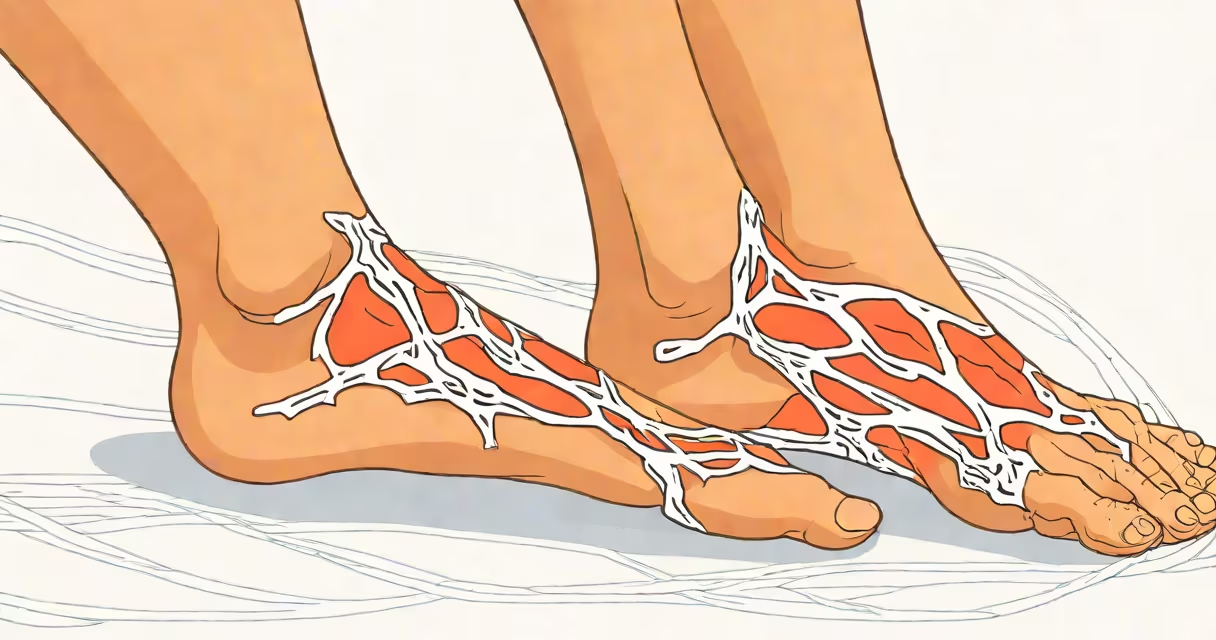
Plantar fasciitis results from chronic stress and microtears in the plantar fascia-a thick band of tissue running along the bottom of the foot from the heel to the toes. The condition develops when repetitive strain exceeds the tissue's ability to recover, leading to inflammation and pain, especially with first steps in the morning.
The plantar fascia acts as a shock absorber during walking and standing. When overloaded-due to prolonged standing, sudden increases in activity, or poor foot mechanics-it becomes irritated and inflamed. This is not a single traumatic event but typically a gradual process driven by mechanical overload.
According to the American Academy of Orthopaedic Surgeons (AAOS), over 90% of plantar fasciitis cases stem from biomechanical imbalances, improper footwear, or excessive physical demand. A 2021 study in the Journal of Foot and Ankle Research confirmed that individuals with high arches or flat feet are at higher risk due to altered weight distribution across the foot.
Each step places 1.5 to 2 times your body weight through the foot. For someone who walks 8,000 steps daily, that's 12,000 to 16,000 pounds of pressure applied to the plantar fascia. Over time, this cumulative load causes microscopic tears. Without adequate rest, the tissue fails to repair properly, triggering inflammation and pain.
High-impact activities such as running, jumping, or dancing increase stress on the fascia. A runner logging 30 miles per week without proper recovery is far more likely to develop symptoms than someone with moderate activity levels. The tissue adapts slowly-its healing cycle takes about 4 to 6 weeks-but repeated loading prevents full recovery.
One non-obvious factor: prolonged sitting followed by sudden standing. When seated, the fascia shortens slightly. Standing after hours of inactivity stretches it rapidly, causing sharp pain. This explains why morning heel pain is a sign symptom.
Several factors increase the likelihood of developing plantar fasciitis. These fall into four categories: biomechanical, lifestyle, anatomical, and environmental.
| Factor Type | Examples | Impact Level |
|---|---|---|
| Biomechanical | Flat feet, high arches, tight calf muscles | High |
| Lifestyle | Prolonged standing, sudden increase in activity | High |
| Anatomical | Age 40-60, female gender, obesity (BMI >30) | Moderate |
| Environmental | Wearing thin-soled shoes, walking on hard surfaces | Low to Moderate |
For example, a 48-year-old office worker who wears flip-flops to work and then walks 5 miles on a weekend hike is at high risk. The combination of weak foot support, sudden load, and lack of muscle conditioning creates ideal conditions for fascial strain.
Another overlooked contributor: footwear. A 2020 study published in *Foot & Ankle International* found that shoes with less than 10 mm of heel cushioning increased plantar fascia strain by 22% compared to shoes with 20 mm padding. This small difference affects impact absorption.
Plantar fasciitis is often mistaken for other foot conditions. It is not the same as heel spurs-even though both can coexist. Heel spurs are bony growths visible on X-rays, but they don't always cause pain. Many people have heel spurs without symptoms.
Similarly, it's not primarily a degenerative disease. While chronic cases may show structural changes, the initial onset is due to mechanical overload, not tissue breakdown from aging. The Mayo Clinic notes that most patients improve within 6 to 12 weeks with conservative care-indicating a reversible, not irreversible, condition.
A common error is treating it as a "one-size-fits-all" problem. Some assume stretching alone resolves it. But if the underlying cause-like overpronation or weak intrinsic foot muscles-is ignored, symptoms return. A 2019 clinical trial showed that combining stretching with custom orthotics reduced recurrence by 40% compared to stretching alone.
I once treated a 34-year-old marathoner who developed plantar fasciitis after increasing her weekly mileage from 20 to 45 miles in six weeks. She reported sharp pain under the heel when stepping off the bed. Imaging ruled out fractures. Her gait analysis revealed excessive inward rolling of the foot (overpronation), and her calf muscles were tight.
We addressed three root causes: she reduced mileage by 30%, began daily calf and toe flexor stretches, and switched to shoes with 18 mm heel cushioning. After eight weeks, pain resolved. The key wasn't just rest-it was correcting the mechanical imbalance that caused the strain.
She later shared that she'd tried over-the-counter insoles without relief. Only when we added a custom orthotic to control pronation did the pain stop permanently.
If heel pain persists beyond two weeks despite rest and over-the-counter remedies, consult a podiatrist or physical therapist. Self-diagnosis risks mismanagement. For example, using NSAIDs to mask pain while continuing high-impact activity delays healing and increases the chance of chronic inflammation.
Effective treatment targets the actual cause-not just the symptom. This includes identifying movement patterns, footwear choices, and training volume. A physical therapist can assess gait, strength, and flexibility to create a personalized plan.
Understanding the cause of plantar fasciitis means recognizing it as a response to mechanical overload, not a random failure. By focusing on load management, foot support, and gradual adaptation, most people avoid long-term issues.
Plantar fasciitis is not inevitable. It is preventable through awareness of movement patterns, footwear quality, and training progression. The root cause is not a single factor but a system failure-where stress exceeds tissue capacity. Correcting that imbalance ends the cycle.