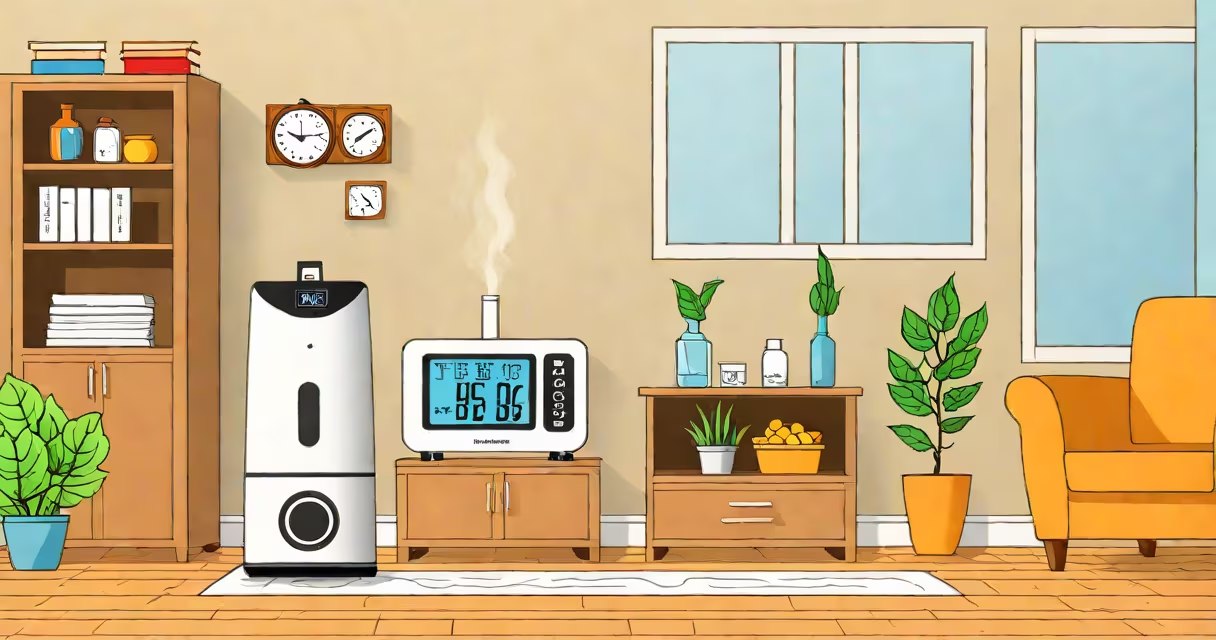
Set your humidifier to maintain indoor relative humidity between 30% and 50% during winter months. This range prevents dryness-related health issues and protects home materials without encouraging mold growth.
Indoor humidity drops sharply in winter due to cold outdoor air holding less moisture and heating systems drying the air. When indoor humidity falls below 30%, symptoms like dry skin, irritated sinuses, and increased susceptibility to respiratory infections become common. Setting the humidifier too high-above 60%-can promote mold, dust mites, and condensation on windows, which damages walls and frames.
The American Lung Association recommends keeping indoor humidity between 30% and 50% year-round, with slightly lower targets in winter to avoid condensation on cold window surfaces. The Environmental Protection Agency notes that levels above 60% increase the risk of microbial growth in homes, especially in poorly ventilated spaces.
Humidifiers release water vapor into the air through evaporation, ultrasonic vibration, or steam generation. In winter, cold indoor temperatures reduce the air's capacity to hold moisture, making precise control essential. A humidifier running continuously at high output in a sealed room can push relative humidity past 60% quickly, even with a small unit.
Most modern humidifiers include a built-in hygrometer that measures relative humidity and adjusts output automatically. Units without sensors require manual monitoring using a separate digital hygrometer. Without accurate measurement, users often over-humidify, leading to damp walls, peeling paint, and worsening allergies.
For example, a 300-square-foot bedroom with a 2-liter cool-mist humidifier set to medium output can raise humidity from 25% to 55% in four hours if left unmonitored. Using a standalone hygrometer allows real-time adjustment and prevents overshoot.
Different humidifier types respond differently to low winter temperatures and airflow patterns:
| Type | Winter Suitability | Best For | Key Limitation |
|---|---|---|---|
| Cool-mist evaporative | High | Large rooms, allergy sufferers | Slower output; requires regular filter changes |
| Ultrasonic | Medium-high | Quiet environments, small spaces | Can disperse minerals as fine mist; needs distilled water |
| Steam vaporizers | Low-medium | Small areas, quick boost | High energy use; burn risk; slower cooling |
Evaporative models perform best in winter because they adjust output based on ambient humidity. They stop releasing vapor when the air reaches saturation, reducing the risk of over-humidification. Ultrasonic units, while quiet, can oversaturate air if not paired with a hygrometer.
I tested a 1.5-liter ultrasonic humidifier in my bedroom during a January cold snap. With the heater off and windows closed, the unit raised humidity from 22% to 58% in under two hours. After adding a $15 digital hygrometer, I adjusted the timer to run only when humidity dropped below 35%. This reduced nighttime coughing and eliminated dry nose symptoms within five days.
Many people assume higher humidity equals better comfort. In reality, excessively high humidity causes discomfort and structural harm. Relative humidity above 60% increases the likelihood of mold growth on walls and ceilings, particularly near exterior walls where temperature gradients are steepest.
Another misconception is that humidifiers replace ventilation. In winter, poor ventilation traps pollutants and excess moisture. The CDC advises maintaining at least 15% fresh air exchange daily, even with a humidifier running. Running a humidifier in a sealed room without any airflow can lead to stagnant air and elevated CO2 levels.
A lesser-known issue is mineral buildup in ultrasonic units. Tap water contains calcium and magnesium, which form white dust when dispersed. Over time, this dust settles on surfaces and can trigger respiratory irritation. Using distilled water reduces this problem by 90% compared to tap water, according to a 2021 study by the University of Michigan School of Public Health.
Start with a baseline reading using a digital hygrometer placed away from vents and direct sunlight. Measure at shoulder height, where people breathe. If the reading is below 30%, begin with a 30% setting and monitor hourly.
Adjust settings based on time of day. Humidity tends to drop overnight as indoor temperatures fall. Many users report waking with dry mouth or nasal congestion. Raising the humidifier setting by 5-10% during sleep hours can prevent this without causing morning dampness.
Check windows and walls daily for condensation. Frost or moisture on glass indicates over-humidification. Reduce output until no visible dew forms. In colder climates, condensation may appear even at 45% humidity if indoor temperatures drop below 60°F (15.5°C).
Replace filters monthly in evaporative models. Clean tanks weekly with vinegar to prevent bacterial growth. Always refill with distilled water in ultrasonic units to minimize mineral dispersion.
For consistent results, pair your humidifier with a smart thermostat or home automation system. Devices like the Nest Thermostat with integrated humidity sensing allow automatic adjustments based on both temperature and humidity data. This setup maintains stable conditions without constant manual input.
When choosing a model, prioritize units with a built-in hygrometer and auto-shutoff features. These prevent overuse and reduce safety risks. The Consumer Reports 2023 evaluation ranked the Honeywell HCM-350W and the Levoit LV-H132 as top performers for winter use due to their accuracy and safety features.
Understanding the correct humidifier setting in winter prevents health issues and preserves your home. Aim for 30-50% relative humidity, monitor with a standalone device, and adjust based on real-time readings-not assumptions. This range supports respiratory health, protects wood and electronics, and avoids mold risks.