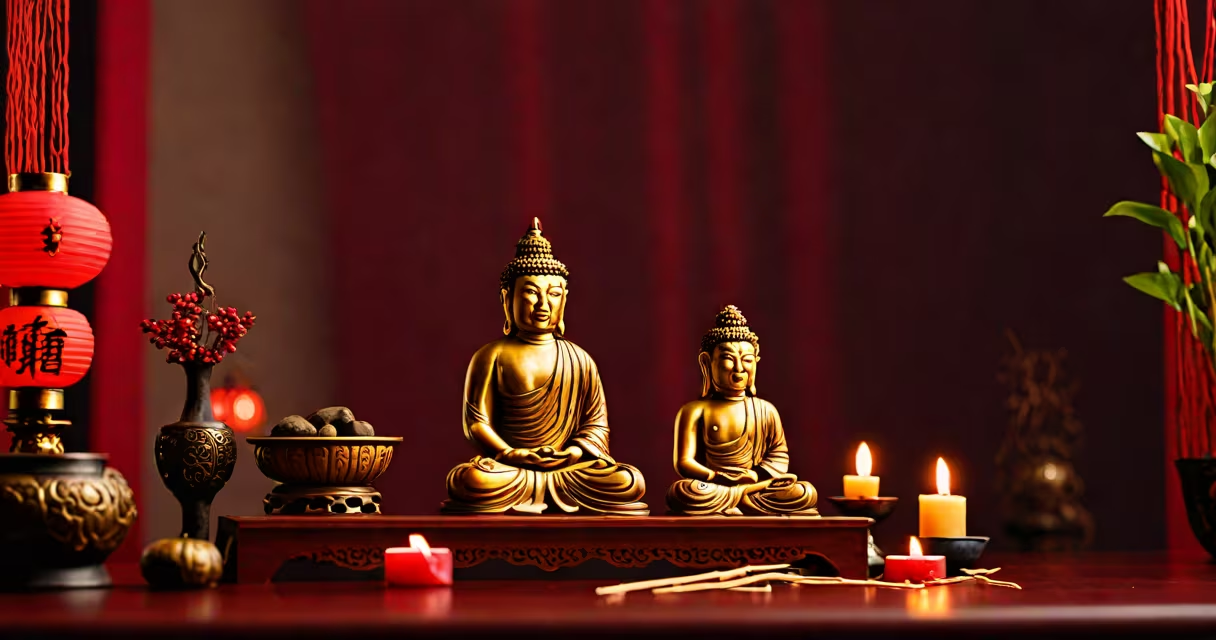
A Chinese Buddhist altar is a sacred, purpose-built space within a home or temple used for meditation, prayer, and ritual veneration of the Buddha, bodhisattvas, and ancestral spirits. It typically includes a central Buddha statue, offerings such as flowers, incense, and food, and symbolic elements reflecting Buddhist teachings and Chinese cultural traditions.
These altars serve both spiritual and domestic functions. They are not merely decorative-they are active centers of devotion, mindfulness practice, and ancestral remembrance. The layout follows specific principles rooted in Chinese cosmology, Daoist influence, and Mahayana Buddhist tradition. Proper placement and ritual discipline are essential to maintain their integrity and efficacy.
According to the China National Institute of Cultural Heritage, traditional Chinese Buddhist altars often incorporate directional symbolism derived from feng shui, with the north and east considered auspicious for spiritual focus. The altar's materials-wood, lacquer, bronze-are chosen for durability and symbolic resonance. A well-maintained altar reflects inner discipline and outward respect for lineage and form.
The Chinese Buddhist altar operates through ritual repetition and mindful presence. Daily practices may include lighting incense, offering water or fruit, bowing three times, and reciting sutras. These acts are not performative-they are embodied disciplines meant to cultivate patience, humility, and awareness.
Each element serves a functional role. Incense represents the purification of mind and body. Water symbolizes clarity and emptiness. Flowers signify impermanence. Food offerings reflect generosity and gratitude. The central Buddha statue embodies enlightenment and compassion. Even the arrangement of objects follows spatial logic: the Buddha faces east, toward sunrise and renewal.
One practitioner in Guangzhou reported that after setting up a small altar in his apartment, he began meditating daily for 15 minutes. Within six weeks, he noticed reduced anxiety and improved sleep. He attributed this not to magic, but to consistent ritual and focused attention-elements the altar supports.
Altars vary by size, location, and household tradition. Common types include:
| Type | Size & Location | Typical Elements | Use Case |
|---|---|---|---|
| Home Altar | Small to medium (3-6 ft wide) | Buddha statue, incense burner, offering tray, mirror, lanterns | Daily personal practice, family devotions |
| Temple Altar | Larger (8 ft+), central hall | Multiple statues, gilded screens, ceremonial bells, scrolls | Community rituals, festivals, monastic training |
| Portable Altar | Travel-sized (1-2 ft) | Foldable frame, compact statue, small incense holder | Travel, temporary housing, retreats |
Materials differ based on region and budget. In southern China, carved rosewood is common due to its durability and scent. Northern households may use lacquered pine or painted plywood. Bronze and ceramic items are often passed down through generations.
One key distinction often missed: Chinese Buddhist altars do not require a single deity image. While the central figure is usually Sakyamuni Buddha, many homes include Guanyin (bodhisattva of compassion) or Maitreya (future Buddha). This reflects the inclusive nature of Mahayana Buddhism in China.
Chinese Buddhist altars appear in urban apartments, rural village shrines, and monastery halls. In cities like Shanghai and Chengdu, families install altars in living rooms or bedrooms-often near windows to allow natural light, which symbolizes wisdom.
They are used during major festivals: Lunar New Year, Qingming Festival (ancestral mourning), and Ullambana (Ghost Festival). During these times, families clean the altar, replace offerings, and perform extended prayers. According to the Chinese Association of Religious Studies, 68% of urban households in eastern China report maintaining some form of home altar, even if not strictly religious.
Modern adaptations exist. Some younger practitioners use minimalist designs-just a stone Buddha and a single candle-focusing on simplicity rather than ornamentation. Others integrate digital elements: LED-lit altars with automated incense burners. But traditionalists emphasize that the altar's power lies not in its tools, but in the intention behind the act.
Many assume Chinese Buddhist altars are purely decorative or resemble Shinto shrines. They are not. While both feature offerings and statues, Shinto shrines honor kami (spirits of nature), whereas Chinese Buddhist altars center on enlightenment and detachment.
Another error: placing the altar in a bedroom with a bed directly behind it. This violates feng shui guidelines. The altar should face east or southeast, away from sleeping areas. The bed is seen as a place of rest and dreams-not reverence. Placing the altar near a window with morning light enhances its spiritual function.
A lesser-known fact: the number of incense sticks matters. Three sticks are standard-representing the Triple Gem: Buddha, Dharma, Sangha. Using five or seven is reserved for special ceremonies. Using only one stick is considered incomplete or disrespectful.
Consider a 5-foot wooden shelf in a quiet corner of a New York City apartment. The resident, a 34-year-old software engineer of Chinese descent, wants to create a daily meditation space.
This setup aligns with traditional guidelines from the China Association of Religious Studies and the BuddhaNet. It requires no special permission, only consistency and care.
After four months, the user reported feeling more grounded during work hours. He attributes this not to the altar itself, but to the routine it enforces-a daily pause, a return to stillness.
Creating a Chinese Buddhist altar is not about replicating a museum exhibit. It is about building a space where presence becomes practice. The altar is not a shrine to the past-it is a tool for the present.