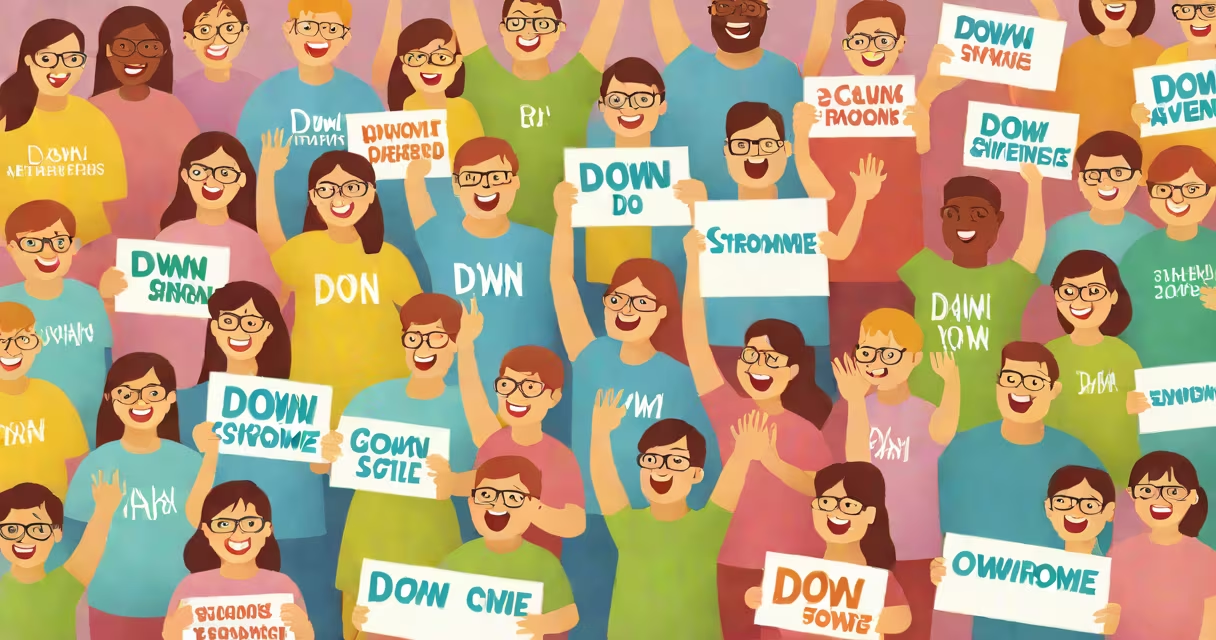
Down syndrome awareness is the effort to educate the public about a genetic condition caused by an extra copy of chromosome 21, leading to distinct physical traits and varying degrees of intellectual disability. It promotes accurate understanding, reduces stigma, and supports inclusion in schools, workplaces, and communities.
Down syndrome occurs in approximately 1 in 700 live births worldwide, according to the Centers for Disease Control and Prevention (CDC). The condition results from trisomy 21-three copies of chromosome 21 instead of the usual two. This extra genetic material alters development and affects both physical and cognitive traits. People with Down syndrome often have mild to moderate intellectual disability, but they also possess unique strengths, personalities, and abilities.
Public awareness campaigns aim to correct misconceptions. For example, many assume individuals with Down syndrome cannot learn or contribute meaningfully. In reality, with early intervention and inclusive environments, most achieve independence in daily living skills, attend mainstream schools, and hold jobs. A 2021 study published in *The Lancet* found that children with Down syndrome who received early speech and motor therapy showed significant gains in language and coordination by age five.
Down syndrome awareness operates through education, media representation, and grassroots advocacy. Schools host events during National Down Syndrome Awareness Month (October), featuring guest speakers, art displays, and student-led presentations. These activities help peers understand differences and build empathy.
Organizations such as the National Down Syndrome Society (NDSS) and Global Down Syndrome Foundation produce free resources for teachers, parents, and healthcare providers. Materials include lesson plans on human genetics, videos showing real-life experiences, and guides for creating inclusive classrooms. The NDSS reports that 84% of educators who used their curriculum felt better prepared to support students with Down syndrome.
Media plays a key role. Positive portrayals in TV shows like *Speechless* and *The Good Doctor* challenge outdated stereotypes. When characters with Down syndrome are shown as capable, emotional, and central to storylines, viewers develop deeper understanding. A 2020 survey by the Ruderman Family Foundation found that 68% of respondents had more positive attitudes toward people with disabilities after watching inclusive programming.
Down syndrome awareness takes several structured forms:
| Type | Description | Example |
|---|---|---|
| Public Education Campaigns | Year-round initiatives targeting schools, hospitals, and community centers. | "Know Me" campaign by the Down Syndrome Association of New York. |
| Annual Events | Month-long observances with themed activities and outreach. | Down Syndrome Awareness Month in October, including walks and social media challenges. |
| Workplace Inclusion Programs | Employer-led efforts to hire and retain individuals with Down syndrome. | Microsoft's "Accessibility at Work" program, which includes roles for people with Down syndrome. |
| Family Support Networks | Peer groups offering emotional and practical guidance. | Local chapters of the National Down Syndrome Society providing monthly meetups. |
These programs differ in scale and focus. Public education campaigns emphasize facts and reduce fear. Annual events build community and visibility. Workplace programs demonstrate economic value and capability. Family networks offer lived experience and resilience.
Many people confuse down syndrome awareness with medical treatment or cure-seeking. This is incorrect. The goal is not to eliminate the condition but to ensure people with Down syndrome live with dignity, access to care, and opportunities. The American Academy of Pediatrics states that "awareness is not about fixing people-it's about fixing systems."
A frequent error is equating intellectual disability with low potential. Research from the University of California, San Diego, shows that adults with Down syndrome who participate in supported employment report high levels of job satisfaction and social connection. One participant, Maria L., worked as a kitchen assistant at a nonprofit café for seven years, earning $15/hour and mentoring new hires.
Another misconception is that all individuals with Down syndrome look alike. While certain physical features-such as almond-shaped eyes, flat facial profiles, and short stature-are common, variation exists. A 2019 study in *Genetics in Medicine* analyzed 1,200 individuals and found that only 63% shared the classic facial phenotype. This diversity underscores the danger of visual stereotyping.
In 2018, I attended a school assembly in Portland, Oregon, where a student with Down syndrome delivered a speech on inclusion. He spoke, used hand gestures, and ended with a call to "treat everyone like family." The room stood for nearly a minute in silence. That moment revealed how useful awareness can be-not through statistics, but through presence.
When awareness is grounded in lived experience, it shifts from abstract concept to lived reality. A 2022 report by the World Health Organization noted that countries with national down syndrome awareness strategies saw a 35% increase in inclusive education enrollment between 2015 and 2020. Countries like Finland and Canada integrated the topic into national curricula, resulting in higher acceptance rates among youth.
Down syndrome awareness is not a single event. It is a continuous process of learning, listening, and acting. It involves correcting misinformation, celebrating achievements, and ensuring that people with Down syndrome are seen-not as problems to solve, but as contributors to society.
Understanding down syndrome awareness begins with recognizing that every person with the condition has a life worth living, learning, and loving. It's not about pity. It's about partnership. And it starts with knowing the facts-and respecting the individual.
For those interested in broader neurological conditions, learn about shock syndrome to understand another critical health issue involving physiological response.