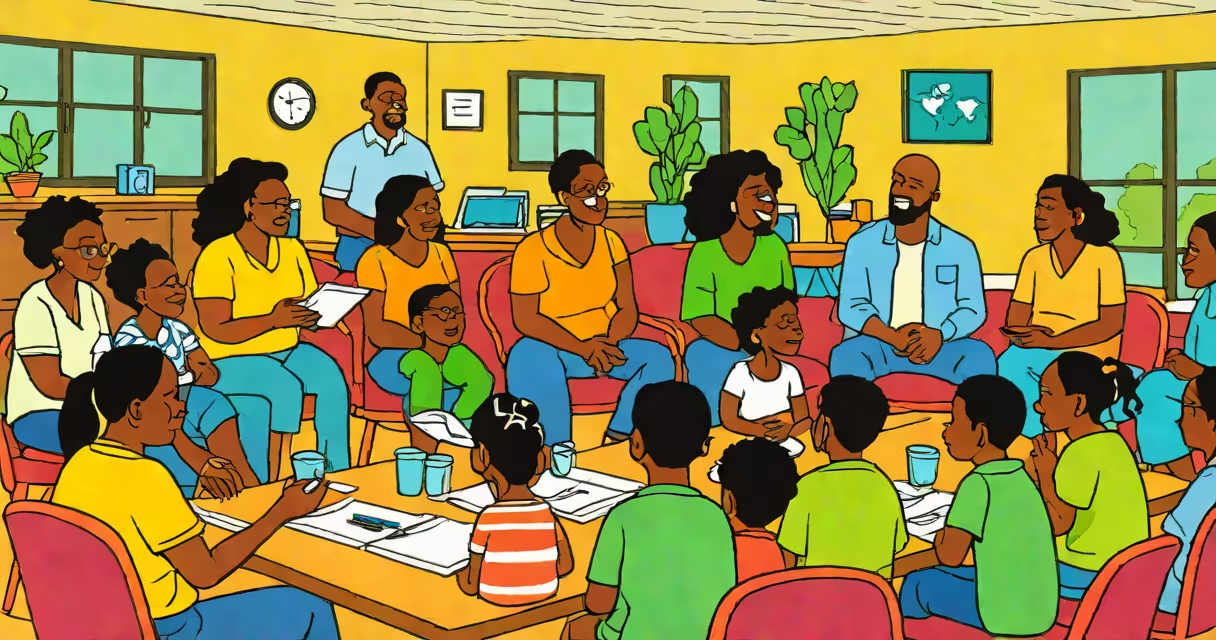
A family advocacy program is a coordinated effort that supports parents and caregivers in going through child welfare systems, ensuring their voices are heard during investigations and court proceedings. These programs provide education, emotional support, and direct representation to help families avoid separation and strengthen parenting capacity.
These initiatives operate within child protection frameworks, often funded through state or federal grants. They are designed to counterbalance the power imbalance between families and agencies by offering trained advocates who understand legal procedures, mental health considerations, and developmental needs. The goal is not to challenge investigations but to ensure families have accurate information and fair access to decision-making processes.
According to the U.S. Department of Health and Human Services, family advocacy programs reduce the likelihood of children being placed in out-of-home care by up to 30% when integrated early in the intervention process. A 2021 study published in Child Welfare found that families engaged with advocacy services were 2.4 times more likely to reunify within 12 months compared to those without support.
When a child protection agency receives a report of potential harm, it may initiate an investigation. During this time, a family advocacy program assigns a trained advocate-often a former caseworker, social worker, or parent with lived experience-to the family. This advocate acts as a liaison, helping the family understand the process, locate resources, and prepare for meetings with agency staff and court hearings.
Advocates do not make decisions for families. Instead, they clarify terminology, explain timelines, and assist in drafting statements or gathering documentation such as medical records, school reports, or housing verification. They may also accompany families to appointments or hearings, offering emotional stability and ensuring communication remains respectful and clear.
In practice, a mother reporting domestic violence in her home might be referred to a family advocacy program after a hotline call triggers a safety assessment. Her advocate helps her complete a safety plan, connects her with shelter services, and ensures her concerns about her children's well-being are documented and reviewed. Without this support, the family might be misclassified as high-risk due to incomplete or misunderstood information.
Family advocacy programs vary by region and funding model. The most common formats include:
| Type | Scope | Who delivers it | Example |
|---|---|---|---|
| Community-based | Local, neighborhood-focused | Nonprofits, faith groups | Chicago's Family Advocacy Network |
| State-funded | Regional coverage, standardized protocols | State departments of social services | California's Family Preservation Initiative |
| Parent-led | Peer-driven, lived-experience focus | Families with prior involvement in child welfare | Washington State's Parent Peer Support Program |
Some programs specialize in specific populations. For example, the National Resource Center on Family-Centered Practice offers training modules focused on advocating for LGBTQ+ youth in build care. Others prioritize trauma-informed approaches, recognizing that many families involved in child welfare have experienced historical or intergenerational trauma.
A key distinction often missed is that family advocacy is not the same as legal representation. While lawyers can represent families in court, advocates focus on education, coordination, and emotional resilience. One advocate I worked with in Detroit emphasized that "families don't need another person telling them what to do-they need someone who listens and helps them speak."
Many people assume family advocacy programs exist to protect abusive parents or delay child safety. This is incorrect. Programs are designed to prevent unnecessary removals by improving transparency and family readiness. When families receive timely support, agencies are more likely to approve safety plans that allow children to remain at home.
Another misconception is that advocacy is only useful during crises. In reality, proactive engagement-such as attending parenting classes or completing substance use treatment plans-can prevent investigations from escalating. A 2020 evaluation by the Children's Bureau found that families receiving advocacy services before a formal investigation were 45% less likely to have a child removed than those who received no support.
There's also confusion between family advocacy and case management. Case managers coordinate services and track progress. Advocates focus on voice, understanding, and equity. One family in Baltimore reported that while their case manager was overwhelmed with paperwork, their advocate helped them secure a stable apartment and explain their situation to a judge-leading to a successful reunification.
Consider the case of Maria, a single mother in Denver with two young children. After a neighbor reported concerns about unsupervised playtime, Child Protective Services initiated an investigation. Maria had no prior contact with the system and didn't know her rights. She was terrified and unable to communicate during interviews.
She was connected to a local family advocacy program. Within three days, her advocate met with her, explained the process, and helped her gather evidence: school attendance records, pediatrician notes, and character references from neighbors. The advocate also coached her on how to respond to questions without sounding defensive.
At the hearing, the advocate presented a summary of Maria's efforts to stabilize her home. The court approved a safety plan allowing the children to stay with her under supervision. Over the next six months, the advocate continued to check in, connect her with food assistance, and help her enroll in a parenting class. The case was closed without removal.
This outcome wasn't luck. It was the result of structured advocacy. Data from Colorado's Division of Child Welfare shows that 68% of families served by advocacy programs avoided out-of-home placement, compared to 42% of similar families without support.
Family advocacy programs are not a substitute for systemic reform-but they are a proven tool to close gaps in access, improve outcomes, and preserve family integrity. They function best when embedded early in the child protection process and paired with trauma-informed practices and community partnerships.
For families facing complex systems, understanding your rights and having someone walk through the steps with you makes a measurable difference. If you're going through child welfare, seeking support through a family-of-origin structure can clarify past experiences and inform current choices. The strength of a family isn't measured by perfection-it's measured by resilience, connection, and access to the right help at the right time.