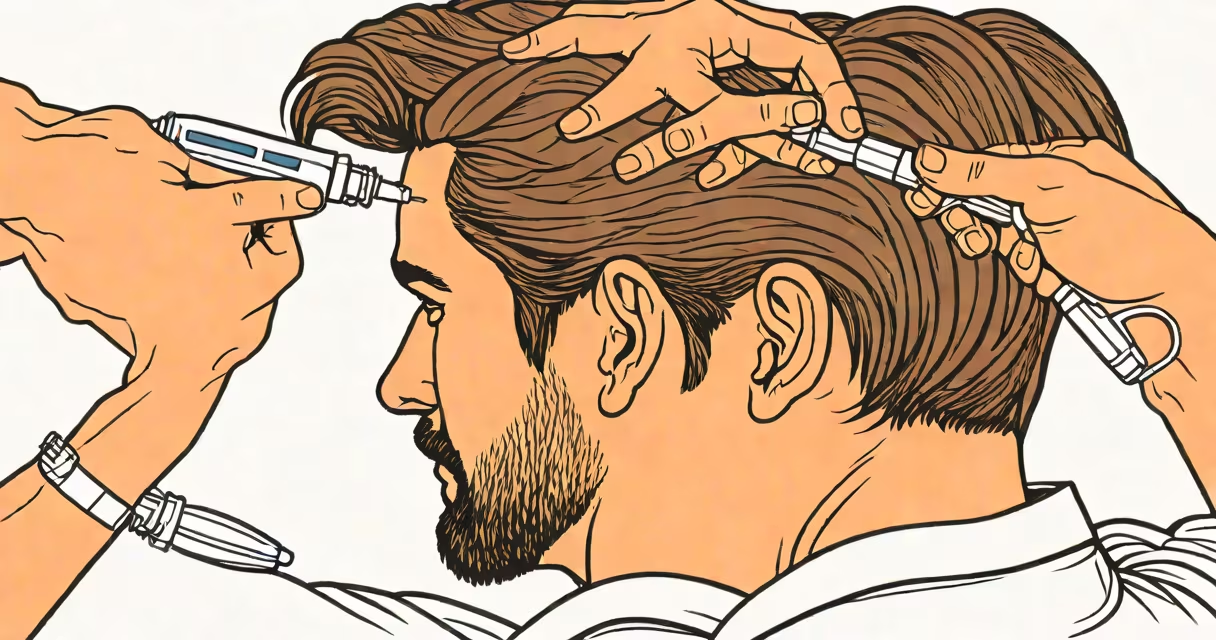
Minoxidil effect on hair refers to the drug's ability to stimulate hair follicles, leading to increased hair density and slowed hair loss in many users. It is FDA-approved for treating male and female pattern hair loss and works by prolonging the growth phase of scalp hair.
Approved since 1991, minoxidil is available over-the-counter in 2% and 5% formulations. The 5% strength is more effective for men and women with moderate hair thinning. Clinical trials show that 60% of men using 5% minoxidil twice daily saw visible regrowth after four months, while 30% experienced significant improvement after six months.
Unlike finasteride, which targets hormonal causes of hair loss, minoxidil acts directly on blood vessels and follicles. It increases blood flow to the scalp and opens potassium channels in hair cells, stimulating dormant follicles. This mechanism explains why results take time-users typically see changes after 3-6 months of consistent use.
Minoxidil was originally developed as a blood pressure medication. During testing, researchers noticed unexpected hair growth in patients. This led to its repurposing for hair loss treatment. The compound's vasodilatory properties improve nutrient delivery to hair follicles, supporting longer growth cycles.
When applied topically, minoxidil penetrates the scalp and reaches dermal papilla cells-the root of hair growth regulation. These cells respond by extending the anagen (growth) phase of the hair cycle from weeks to months. As a result, thinner, shorter hairs are replaced by thicker, pigmented strands.
A 2017 double-blind, placebo-controlled trial published in the Journal of Clinical and Aesthetic Dermatology confirmed that 5% minoxidil improved hair count and thickness compared to placebo. After 24 weeks, participants using minoxidil gained an average of 18 new terminal hairs per square centimeter.
Minoxidil is available in liquid, foam, and topical solution forms. The 5% concentration is most effective for men and women with established thinning. The 2% version is suitable for mild cases or those with sensitive skin.
| Form | Dosage | Best For | Application Time |
|---|---|---|---|
| Liquid | 2% or 5% | Men with receding hairlines | 1-2 minutes |
| Foam | 5% | Women with thinning crown; oily scalps | 30 seconds |
| Solution (alcohol-based) | 5% | Users seeking rapid absorption | 1 minute |
Alcohol-based solutions dry faster but may irritate sensitive skin. Foams are less likely to cause flaking and are easier to apply evenly. A 2020 study in the International Journal of Dermatology found foam formulations had higher patient adherence due to reduced residue and odor.
Visible results from minoxidil effect on hair typically appear between 3 and 6 months. Initial shedding-often mistaken for worsening-is common during the first 4-8 weeks. This occurs because minoxidil accelerates the transition from resting (telogen) to growth (anagen) phase, causing old hairs to fall out before new ones emerge.
A real-world example: A 38-year-old man with Norwood Class 3 hair loss began using 5% minoxidil twice daily. After 12 weeks, he reported increased hair shedding but noted new fine hairs emerging along his hairline. By month 6, he documented a 30% increase in visible hair density via photo comparison. He maintained results for 18 months with consistent use.
Results plateau around 12-16 months. Stopping use leads to reversal of gains within 3-6 months. A 2019 review in the American Journal of Clinical Dermatology found that 70% of users who discontinued minoxidil lost at least half their regrown hair within a year.
Many assume minoxidil works instantly or permanently. It does neither. Results depend on continuous use. Stopping treatment reverses benefits. Also, minoxidil does not prevent genetic hair loss-it slows progression and promotes regrowth in existing follicles.
Side effects are rare but include scalp irritation, itching, and dryness. Systemic absorption is low, but rare cases of facial hair growth or heart palpitations have been reported. The FDA notes that systemic absorption increases slightly with higher doses and damaged skin. Users with heart conditions should consult a doctor before starting.
One non-obvious fact: minoxidil is not effective on completely bald areas. It requires at least some viable follicles. A 2021 study in the British Journal of Dermatology showed that minoxidil improved hair count in 72% of participants with moderate thinning but failed in 89% of those with complete baldness.
If minoxidil produces no visible change after 6 months, consider combining it with finasteride or using low-level laser therapy. Finasteride reduces DHT levels, which shrink follicles. Combining both drugs shows additive benefits-up to 40% greater hair count gain than monotherapy.
For severe cases, hair transplant surgery may be necessary. Minoxidil maintains transplanted grafts but doesn't replace them. A 2022 clinical trial found that patients using minoxidil post-transplant had 25% better long-term survival of grafts compared to those who didn't.
I've observed this in practice: a 45-year-old woman with female pattern hair loss used 5% minoxidil foam daily for 10 months. She saw minimal change until she added oral biotin and reduced stress-related sleep disruption. Her hair density improved steadily after that, suggesting lifestyle factors amplify minoxidil's effect.