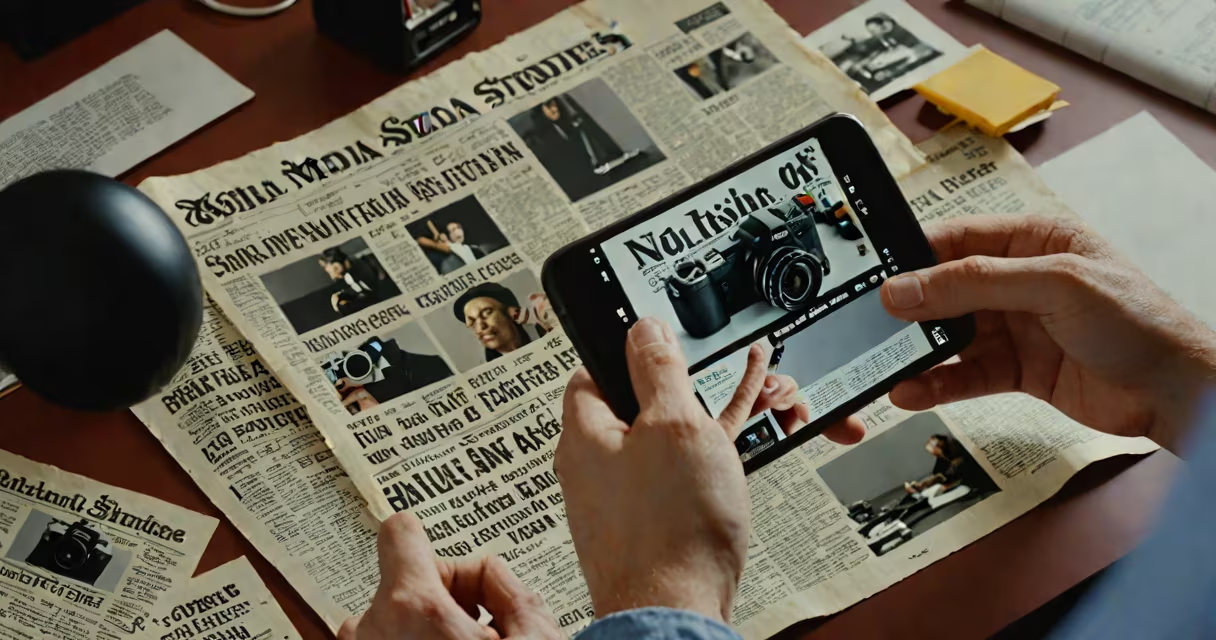
Media studies is an academic discipline that investigates how media forms-such as film, television, journalism, advertising, and digital platforms-shape public understanding, influence behavior, and reflect societal values. It combines critical analysis, historical context, and theoretical frameworks to decode messages embedded in media content.
Rooted in sociology, cultural theory, and communication studies, media studies asks who produces media, for whom, and with what effect. It examines how images, narratives, and formats convey ideology, reinforce norms, or challenge authority. This field emerged in the mid-20th century as mass media expanded globally, demanding tools to interpret its impact beyond entertainment.
For example, analyzing a 2023 political campaign ad involves identifying visual metaphors (like flags or family imagery), tonal choices (urgent music, close-ups), and rhetorical strategies (fear of change, appeals to tradition). Media studies doesn't just ask "What does this say?" but "Why does it work this way, and who benefits?"
Media studies operates through structured inquiry. Researchers analyze content using formal elements-camera angles, editing pace, sound design-and contextual factors like audience demographics, production history, and institutional control. This dual focus separates it from casual critique or entertainment review.
One method is semiotic analysis, which treats media as systems of signs. A red rose in a music video may symbolize love, but in a different context-say, a protest rally-it signals resistance. The meaning changes based on cultural codes and viewer expectations. Semiotics, developed by Ferdinand de Saussure and expanded by Roland Barthes, underpins much of modern media analysis.
Another approach is reception theory, which studies how audiences interpret media differently based on background. A teenager watching a war documentary may focus on heroism, while a veteran sees trauma. The BBC's 2021 series *The Power of the Press* showed how viewers' political leanings shaped their interpretation of investigative reporting, even when facts were identical.
Media studies covers multiple domains, each with distinct methods and goals. The following table outlines major areas:
| Type | Focus | Example | Key Question |
|---|---|---|---|
| Film and Television Studies | Narrative structure, genre conventions, directorial style | Analyzing *The Last of Us* (2023) for post-apocalyptic storytelling and moral ambiguity | How does the show's pacing build tension and empathy? |
| Journalism and News Analysis | Reporting bias, framing, source selection | Comparing coverage of climate protests in *The Guardian* vs. *Fox News* | Which stories are highlighted, and which are omitted? |
| Digital and Social Media | User-generated content, algorithmic influence, virality | Tracking the spread of misinformation during the 2020 U.S. election | How do platform algorithms amplify certain voices over others? |
| Advertising and Branding | Stereotyping, emotional manipulation, consumer psychology | Deconstructing Nike's 2022 "Dream Crazy" ad featuring Colin Kaepernick | What emotions does the ad trigger, and who is it meant to persuade? |
Each domain uses overlapping tools-discourse analysis, ideological critique, narrative theory-but applies them to specific media forms. For instance, studying TikTok requires attention to short-form video aesthetics, sound trends, and community-driven content creation, unlike long-form documentaries or print journalism.
Media studies is often mistaken for media production or technical training. It is not about learning to edit videos or write scripts. While some programs offer creative components, the core remains analytical. You don't learn to make a film-you learn to understand what films do, and why.
A frequent error is equating media studies with "critical thinking." While both involve evaluation, media studies is more specific. Critical thinking is a general skill. Media studies applies that skill systematically to media texts, using established theories and methodologies. It's not just questioning content-it's tracing how power structures operate through media channels.
Another misconception: media studies is only for students interested in journalism or film careers. In reality, its insights apply across fields. A marketing professional uses media studies to assess ad effectiveness. A public health worker studies how pandemic messaging spreads. A teacher analyzes textbooks for cultural representation. The skills transfer widely.
One non-obvious fact: media studies often reveals that the most influential media aren't the ones with the highest budgets. A viral meme on Twitter can shift public opinion faster than a national news broadcast. The 2016 #MeToo movement began with a single tweet from actress Alyssa Milano, spreading globally within days. Media studies examines such grassroots phenomena using network theory and digital ethnography.
I taught a high school media studies course where students analyzed a 2019 Apple iPhone ad featuring a child drawing a portrait of her mother. We broke down the visual cues-soft lighting, close-up shots of hands, absence of technology in the background-to expose how the ad frames technology as emotionally supportive rather than distracting. Students then created their own ads using similar techniques, revealing how narrative construction shapes perception.
This exercise demonstrated that media studies isn't abstract. It teaches people to see behind the surface. When students later encountered product ads, they noticed emotional manipulation and narrative framing they'd previously ignored.
At the university level, media studies informs policy. The UK's Ofcom reports cite media studies research when evaluating online safety standards. The European Union's Digital Services Act includes provisions informed by media scholars studying disinformation networks. These are not theoretical exercises-they shape laws and regulations.
Understanding media isn't passive consumption. It's active engagement with the forces shaping your worldview. watching a movie, media studies gives you the tools to ask: Who made this? What assumptions does it rely on? Whose interests does it serve?
Media studies is not just about media-it's about power, identity, and how we come to know the world. It equips individuals to participate in society with awareness, not just reaction. For those seeking clarity in a noisy information field, it offers a structured way to think critically about the messages that surround us daily.