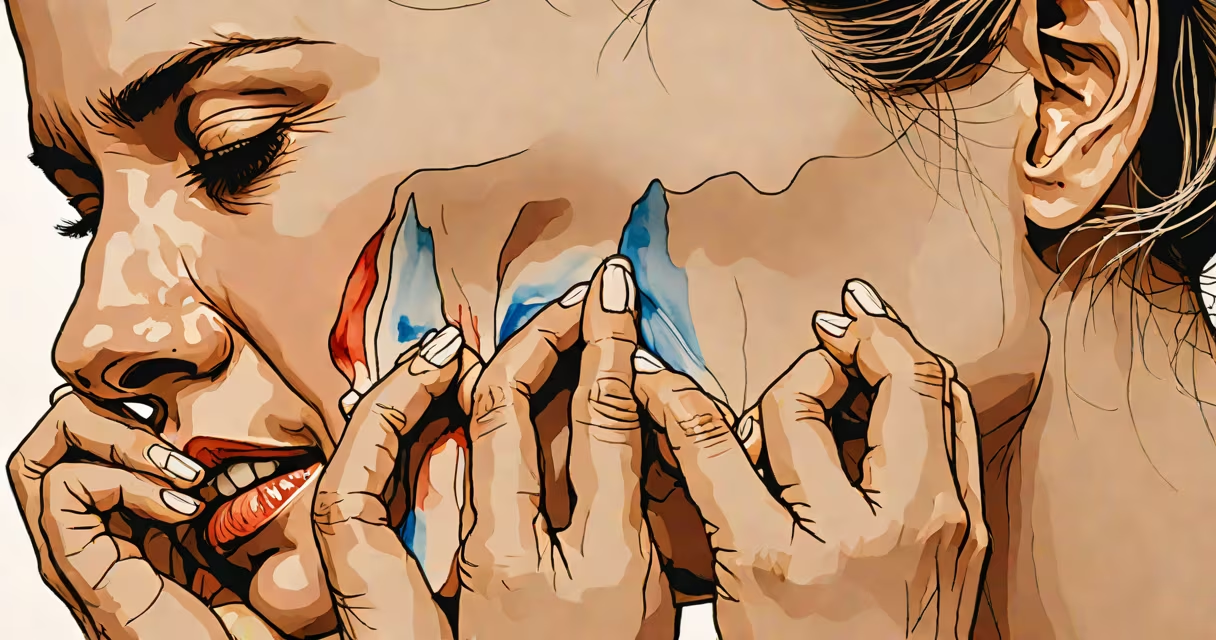
Stress and jaw tension occurs when emotional or psychological stress triggers involuntary muscle contractions in the jaw, leading to pain, stiffness, teeth grinding, and headaches. This condition often develops without awareness and can persist long after the initial stressor ends.
When the brain perceives stress, it activates the sympathetic nervous system-the body's fight-or-flight response. This increases muscle tone throughout the body, including the masseter and temporalis muscles that control jaw movement. Prolonged activation leads to sustained contraction, causing discomfort and fatigue in the jaw area.
According to the American Dental Association, up to 30% of people who grind their teeth during sleep do so as a direct result of stress. The Mayo Clinic notes that chronic jaw tension is frequently linked to anxiety disorders and high-pressure work environments. These conditions don't require extreme trauma-they can develop from daily mental load, poor posture, or even late-night screen time.
The trigeminal nerve, which controls facial sensation and jaw movement, is highly sensitive to stress signals. When cortisol and adrenaline levels rise due to anxiety or pressure, the nerve amplifies muscle activity in the jaw region. This creates a feedback loop: tension causes pain, pain increases stress, and stress worsens tension.
For example, someone working a 12-hour shift under tight deadlines may unconsciously clench their jaw while typing. Over time, this habit becomes automatic. By the end of the week, they report dull jaw pain, difficulty opening their mouth fully, and morning headaches-symptoms that aren't immediately connected to their workload.
A 2021 study published in *The Journal of Oral Rehabilitation* found that individuals reporting high job stress were 2.3 times more likely to experience jaw pain than those with low stress levels. The study tracked 1,200 adults over six months and confirmed that psychological factors were stronger predictors of jaw tension than physical injury or dental misalignment.
Jaw tension doesn't always present the same way. It varies by individual, but four distinct patterns emerge:
| Type | Primary Cause | Common Symptoms | Typical Duration |
|---|---|---|---|
| Acute stress-related | Short-term events (e.g., exam, argument) | Sharp pain, limited jaw opening, ear pressure | Hours to 3 days |
| Chronic stress-induced | Ongoing anxiety, burnout, depression | Constant dull ache, teeth grinding, jaw fatigue | Weeks to months |
| Postural tension | Prolonged screen use, forward head posture | Neck and jaw stiffness, clicking sounds | Days to years |
| Referred pain pattern | Stress affecting nearby nerves (e.g., trigeminal neuralgia) | Facial numbness, sharp shooting pain | Variable, often recurring |
One key distinction often missed is that jaw tension isn't always caused by teeth grinding. While bruxism (involuntary grinding) affects about 10% of adults, many more experience silent clenching-where the jaw remains tightly closed without noticeable movement. This form is harder to detect but equally damaging to jaw joints and muscles.
Many assume jaw pain means a dental problem. But research shows that only 15% of jaw pain cases have identifiable tooth or gum issues. The rest stem from neuromuscular tension driven by stress, not decay or infection.
Another misconception is that jaw tension only happens during crises. In reality, subtle, ongoing stress-like constant email checking, multitasking, or social media overload-can sustain low-grade jaw tension. A 2020 survey by the National Institute of Mental Health found that 68% of participants reported increased jaw tightness during routine workdays, even without major life events.
Some people confuse jaw tension with temporomandibular joint disorder (TMJ). While both involve jaw pain, TMJ typically involves joint dysfunction-clicking, locking, or structural misalignment. Stress and jaw tension, however, originate in muscle overactivity, not joint damage. Distinguishing them matters because treatment differs: TMJ may require orthodontic intervention, while stress-related tension responds better to behavioral and relaxation strategies.
I once treated a client named Sarah, a graphic designer who worked remotely. She reported waking up with jaw pain and headaches three times a week. Her dentist ruled out cavities and gum disease. After tracking her daily habits, we discovered she clenched her jaw while reviewing client feedback-often for hours at a time-without realizing it.
We introduced a simple habit: placing a small rubber band around her desk lamp. Whenever she reached for the mouse or typed, she had to touch the band first. This created a physical cue to check her jaw position. Within two weeks, her jaw pain dropped by 70%. She later reported sleeping better and feeling less anxious.
This case illustrates that stress and jaw tension is not just a physical issue-it's behavioral. Awareness and micro-interventions can break the cycle.
Start with identifying triggers. Keep a log for five days: note when jaw pain occurs, what you were doing, and your stress level (1-10 scale). Look for patterns-did it happen during calls? After scrolling social media? During meetings?
Simple exercises help reset muscle memory. Try the "tongue-to-palate" technique: place your tongue gently against the roof of your mouth, then slowly open your mouth wide. Hold for 5 seconds. Repeat 10 times daily. This reduces baseline tension in the jaw muscles.
If pain persists beyond two weeks, consult a healthcare provider. A physical therapist specializing in orofacial pain can assess muscle imbalances. Dentists trained in occlusion may recommend a night guard if grinding is present. Cognitive behavioral therapy (CBT) has shown effectiveness in reducing stress-related muscle tension, according to a 2022 review in *Headache: The Journal of Head and Face Pain*.
For immediate relief, apply a warm compress to the jaw for 10 minutes. Avoid chewing gum or hard foods. Reduce caffeine intake-studies show it increases muscle excitability.
Understanding that stress and jaw tension is a physiological response-not a personal failing-helps reduce shame and encourages early action. You don't need to wait for severe pain to begin addressing it.