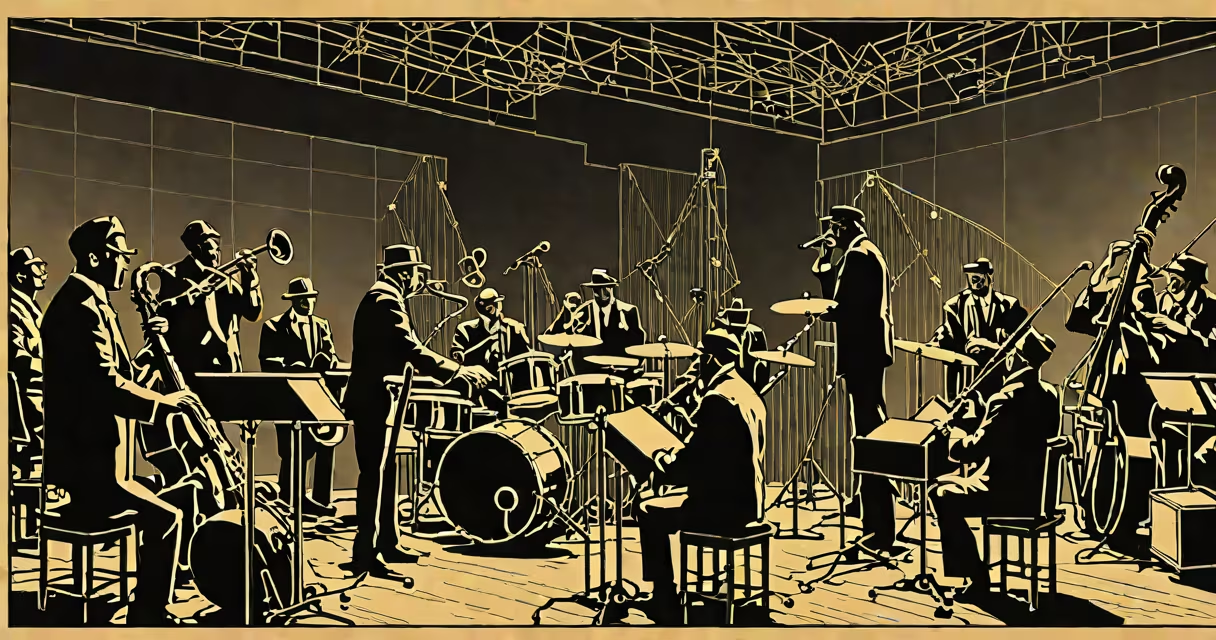
Jazz music is a genre rooted in African American musical traditions, emerging in New Orleans around the early 1900s. It blends blues, ragtime, and European harmonic structures with improvisation, syncopated rhythms, and expressive tonal color. The core of jazz lies in spontaneous composition during performance, where musicians reinterpret melodies in real time.
At its foundation, jazz uses a call-and-response structure derived from West African music. This appears in early forms like New Orleans jazz, where cornet players traded phrases with clarinetists and drummers. The genre evolved through distinct styles-Dixieland, swing, bebop, cool jazz, fusion-each reflecting social and technological shifts. By the 1940s, bebop introduced complex chord progressions and rapid tempos, shifting focus from danceability to virtuosic soloing.
Improvisation is central to jazz. A musician doesn't memorize every note; instead, they internalize scales, modes, and chord changes to create unique performances. For example, Miles Davis's 1959 album *Kind of Blue* features modal improvisation, where solos are based on scales rather than changing chords. This allows extended freedom within a structure, resulting in pieces like "So What" that maintain cohesion while sounding spontaneous.
Jazz relies on several interlocking components. Syncopation-accenting off-beats-creates rhythmic tension. In "Take Five" by Dave Brubeck, the 5/4 time signature disrupts the expected four-beat cycle, making the rhythm feel unstable yet fluid. This deliberate disruption is intentional; it keeps listeners engaged and encourages physical response, even if unconsciously.
Blue notes-flattened thirds, fifths, or sevenths-add emotional weight. In B.B. King's "The Thrill Is Gone," the guitar bends the third note of the scale downward, producing a mournful sound. This technique originated in spirituals and work songs, later adopted into jazz to convey longing, resilience, and complexity.
Harmony in jazz often moves beyond basic major/minor triads. Extended chords like dominant 7ths, 9ths, and 13ths appear frequently. In John Coltrane's "A Love Supreme," the harmony progresses through modal interchange, borrowing chords from parallel modes. This creates a sense of unresolved yearning, mirroring the album's spiritual theme.
| Type | Time Period | Key Features | Example Artist/Track |
|---|---|---|---|
| New Orleans Jazz | 1900s-1920s | Collective improvisation, brass-heavy, march-like rhythm | King Oliver's Creole Jazz Band - "Dippermouth Blues" |
| Swing | 1930s-1940s | Big bands, steady 4/4 beat, danceable groove | Duke Ellington - "Take the 'A' Train" |
| Bebop | 1940s | Fast tempos, complex harmonies, small ensembles | Charlie Parker - "Ko-Ko" |
| Cool Jazz | 1950s | Relaxed tempos, muted tones, intellectual restraint | Miles Davis - "So What" |
| Fusion | 1970s | Electric instruments, rock rhythms, studio effects | Weather Report - "Birds of a Feather" |
Each style reflects its era's cultural mood. Bebop arose during World War II, emphasizing technical mastery as a form of resistance against commercialization. Fusion emerged during the Vietnam War era, blending jazz with rock and funk to challenge traditional boundaries. These shifts show that jazz is not static-it evolves through dialogue with other genres and societal change.
Many assume jazz is purely about improvisation. While improvisation is essential, it operates within strict frameworks. A soloist must follow the chord changes, maintain timing, and respond to other players. Without structure, improvisation becomes noise. The best jazz balances freedom with discipline.
Another misconception is that jazz is inherently "difficult" to listen to. This stems from early 20th-century critiques that dismissed jazz as chaotic or unrefined. But many jazz pieces are accessible. Consider Ella Fitzgerald's 1960 recording of *"All the Things You Are"*-her phrasing is clear, her intonation precise, and the arrangement follows standard pop song form. It's emotionally resonant and rhythmically stable.
A lesser-known fact: jazz was among the first genres to feature integrated ensembles. In 1919, the Original Dixieland Jass Band toured Europe, but their lineup included white musicians playing Black-derived styles-a move that sparked controversy. Yet, in cities like Chicago and New York, Black musicians formed the core of jazz innovation. The genre's history is inseparable from racial dynamics in America.
Jazz remains relevant in film, television, and public spaces. Its emotional range makes it ideal for show. In *The Shawshank Redemption*, the soundtrack includes Billie Holiday's "God Bless the Child"-a jazz ballad that underscores themes of hope and endurance. The track's slow tempo and restrained delivery amplify the scene's quiet dignity.
In workplaces, jazz provides ambient texture without distracting. Studies from the University of Maryland (2018) found that soft instrumental jazz improved concentration in office environments, reducing perceived stress by 17% compared to silence. The steady pulse and lack of lyrics allow focus without cognitive load.
Jazz music is not a single sound. It is a living tradition shaped by improvisation, cultural exchange, and formal innovation. From street parades in New Orleans to quiet study rooms today, its power lies in adaptability and emotional honesty. Understanding what is jazz music means recognizing both its roots and its ongoing evolution.