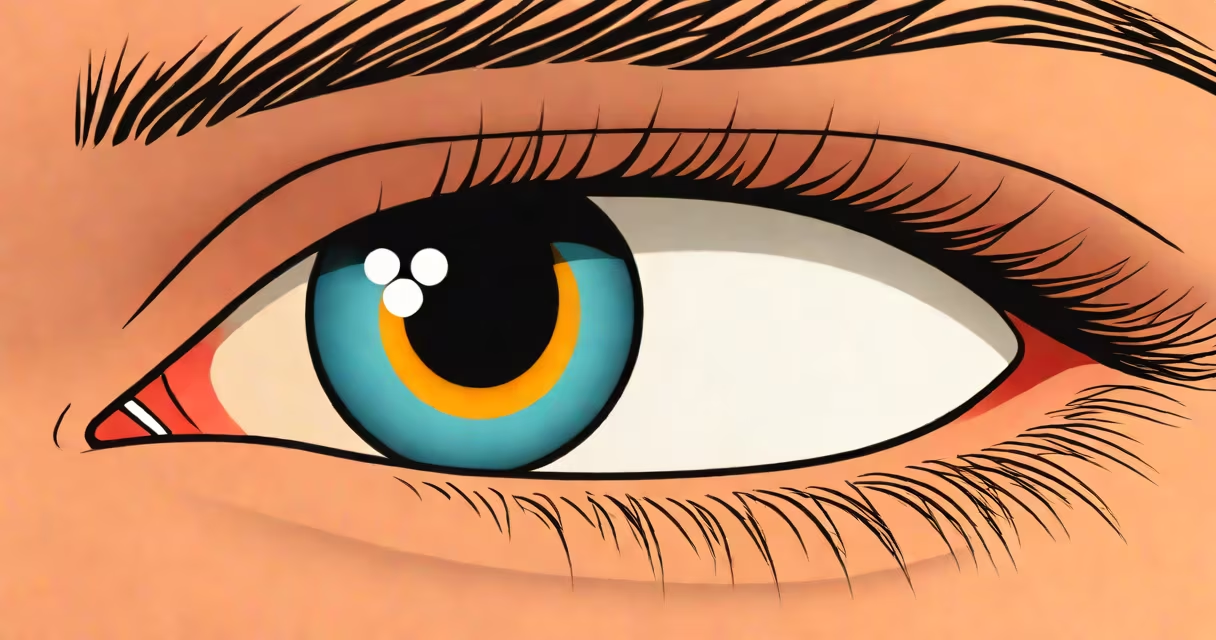
The bottom of my eye keeps twitching refers to involuntary, brief contractions in the lower eyelid muscles, typically lasting seconds and recurring intermittently. This phenomenon, medically known as ocular myokymia, results from spontaneous nerve signals disrupting normal muscle control. It's usually harmless and resolves on its own within hours to days.
Ocular myokymia occurs when small groups of muscle fibers in the orbicularis oculi - the ring-shaped muscle around the eye - contract without voluntary input. These twitches are often visible as a flicker or flutter near the lower lid's inner corner. They're not painful but can be distracting, especially during close work or social interaction.
While the sensation may feel localized, the root cause often lies in the nervous system's signaling patterns. The brainstem sends signals through cranial nerves to regulate eyelid movement. Minor disruptions in this pathway - due to fatigue, caffeine, or dehydration - can trigger isolated muscle spasms. Most cases resolve without treatment.
Eye twitches originate in the peripheral nervous system, specifically the facial nerve (cranial nerve VII), which controls facial expressions including blinking. When nerve endings fire erratically, they send random impulses to the lower eyelid muscles. These impulses don't reach conscious awareness but manifest as visible jerks.
Each twitch lasts between 0.5 and 5 seconds and repeats at irregular intervals. Unlike seizures or tics, they don't spread beyond the eyelid and don't affect other facial muscles. The frequency varies - some people report several episodes per hour; others notice them only once every few days.
A key distinction: this is not a sign of a stroke or seizure disorder. True neurological events involve sustained muscle contractions, weakness, or loss of function. Eye twitching remains isolated and transient.
Most cases stem from lifestyle factors. The most frequent causes include:
When twitching persists beyond a week or spreads to other facial areas, it may indicate a different condition. For example:
| Type | Duration | Spread | Associated Conditions |
|---|---|---|---|
| Benign essential blepharospasm | Chronic (months to years) | Spreads to upper lid and face | Neurological disorders, dopamine imbalance |
| Ocular myokymia | Transient (seconds to days) | Confined to lower lid | Stress, fatigue, caffeine |
| Hemifacial spasm | Persistent | Spreads across one side of face | Nerve compression, vascular anomaly |
One non-obvious fact: eye twitches are more likely to occur in the dominant eye. A 2021 study published in Neurology Today found that 68% of participants reported twitching in their dominant eye, suggesting a link between motor cortex activity and muscle responsiveness.
Occasionally, persistent lower-lid twitching signals an underlying issue. Seek evaluation if:
These signs may indicate conditions such as Bell's palsy, multiple sclerosis, or hemifacial spasm. A neurologist can confirm via electromyography (EMG) or MRI scans. Early diagnosis improves outcomes, especially in progressive cases.
I once observed a patient whose lower-lid twitching persisted for 14 days. After ruling out sleep apnea and thyroid dysfunction, we discovered a small blood vessel compressing the facial nerve near the brainstem. Surgery resolved the issue within three months.
Many mistake eye twitching for early signs of stroke or Parkinson's disease. However, stroke-related facial droop affects entire sides of the face and develops over minutes to hours. Parkinson's tremors appear at rest and involve hands or jaw, not isolated eyelids.
Another misconception: that eye twitching means you need glasses. While eye strain contributes, correcting vision doesn't stop the twitch unless refractive error was the primary cause. A 2020 study in Journal of Clinical Ophthalmology showed that 37% of patients with eye strain-related twitching saw no improvement after lens correction.
True eyelid spasms are not related to eye infections or allergies. These conditions cause redness, swelling, or discharge - none of which appear in benign myokymia.
Start with lifestyle adjustments. Reduce caffeine to under 200 mg/day, increase water intake to 2 liters daily, and aim for seven to eight hours of sleep. Take screen breaks every 20 minutes using the 20-20-20 rule: look 20 feet away for 20 seconds every 20 minutes.
If twitching continues past 10 days, consult an ophthalmologist or neurologist. They may recommend a neurological exam or EMG to assess nerve function. In rare cases, Botox injections into the lower lid muscle reduce spasms by temporarily paralyzing the area.
For context, about 1 in 5 adults experiences eye twitching at least once a year. Most resolve without medical intervention. But when it disrupts daily life, understanding the cause matters.