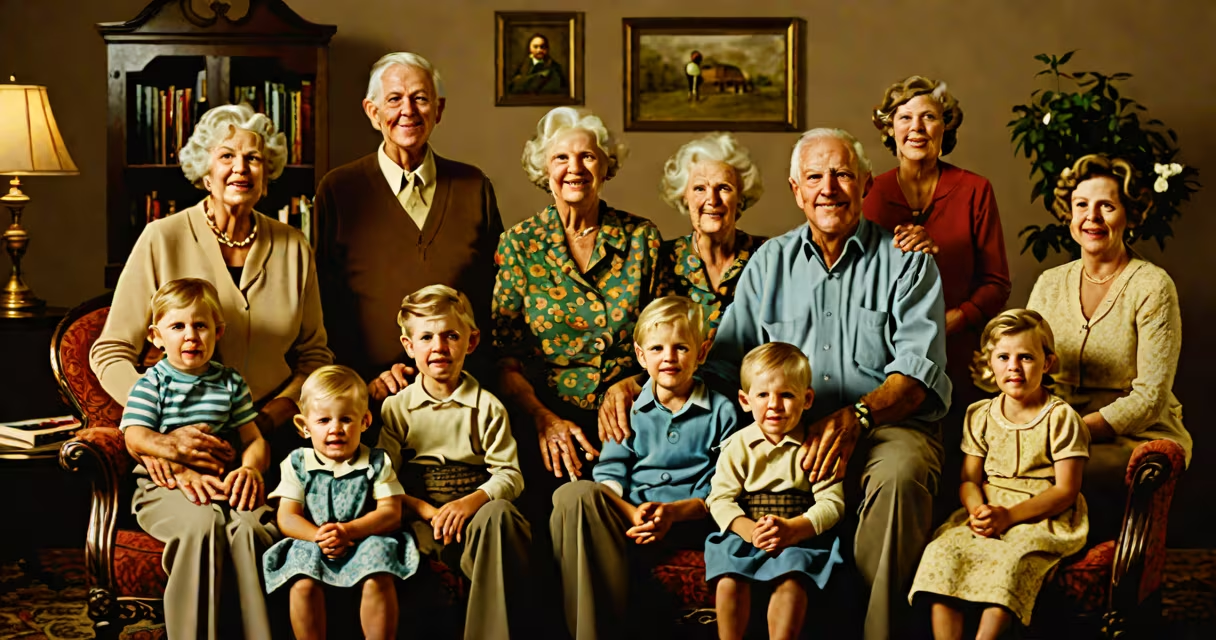
The family of origin refers to the household and social environment in which a person was raised during childhood, including biological parents, siblings, extended relatives, and cultural or religious influences. It is the foundational unit that shapes early emotional development, belief systems, and interpersonal patterns.
This concept is central to psychology and therapy because it identifies the earliest source of relational models. A child learns how to express emotions, handle conflict, and form attachments based on interactions within their family of origin. These learned behaviors often persist into adulthood unless consciously examined and adjusted.
Research from the American Psychological Association confirms that early family environments impact mental health outcomes. For example, children raised in emotionally supportive homes show higher resilience to stress later in life compared to those in high-conflict or neglectful settings.
From infancy onward, individuals absorb cues about safety, love, and self-worth through daily interactions. A child who consistently receives attention and validation develops secure attachment styles. One exposed to criticism, unpredictability, or emotional withdrawal may adopt anxious or avoidant patterns.
These internalized scripts influence adult choices-how someone picks partners, manages stress, or handles authority. For instance, a person whose father was emotionally distant may unconsciously seek partners who are similarly detached, repeating the changing they experienced as a child.
Therapists often explore family of origin narratives to uncover unconscious triggers. A client struggling with trust issues might trace the root to a mother who frequently changed her mind about plans, creating instability. Recognizing this pattern allows for intentional change rather than automatic reaction.
Families of origin vary widely in structure and function. The following table outlines common configurations and their potential psychological impacts:
| Type | Key Features | Potential Outcomes |
|---|---|---|
| Authoritarian | High control, low warmth, rigid rules | Perfectionism, fear of failure, difficulty expressing emotion |
| Permissive | High warmth, low structure, few boundaries | Impulsivity, poor self-regulation, difficulty handling authority |
| Enmeshed | Blurred personal boundaries, over-involvement | Difficulty setting limits, people-pleasing, loss of individual identity |
| Disengaged | Emotional distance, minimal communication | Isolation, difficulty forming close bonds, emotional numbness |
Not all families fit neatly into categories. Some combine traits-like a parent who is warm but inconsistent in discipline. The cumulative effect matters more than isolated incidents. A single act of kindness doesn't override years of emotional neglect.
One study published in the Journal of Family Psychology found that individuals from disengaged families were twice as likely to report loneliness in adulthood compared to those from moderately involved households.
People often confuse "family of origin" with "current family." The former refers to the home you grew up in, regardless of whether it still exists or whether you're legally adopted. A child raised by grandparents in a rural town has a family of origin even if their biological parents were absent.
Another misconception is that a positive family of origin guarantees emotional health. While supportive upbringing reduces risk, trauma can still occur-even in loving homes. A child may grow up in a stable, financially secure household yet suffer abuse masked as discipline.
There's also a myth that discussing your family of origin means blaming parents. That's not the goal. The purpose is not to assign guilt but to understand how past experiences shaped current behavior. This insight enables growth, not recrimination.
Consider Sarah, a 34-year-old woman who avoids commitment in romantic relationships. She feels drawn to partners who are emotionally unavailable, then becomes frustrated when they don't respond to her needs.
During therapy, she recalls growing up in a household where both parents were emotionally withdrawn. Her mother was physically present but rarely engaged in conversation. Her father left the house early and returned late, always tired. Meals were silent. Emotional expression was discouraged.
At age 10, Sarah learned that showing sadness led to being told to "stop crying" or "be strong." Over time, she stopped sharing feelings altogether. As an adult, she unconsciously seeks partners who mirror that emotional distance-because it feels familiar, even if painful.
Recognizing this pattern allowed Sarah to challenge it. She began choosing partners who communicated openly and practiced setting boundaries. Therapy helped her rewire old neural pathways tied to abandonment fears.
This case illustrates how family of origin influences adult behavior-not through fate, but through learned responses. Awareness leads to choice.
Understanding your family of origin is not about dwelling on the past. It's about identifying inherited patterns so you can decide whether to continue them or change them.
For example, someone raised in a household where anger was met with silence may struggle to assert themselves in work meetings. They might freeze or speak too softly, fearing backlash. Once they recognize this response as rooted in childhood experience, they can practice new ways of speaking up.
I've seen clients make lasting shifts after mapping their family of origin. One man realized his tendency to overwork stemmed from watching his father constantly strive to prove worth through productivity. He had never questioned that link until he explored it in therapy. Now he sets work-life boundaries intentionally.
"Family of origin" is sometimes mistaken for "chosen family," though they differ. Chosen family refers to adults who create intimate bonds outside bloodlines-friends, partners, or community members. While chosen family provides support, it doesn't replace the foundational role of the original family.
A key distinction: family of origin is about relational learning. It's not about biology, race, or religion-but about the emotional climate and interaction styles present during formative years.
Knowing your family of origin isn't about judgment. It's about clarity. It helps explain why you react the way you do in certain situations-why you feel anxious in crowds, why you avoid conflict, or why you idealize certain types of people.
Every adult carries echoes of their upbringing. The goal isn't to erase them, but to recognize them. That recognition creates space for change, healing, and healthier relationships.
Understanding your family of origin is not a luxury-it's a necessary step toward self-knowledge. It's the foundation for building a life that reflects your values, not just your past.