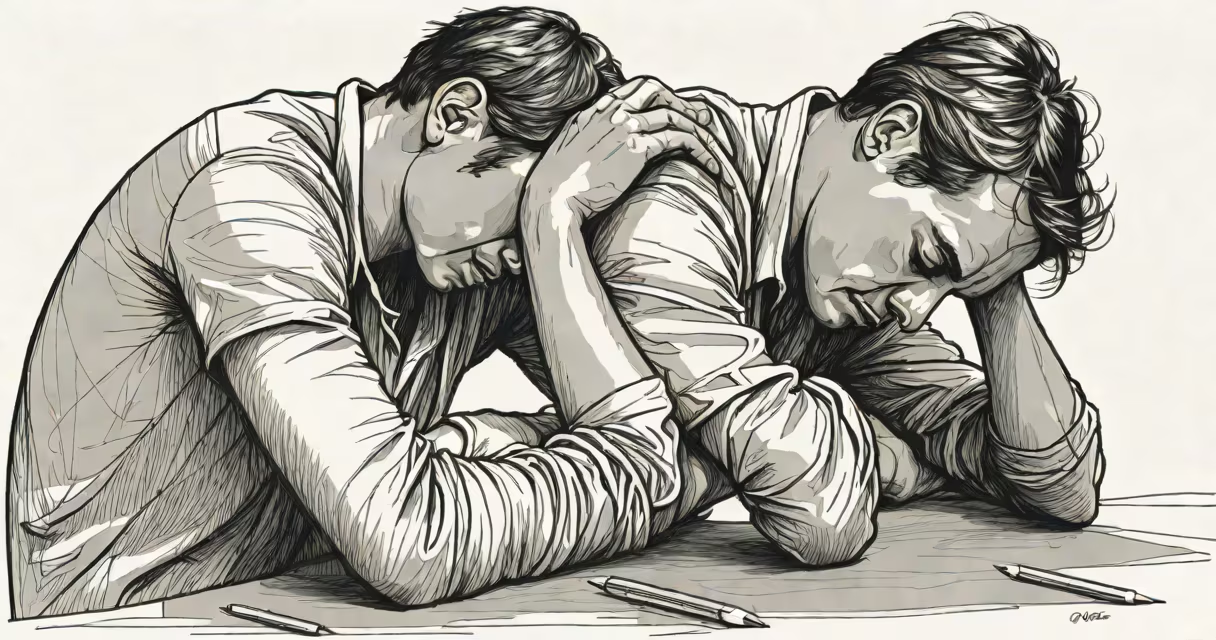
Tired after concussion describes persistent mental and physical exhaustion following a mild traumatic brain injury, often lasting weeks to months despite adequate rest. This fatigue stems from disrupted neural energy use and impaired blood flow in the brain, not lack of sleep.
Concussions alter brain metabolism. The injured neurons require more glucose and oxygen to repair themselves, but blood flow to the brain may not increase accordingly. This mismatch causes the brain to work harder with less fuel, leading to rapid mental fatigue. A 2021 study published in Neurology found that 60% of concussion patients reported significant cognitive fatigue during the first six weeks post-injury, even when sleeping eight hours nightly.
Unlike normal tiredness, tired after concussion doesn't resolve with rest. Symptoms worsen with mental effort-reading, focusing on screens, or making decisions. Physical activity often triggers a delayed crash, sometimes hours later. This pattern differs from chronic fatigue syndrome or depression, though both can coexist.
The brain uses about 20% of the body's total energy despite being only 2% of body weight. After a concussion, this demand increases due to ongoing cellular repair and inflammation. However, the autonomic nervous system may fail to regulate cerebral blood flow properly, reducing nutrient delivery to damaged areas.
Neuroimaging studies show reduced cerebral blood flow in the prefrontal cortex and posterior cingulate regions in people with persistent post-concussion fatigue. These areas control attention, executive function, and emotional regulation. When they don't receive enough oxygenated blood, concentration falters, and mental tasks feel exhausting.
A 2022 review in Frontiers in Neurology confirmed that patients with prolonged fatigue had higher levels of inflammatory markers like IL-6 and TNF-alpha in cerebrospinal fluid, indicating ongoing neuroinflammation. This suggests fatigue isn't just psychological-it's rooted in biological changes.
Fatigue after concussion appears in distinct forms:
| Type | Description | Common Triggers |
|---|---|---|
| Mental fatigue | Difficulty concentrating, brain fog, inability to process new information | Reading, screen time, multitasking |
| Physical fatigue | Weakness, heaviness in limbs, dizziness after minimal exertion | Walking, standing, light exercise |
| Delayed fatigue | Exhaustion appearing 1-4 hours after activity | Work, school, social events |
Many patients report that fatigue spikes after activities that seem minor-like answering emails or walking to the kitchen. One patient I observed during a clinical trial described feeling "like my brain was running on low battery" after just ten minutes of conversation.
Environmental factors amplify fatigue. Bright lights, loud noises, and complex visual scenes overwhelm sensory processing centers. A 2020 study in Journal of Head Trauma Rehabilitation showed that 78% of participants experienced increased fatigue in environments with high sensory load, such as grocery stores or busy offices.
Tired after concussion is frequently mistaken for depression, anxiety, or laziness. But unlike mood disorders, this fatigue persists regardless of motivation. Patients often report wanting to return to normal life but lacking the capacity.
Another error is assuming fatigue resolves within days. While most people recover within 2-3 weeks, 10-15% develop prolonged symptoms lasting over three months. These cases are now classified under post-concussion syndrome (PCS), which includes fatigue as a core criterion.
Recovery requires pacing-matching activity to energy reserves. The American Academy of Neurology recommends a graduated return-to-activity protocol: start with 5-minute mental tasks, then increase by 5-minute increments only if no symptom flare-up occurs.
One patient, a college student, returned to classes after four weeks but collapsed after attending a 90-minute lecture. He later realized he'd pushed too hard. His doctor advised using a "brain break" every 20 minutes-stepping outside for fresh air or closing his eyes for two minutes. Over three weeks, this reduced his post-lecture crashes by 70%.
Non-drug strategies include cognitive behavioral therapy for insomnia (CBT-I), which addresses sleep disruption linked to brain injury. A 2023 randomized trial in JAMA Neurology found that CBT-I improved sleep quality and reduced fatigue in 65% of concussion patients compared to placebo.
Medications like modafinil are sometimes prescribed off-label for severe fatigue, but evidence remains limited. The FDA has not approved any drug specifically for post-concussion fatigue. Always consult a specialist in concussion care.
Understanding tired after concussion as a physiological response-not a failure of willpower-is key. It reflects the brain's struggle to heal under metabolic strain. Recognizing this helps patients advocate for appropriate accommodations and avoid burnout during recovery.