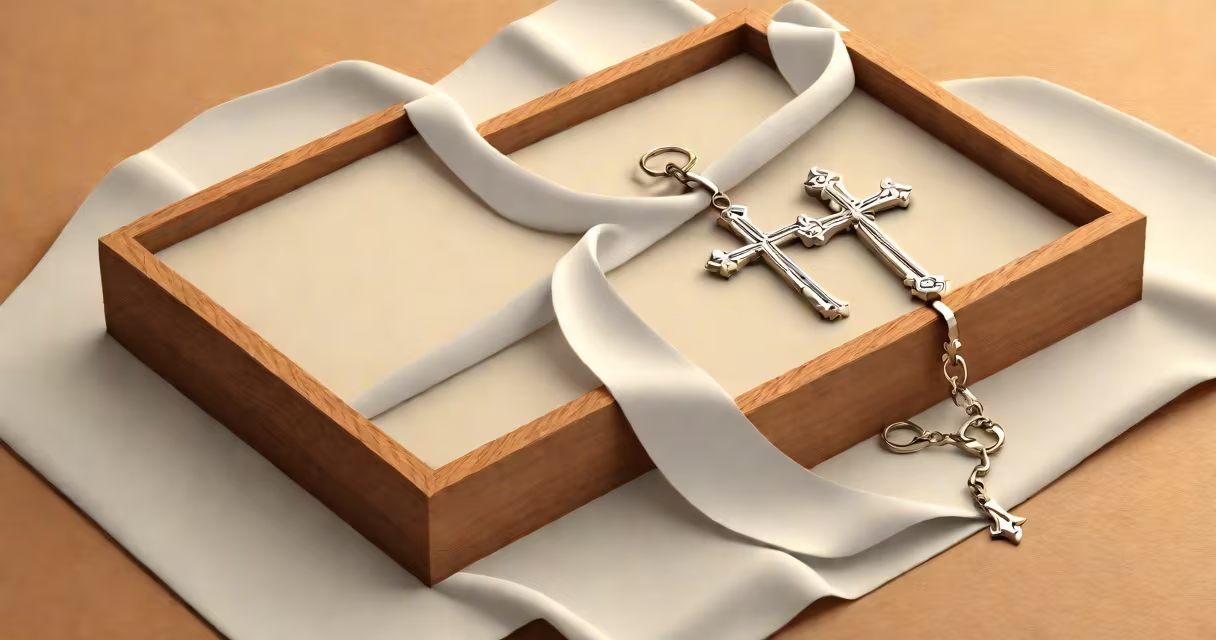
A baptism gift is a meaningful token presented to a child or family during a Christian ceremony marking the beginning of spiritual life. It typically includes a religious item or keepsake symbolizing faith, protection, and new beginnings. The most common gifts are Bibles, crosses, prayer books, or personalized items such as engraved jewelry or photo frames.
Baptism is a rite of initiation in many Christian denominations, including Catholic, Protestant, and Orthodox traditions. It signifies cleansing from original sin, acceptance into the community of believers, and entry into eternal life. The gift given reflects this significance-it's not a celebration of birth alone, but of a sacred commitment. A well-chosen gift acknowledges both the spiritual weight and personal joy of the occasion.
Gifts should reflect reverence, not extravagance. The focus is on symbolism, not price. A $20 engraved silver cross may carry more emotional resonance than a $200 toy. According to the United States Conference of Catholic Bishops, "The sacrament is not about the gifts, but the grace they represent." This principle guides thoughtful giving.
The purpose of a baptism gift is to mark the moment spiritually and emotionally. It serves as a physical reminder of the promises made during the ceremony-by parents, godparents, and the church. These gifts often become heirlooms passed down through generations.
They're usually presented during or immediately after the service. In some traditions, godparents bring the gift to the church and hand it to the parents. In others, guests place gifts in a basket near the altar or deliver them afterward. The act of giving is as important as the item itself-intentionality matters.
For example, a Catholic family in Chicago received a hand-stitched linen cloth with a woven Latin prayer ("Natus est in Bethlehem") during their daughter's baptism. The priest had blessed it before the service. Twenty years later, the cloth still hangs in their home, folded neatly beside her first communion dress. The gift wasn't expensive, but it was deeply symbolic.
Gifts fall into four broad categories based on function and symbolism:
| Type | Examples | Symbolism | Best For |
|---|---|---|---|
| Religious Texts | Child-sized Bible, illustrated Gospel book, prayer journal | Foundation of faith, lifelong guidance | Catholic, evangelical, Anglican families |
| Wearable Symbols | Engraved silver cross, gold bracelet with a dove, pendant with the Chi-Rho | Protection, identity in Christ, daily remembrance | Godparents, close relatives |
| Keepsake Containers | Wooden box with space for letters, photo frame with a blessing verse | Preservation of memories, future reflection | Extended family, friends |
| Personalized Items | Handwritten letter from godparent, embroidered blanket with name and date | Emotional connection, individual attention | Friends, neighbors, distant relatives |
Some families prefer non-material gifts. A donation to a children's ministry or a church-sponsored event in the child's name is increasingly common. The National Association of Episcopal Church Administrators notes that 37% of parishes now accept symbolic donations as valid alternatives to physical gifts.
One family in Portland chose to fund a scholarship for a local youth group instead of giving a physical item. They included a card with the child's name and the words: "May your faith grow as you serve others." The gesture was praised by the pastor for aligning with core Christian values.
Baptism gifts are standard in most Christian communities, especially in Catholic, Lutheran, and Anglican churches. They're less common in non-denominational or evangelical settings, where the focus is on the sermon and personal testimony rather than ritual objects.
Gifts are expected in formal baptisms, particularly those involving godparents. Godparents traditionally bring a gift as part of their role. The U.S. Catholic Bishops' Committee on the Liturgy states that "the gift is a sign of the godparent's commitment to nurture the child's spiritual growth."
When choosing a gift, avoid anything that could be seen as commercial or secular. A stuffed animal with a religious theme might seem cute, but it risks diluting the sacred intent. A plush Jesus figure, for example, is discouraged by the Vatican's Congregation for Catholic Education due to concerns about idolatry.
One of my own experiences involved selecting a gift for a cousin's infant son. I chose a small, leather-bound copy of the Gospels with a gold-leafed cross on the cover. I had it inscribed with the child's name and the date of baptism. The mother later told me she read it aloud at bedtime every night. The simplicity of the gift made it useful.
People often confuse baptism gifts with baby shower gifts. While both involve newborns, the purposes differ. A baby shower celebrates the arrival of a child. A baptism celebrates the child's spiritual rebirth. The former focuses on practicality-diapers, clothes, bottles. The latter emphasizes meaning-faith, legacy, divine promise.
Another mistake is assuming size matters. A large, ornate gold cross may impress, but it's inappropriate for a newborn. Safety and comfort come first. A tiny silver cross on a soft ribbon is better suited. The American Academy of Pediatrics warns against small parts in infant items due to choking hazards.
Some assume the gift must be expensive. The average baptism gift costs between $25 and $75. According to a 2023 survey by the Pew Research Center, 68% of Americans believe a meaningful gift doesn't require high cost. The most valued gifts were handwritten notes, personalized items, and donations to charity.
Finally, people sometimes think gifts are optional. They're not. In many traditions, giving is part of the covenant. The godparent's role includes spiritual responsibility-and presenting a gift is a visible sign of that duty. Skipping it can feel like disengagement.
When in doubt, choose something simple, symbolic, and lasting. A Bible with a family name etched inside the front cover. A silver locket with a tiny cross. A framed verse from Matthew 18:10: "See that you do not despise one of these little ones." These aren't just objects-they're promises.
Understanding what do you give for a baptism begins with recognizing the moment's gravity. The gift is not a prize-it's a witness. It says, "I see you. I stand with you. I pray for you." That intention, not the price tag, defines the gift's worth.