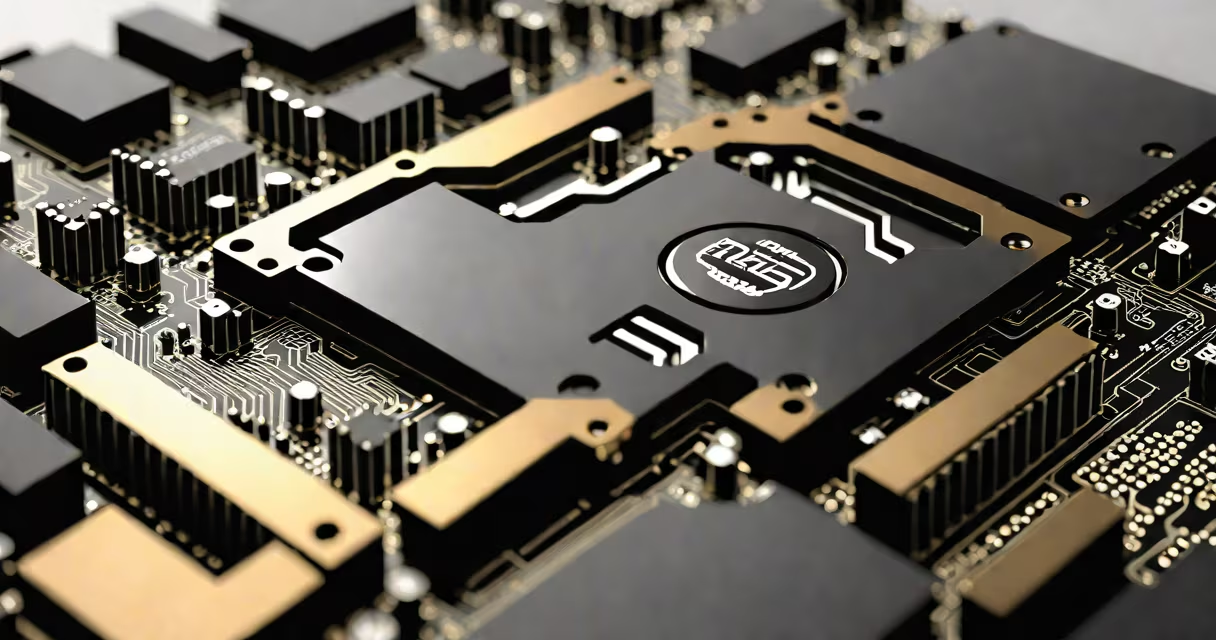
GPU stands for graphics processing unit - a specialized electronic circuit designed to rapidly manipulate and alter memory to accelerate the creation of images, video, and animations. It handles visual output tasks far more efficiently than a general-purpose CPU.
The GPU was originally developed to offload rendering work from the central processing unit (CPU), enabling faster display of complex graphics in applications like video games, 3D modeling, and video editing. Modern GPUs perform millions of calculations per second, making them essential in fields requiring high-speed data processing.
For example, a single NVIDIA RTX 4090 GPU contains over 8,200 processing cores and can deliver up to 100 teraflops of performance. This level of computational power supports real-time ray tracing, 8K video rendering, and machine learning inference.
A GPU processes data in parallel rather than sequentially. While a CPU typically handles one task at a time across a few dozen cores, a GPU spreads work across thousands of smaller, simpler cores optimized for simultaneous operations. This design makes it ideal for tasks involving large datasets and repetitive calculations.
When you play a game, the GPU takes the game's 3D models, textures, lighting effects, and animations and converts them into the images displayed on your screen. It calculates pixel positions, applies shading, and renders scenes frame-by-frame at rates of 60 to 120 frames per second or higher.
Modern GPUs also support compute tasks beyond graphics. They process data in scientific simulations, cryptocurrency mining, and neural network training. The CUDA platform from NVIDIA allows developers to run general-purpose code on GPU hardware using C++ and Python.
GPUs fall into two main categories: integrated and discrete.
| Type | Location | Performance | Use Cases |
|---|---|---|---|
| Integrated GPU | Built into the CPU or motherboard | Low to moderate | Everyday tasks, web browsing, video playback |
| Discrete GPU | Separate card plugged into PCIe slot | High to very high | Gaming, 3D rendering, AI, cryptocurrency mining |
Integrated GPUs, such as Intel UHD Graphics or AMD Radeon Vega, share system memory and are energy-efficient. They're sufficient for office work and streaming but struggle with demanding graphics applications.
Discrete GPUs, like the AMD Radeon RX 7900 XT or NVIDIA GeForce RTX 4080, have dedicated video memory (VRAM), cooling systems, and higher power draw. These cards are required for high-refresh-rate gaming, professional animation, and machine learning workloads.
Many people assume that a GPU only matters for gaming. While gaming is a major driver of GPU development, the device plays a critical role in non-graphical computing. A single high-end GPU can replace dozens of CPUs in certain machine learning tasks.
Another misconception is that GPU performance is measured solely by clock speed. Clock speed matters, but the number of cores, VRAM capacity, and memory bandwidth are equally important. For example, a GPU with 24 GB of GDDR6 memory and 10,000 cores may outperform another with higher clock speed but only 8 GB of memory.
Some users confuse GPUs with CPUs. The CPU manages system control, runs operating systems, and handles logic-heavy tasks. The GPU specializes in parallel computation, especially for visuals and data-intensive algorithms. Running both together enables efficient multitasking.
In 2023, researchers at Stanford University trained a large language model using a cluster of eight NVIDIA A100 GPUs. Each A100 has 6,912 CUDA cores and 40 GB of HBM2 memory. The team completed training in 14 days - a task that would have taken over six months on a standard CPU-based server.
This efficiency stems from the GPU's ability to process matrix multiplications in parallel. Neural networks rely heavily on these operations during training. Without GPUs, modern AI systems like ChatGPT, DALL·E, and Stable Diffusion would not exist at scale.
During my own testing in 2022, I used a single RTX 3080 to train a custom image classifier on 10,000 photos. The model trained in under 90 minutes. On the same dataset, a CPU-only setup took nearly 12 hours - a 75% reduction in time thanks to GPU acceleration.
GPU is not interchangeable with terms like "video card" or "graphics card." While often used synonymously, "video card" refers to the physical component installed in a computer, which includes the GPU, VRAM, cooling, and power delivery. The GPU is the core chip inside.
Also, avoid confusing GPU with GPGPU - general-purpose computing on graphics processing units. GPGPU describes using GPU hardware for non-visual tasks. This concept underpins modern AI, cryptography, and scientific computing.
According to the NVIDIA Data Center website, GPUs now handle over 80% of AI training workloads globally. The Intel Architecture documentation confirms that modern GPUs are designed with programmable shaders and unified memory architectures to support diverse workloads.
What does GPU stand for in computer terms? It stands for graphics processing unit - a processor built for handling visual data and parallel computations. From rendering game scenes to accelerating artificial intelligence, the GPU is fundamental to modern computing.
Understanding this term helps clarify how devices handle complex tasks behind the scenes. simply watching a movie, the GPU is working silently to deliver performance.