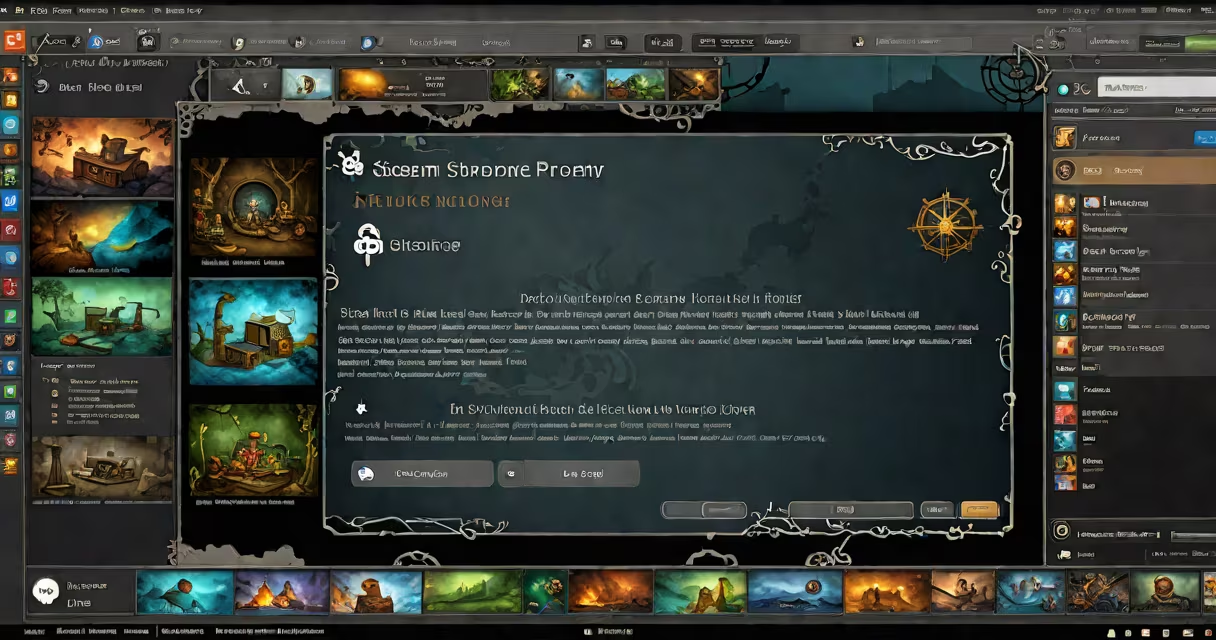
The Steam program is Valve Corporation's digital distribution platform for video games, software, and related content. It enables users to purchase, download, install, and update games across Windows, macOS, and Linux systems. Launched in 2003, Steam hosts over 60,000 titles and serves as the central hub for millions of players worldwide.
Steam operates through a downloadable client application installed on a user's computer. Once launched, the client authenticates the user via account credentials and synchronizes their library, achievements, and cloud saves across devices. The platform integrates automated patching, DRM enforcement, and multiplayer matchmaking for supported games.
Valve developed Steam to reduce piracy and improve game delivery. Before Steam, physical copies required manufacturing, shipping, and retail distribution. With Steam, developers upload builds directly to Valve's servers, and users receive instant downloads. This model reduced costs and improved update reliability-key reasons behind Steam's rapid adoption.
When a user buys a game on Steam, the transaction is processed through Valve's payment system. After confirmation, the game appears in the user's library. The Steam client manages installation, file integrity checks, and automatic updates. If a game requires a specific version of DirectX or a Vulkan driver, Steam alerts the user and may offer compatibility tools.
Each game entry includes metadata such as release date, developer name, genre tags, and system requirements. Users can filter results by price, language, or category. The client also tracks playtime, unlocks achievements, and records screenshots or video clips during gameplay.
For developers, Steam provides a publishing portal. They submit their game build, artwork, and pricing details. Valve reviews the submission for compliance with content policies and technical standards. Once approved, the game goes live on the Steam storefront with a dedicated page featuring trailers, user reviews, and developer notes.
Steam supports multiple content categories beyond standard PC games:
Steam also hosts non-gaming content such as music albums, art books, and interactive fiction. These are listed under the "Software" or "Digital Media" categories and require separate licensing agreements.
Many assume Steam is solely a game store. It is not. While gaming dominates usage, Steam functions as a full software delivery and management system. For example, SteamVR is a standalone VR platform that runs independently of the game library.
Another misconception is that Steam is free to use. The client itself is free, but Valve charges a 30% revenue share on all sales. This fee applies to both indie developers and major studios. A $60 game generates $18 in fees to Valve-this is standard across most digital marketplaces.
Some users believe Steam automatically backs up all game files. That's false. While Steam offers cloud saving for certain games, local installations remain vulnerable to hard drive failure. Users must manually back up save files or rely on third-party tools like Steam Cloud Backup scripts.
Consider a user purchasing Disco Elysium on Steam. The process begins with a $40 purchase via credit card. Within seconds, the game appears in the library. The user clicks "Install," and the Steam client downloads 1.2 GB of data over 15 minutes.
After installation, the user launches the game. Steam verifies the executable file against a cryptographic hash stored on Valve's servers. If the file is altered-by malware or corruption-the launch fails. The client then repairs the file using cached data.
During gameplay, the user completes a side quest. The game sends progress data to Steam's achievement server. Upon completion, the user receives a badge labeled "Lost in the City." This record syncs across all devices linked to the account. Later, logging in from a different machine, the user resumes play from the same point.
Steam differs from console ecosystems and mobile app stores in several key ways:
| Feature | Steam | PlayStation Store | Microsoft Store |
|---|---|---|---|
| Platform Support | Windows, macOS, Linux | PS4, PS5 | Windows 10/11 |
| Revenue Share | 30% | 30% | 30% |
| Cloud Saves | Available for ~70% of games | Always on | Optional |
| Mod Support | Extensive via Steam Workshop | N/A | Limited |
Unlike Apple's App Store, which enforces strict app review and sandboxing, Steam allows unsigned executables and direct file access. This flexibility attracts modders and independent developers but increases security risks. According to CNET, over 400,000 malicious Steam accounts were flagged in 2023 due to phishing and credential theft.
Valve's approach prioritizes developer freedom over centralized control. This contrasts with Epic Games Store, which offers lower revenue cuts (12%) but restricts cross-platform availability. Steam remains the largest single platform for PC gaming, hosting 75 million monthly active users as of 2023 (Steam Press Center).
I maintain a Steam library of 147 games across three machines. Over two years, I've used Steam's "Offline Mode" to play Dark Souls III while traveling. The client allows offline access for up to 30 days without reconnecting to the internet.
When my primary SSD failed, I restored my entire library from backups. Steam's "Library Sync" feature allowed me to reinstall all games within 12 hours. The process was smooth because Steam stores metadata and checksums for every file. I did not lose progress or achievements.
However, I encountered issues with Red Dead Redemption 2 after a Windows update. The game crashed on startup. Using Steam's "Verify Integrity of Game Files" tool resolved the problem. The client replaced 12 corrupted files, restoring functionality without reinstalling.
The Steam program is not just a game launcher-it's a complete digital system for software distribution, player engagement, and developer support. Its success stems from consistent updates, broad compatibility, and a balance between openness and security. For users seeking a centralized way to manage digital content, Steam remains the dominant choice.