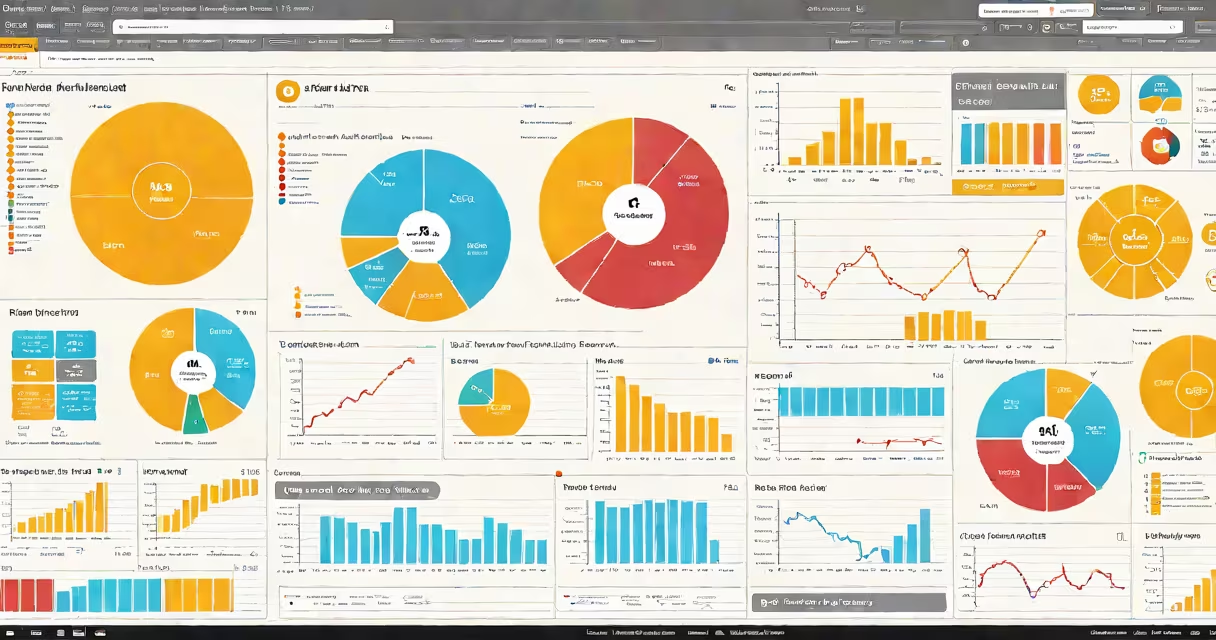
SAP is enterprise resource planning (ERP) software designed to integrate and manage core business processes such as finance, human resources, supply chain, and manufacturing across large organizations. It operates as a centralized system that connects departments through shared data and workflows.
SAP began in 1972 as a German company focused on developing software for financial and logistics management. Today, it runs on cloud and on-premise platforms, serving over 400,000 customers worldwide, including Fortune 500 companies like Unilever, BMW, and Procter & Gamble.
The software uses a relational database architecture and supports real-time transaction processing. It enables businesses to automate tasks like payroll calculation, inventory tracking, and invoice generation while maintaining compliance with international accounting standards such as IFRS and GAAP.
SAP systems process business transactions through predefined modules connected via a central database. When a sales order is placed, SAP automatically updates inventory levels, generates an invoice, and triggers shipping documentation-all within seconds.
Each module runs on a common data model, meaning changes in one area propagate instantly across others. For example, updating employee salary in the HR module automatically reflects in payroll reports and tax filings.
SAP uses ABAP (Advanced Business Application Programming) as its primary development language. Developers build custom logic, interfaces, and reports using ABAP within the SAP environment. This allows companies to adapt standard functionality to unique operational needs.
SAP offers several major product lines tailored to different business functions. The most widely deployed is SAP S/4HANA, which serves as the flagship ERP set.
| Type | Primary Function | Key Features | Example Use Case |
|---|---|---|---|
| SAP S/4HANA | Core ERP | Real-time analytics, in-memory database (HANA), unified data model | Automated month-end closing for multinational finance teams |
| SAP Ariba | Procurement & Supplier Management | Cloud-based sourcing, contract automation, spend visibility | Global procurement team managing $2 billion in supplier contracts |
| SAP SuccessFactors | Human Capital Management (HCM) | Payroll integration, talent acquisition, performance reviews | HR department streamlining onboarding for 50,000 employees annually |
| SAP EWM | Extended Warehouse Management | Inventory optimization, labor scheduling, RFID support | Logistics center handling 10,000 daily warehouse movements |
These products often interoperate. For instance, a purchase requisition initiated in SAP Ariba flows into SAP S/4HANA for approval and then triggers a goods receipt in SAP EWM upon delivery.
Not all SAP solutions are ERP. Some, like SAP Cloud Platform, provide tools for building custom applications. Others, such as SAP Analytics Cloud, focus exclusively on business intelligence and reporting.
Many assume SAP is only for large enterprises. While it originated in that space, SAP now supports small and medium-sized businesses through modular deployment options and subscription pricing models.
Another misconception is that SAP software is monolithic. Modern versions use microservices architecture. For example, SAP S/4HANA allows individual components-like finance or production-to be updated independently without disrupting the entire system.
A lesser-known fact: SAP's original design was based on a three-tier architecture-presentation, application, and database layers-intended to separate concerns and improve scalability. This structure remains foundational even in cloud deployments.
In 2021, a mid-sized automotive parts manufacturer in Michigan replaced legacy systems with SAP S/4HANA. Before implementation, they relied on spreadsheets and standalone databases for production planning, leading to frequent stockouts and delayed shipments.
After deployment, the company integrated SAP with their factory floor machines using OPC UA protocols. Machine status, work orders, and material consumption were fed into SAP in real time. As a result, production lead times dropped by 32%, and inventory accuracy improved from 87% to 99.6% within six months.
They also implemented SAP SuccessFactors for workforce management. Time-off requests, shift assignments, and overtime calculations were automated, reducing HR administrative workload by 40%.
This rollout took 14 months and involved training 380 employees. The project team reported that the biggest challenge wasn't technical-it was changing ingrained habits. Employees initially resisted inputting data manually because they were used to informal email updates.
When asked "what type of software is SAP," the correct answer is enterprise resource planning (ERP) software. But this label oversimplifies its role. SAP is not a single product-it's a family of interconnected systems that span multiple domains.
It's not just software. It's a platform. SAP provides both out-of-box functionality and tools for customization. Organizations don't buy SAP-they adopt a digital transformation strategy centered around it.
For example, a hospital might use SAP for financial management, SAP EAM (Enterprise Asset Management) for equipment maintenance, and SAP HCM for nurse staffing. These are distinct software types under the SAP umbrella, each solving a specific problem.
Understanding this distinction prevents misalignment during procurement. Buying SAP doesn't mean getting a one-size-fits-all solution. It means selecting modules that match business needs and integrating them properly.
According to Gartner, 78% of Fortune 500 companies use SAP for at least one core function. The International Data Corporation (IDC) reports that SAP customers achieve average ROI of 187% over five years, primarily due to reduced operational inefficiencies and better decision-making from integrated data.