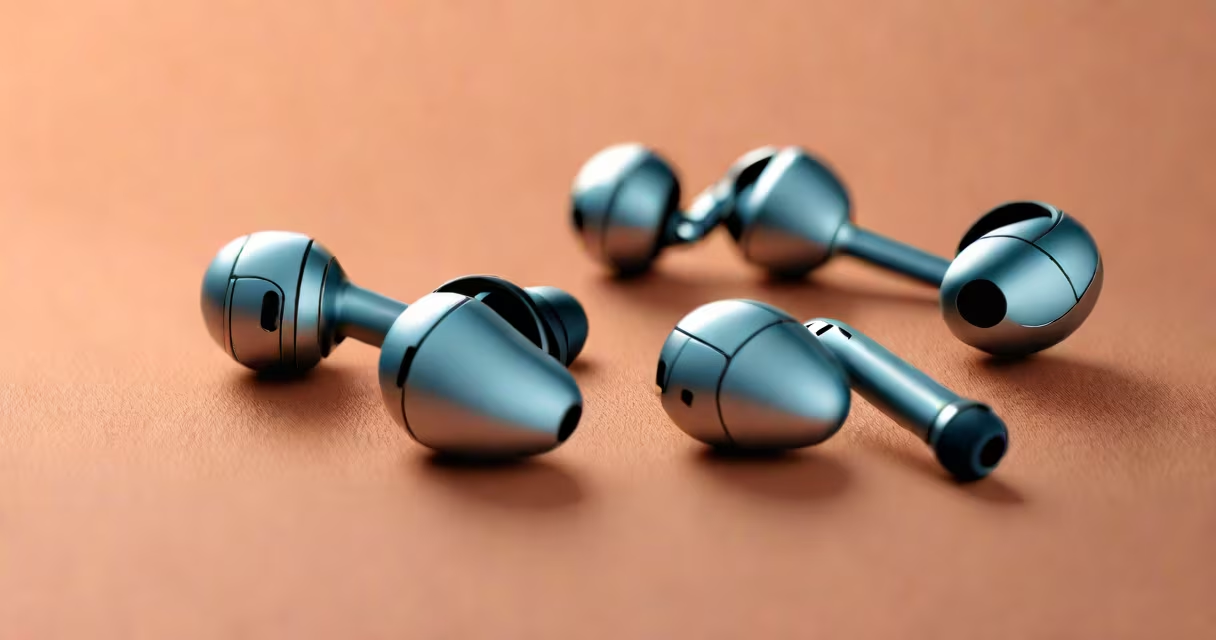
Earbuds are small, portable audio devices designed to fit inside the ear canal, delivering sound directly to the listener's auditory system. They're used primarily for private listening to music, phone calls, audiobooks, and spoken-word content like podcasts. Most modern earbuds operate wirelessly via Bluetooth, enabling freedom of movement without tangled cords.
These devices are engineered for portability and discretion. Their compact size allows them to fit easily in a pocket or small case, making them ideal for commuting, working out, or traveling. Unlike larger headphones, earbuds don't cover the entire ear, reducing heat buildup and offering better environmental awareness during outdoor use.
According to the Consumer Technology Association, over 60% of U.S. adults owned wireless earbuds in 2023, up from 35% in 2019. This growth reflects a shift toward personal, on-demand audio consumption. The rise of streaming services like Spotify and Apple Music further increased demand for convenient listening tools.
Earbuds convert electrical signals from a device-like a smartphone or laptop-into sound waves using miniature drivers. These drivers vibrate to create pressure changes in the air, which the eardrum detects as sound. The smaller the driver, the more challenging it is to produce rich bass and clear highs, though advancements in materials and digital signal processing have narrowed this gap.
Wireless earbuds connect via Bluetooth protocols such as Bluetooth 5.2 or higher. This enables stable connections within a 10-meter range, with low latency for video and gaming. Some models support multipoint pairing, allowing users to switch between a phone and laptop without manual reconnection.
A key feature is active noise cancellation (ANC), which uses microphones to detect external sounds and generate inverse sound waves to cancel them. Apple's AirPods Pro and Sony's WF-1000XM5 both use dual beamforming mics and dedicated processors to reduce ambient noise effectively. ANC improves focus during work or travel and enhances audio clarity in noisy environments.
Earbuds fall into several categories based on form factor, connectivity, and features. The table below outlines common types and their typical applications.
| Type | Key Features | Best For |
|---|---|---|
| True Wireless (TWS) | Bluetooth-only, no wires, case-based charging | Commuting, workouts, travel |
| Wired In-Ear | 3.5mm jack, lower latency, no battery needed | Studio recording, live performance, budget use |
| Hybrid (wired + wireless) | Switchable modes, longer battery life | Users who want flexibility between settings |
| Over-Ear with Earbud Tips | Full ear coverage, better isolation, heavier | Long flights, noise-heavy offices |
True wireless earbuds dominate the market. Models like the Apple AirPods (2nd generation), Samsung Galaxy Buds2, and Jabra Elite 7 Pro offer smooth integration with smartphones and consistent audio quality. They typically last 4-6 hours per charge, with a charging case extending total usage to 24 hours.
Wired earbuds remain relevant for users prioritizing audio fidelity and reliability. They eliminate concerns about battery drain and connection drops. For example, Sennheiser's IE 200 delivers high-resolution audio with minimal distortion, favored by audiophiles and professionals.
Many assume earbuds are only for music. In reality, they serve multiple functions. A 2022 study by the National Institute on Deafness and Other Communication Disorders found that 42% of adults use earbuds daily for non-music purposes, including virtual meetings, language learning apps, and guided meditation.
Another misconception is that all earbuds are equal in sound quality. This is false. Sound quality depends on driver size, material, and software tuning. For example, the Shure AONIC 215 uses custom-tuned drivers and a 12mm changing driver for balanced frequency response, while budget models often emphasize treble at the expense of bass and vocal clarity.
Some users believe earbuds cause hearing damage due to volume. While prolonged exposure to loud sound is harmful, modern earbuds include volume-limiting features. Apple's iOS includes a "Sound Check" feature that caps audio at 85 dB, aligning with World Health Organization guidelines for safe listening duration.
In a typical remote work setup, a user might wear wireless earbuds during a 45-minute Zoom meeting. The earbuds' noise cancellation filters out background kitchen noises, while the built-in microphone picks up speech. The user can take notes without distraction, thanks to the focused audio delivery.
During a break, they switch to a podcast on mental health. The earbuds' touch controls allow them to skip tracks or adjust volume without touching their phone. After the session, they place the earbuds back in the case, which automatically charges them overnight.
This workflow illustrates how earbuds combine convenience, functionality, and personalization. They're not just audio players-they're tools for managing attention, communication, and time in a digital environment.
Earbuds are not merely accessories-they are essential components of modern personal audio ecosystems. Their use spans entertainment, productivity, health monitoring, and social interaction. As audio interfaces evolve, earbuds continue to adapt, becoming smarter, lighter, and more integrated with wearable tech.