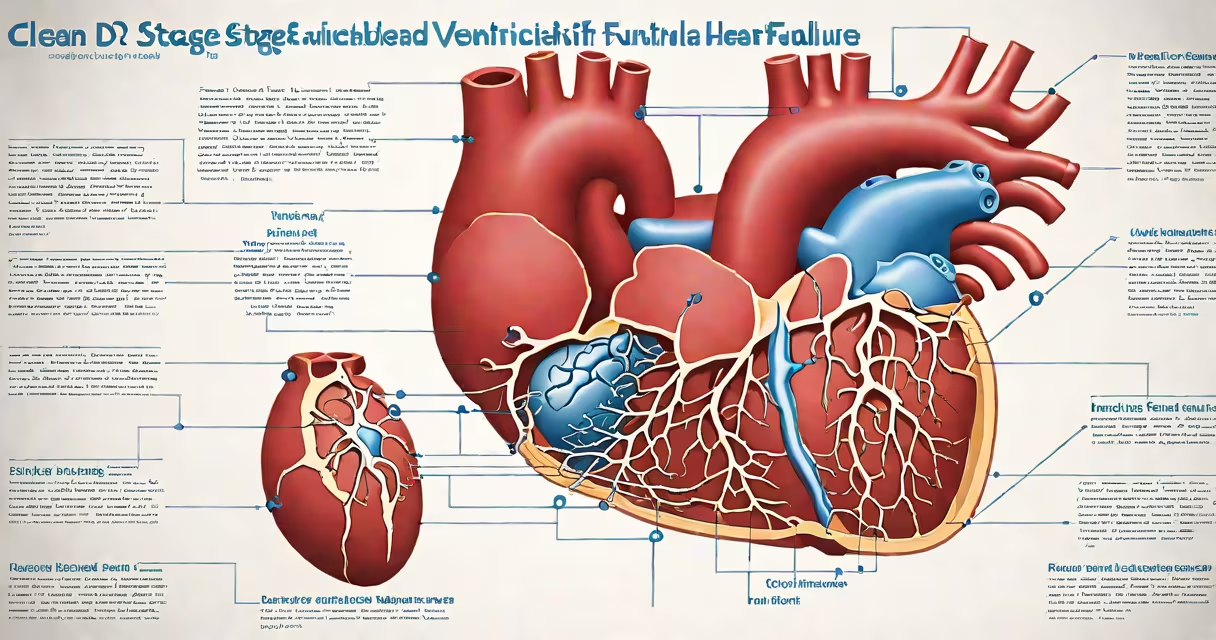
Stage D heart failure is the most advanced and severe form of chronic heart failure, defined by persistent symptoms at rest despite maximal medical therapy and often requiring advanced interventions such as mechanical circulatory support or heart transplantation.
This stage corresponds to New York Heart Association (NYHA) Class IV, where patients experience debilitating symptoms even during minimal activity or at rest. The condition results from progressive structural and functional deterioration of the heart muscle, leading to inadequate cardiac output and systemic congestion.
According to the American College of Cardiology (ACC) and American Heart Association (AHA) guidelines, Stage D heart failure is diagnosed when symptoms persist despite optimized treatment, including guideline-directed medical therapy (GDMT), device therapy, and lifestyle modifications. Patients may require hospitalization for symptom management or consideration of palliative care.
The heart's primary function is to pump oxygenated blood to tissues and return deoxygenated blood to the lungs. In Stage D heart failure, the left ventricle-the main pumping chamber-loses contractility due to damage from prior myocardial infarction, cardiomyopathy, or long-standing hypertension.
As ejection fraction drops below 40%, the heart cannot maintain adequate stroke volume. This leads to reduced perfusion to organs and backward pressure causing pulmonary edema and peripheral edema. Fluid accumulates in the lungs (dyspnea), legs (pitting edema), and abdomen (ascites), worsening symptoms.
Patients often experience orthopnea (shortness of breath lying flat), paroxysmal nocturnal dyspnea, fatigue, and weight gain from fluid retention. These signs reflect neurohormonal activation-renin-angiotensin-aldosterone system (RAAS) and sympathetic nervous system overdrive-that further damages the heart over time.
Heart failure is classified using multiple systems. The ACC/AHA staging system defines four stages based on risk and progression:
| Stage | Description | Examples |
|---|---|---|
| A | No structural heart disease or symptoms | High blood pressure, diabetes, family history |
| B | Structural heart disease but no symptoms | Post-MI with preserved EF, asymptomatic cardiomyopathy |
| C | Current or past symptoms with structural disease | NYHA Class I-III, shortness of breath on exertion |
| D | Refractory symptoms despite optimal therapy | NYHA Class IV, frequent hospitalizations, poor response to meds |
Stage D is distinct from other forms because it represents the endpoint of disease progression. It is not simply "bad" heart failure-it is a clinical state where standard treatments fail to control symptoms or improve outcomes.
Stage D does not equate to terminal illness. Some patients live months to years with continuous support from devices like left ventricular assist devices (LVADs) or through transplant evaluation. Survival varies widely based on comorbidities, age, and access to specialized care.
Many assume Stage D heart failure means imminent death. That is incorrect. While prognosis is poor, survival beyond one year is documented in select populations receiving advanced therapies.
Another misconception is that Stage D is synonymous with end-of-life care. Not all patients choose palliative care. Some pursue aggressive treatment options such as LVAD implantation or heart transplant. The decision depends on patient goals, functional status, and shared clinical judgment.
A key distinction: Stage D is not a diagnosis but a clinical state. It arises from underlying conditions like ischemic cardiomyopathy (post-MI), dilated cardiomyopathy, or hypertensive heart disease. The cause matters for treatment planning.
For example, a 68-year-old man with a history of three prior heart attacks and an ejection fraction of 20% who remains symptomatic on beta-blockers, ACE inhibitors, and diuretics meets Stage D criteria. He may qualify for an LVAD if he is deemed a surgical candidate.
Optimal management of Stage D heart failure requires a multidisciplinary team: cardiologists, heart failure specialists, nurses, pharmacists, social workers, and palliative care providers.
Medications remain central. Guideline-directed medical therapy includes angiotensin receptor-neprilysin inhibitor (ARNI), beta-blockers, mineralocorticoid receptor antagonists (MRAs), and sodium-glucose cotransporter-2 (SGLT2) inhibitors-even in advanced cases. These drugs reduce mortality and hospitalization rates.
Advanced interventions include:
One patient I managed had Stage D heart failure due to idiopathic dilated cardiomyopathy. Despite being on maximal GDMT, he had daily dyspnea and required supplemental oxygen. After evaluation, he received an LVAD and regained independence within six months. His story illustrates that Stage D is not a dead end.
Stage D heart failure is confirmed through clinical assessment, echocardiography, and functional testing. Key markers include:
For billing and documentation, the ICD-10 code for heart failure, unspecified, is I50.9. However, specific codes exist for etiology:
When coding for Stage D, clinicians should use the appropriate ICD-10 code along with a modifier indicating severity. For example, I50.9 with Z95.1 (presence of artificial heart valve or device) may be used for LVAD patients.
Living with Stage D heart failure demands proactive management. Patients should work closely with their healthcare team to adjust medications, monitor weight daily, track symptoms, and attend regular follow-ups.
Simple actions make a difference: daily weighing (gain of ≥2 lbs in 2 days signals fluid retention), limiting sodium intake to less than 2,000 mg/day, adhering to medication schedules, and reporting new or worsening symptoms promptly.
For those going through this stage, understanding the options available-whether curative, supportive, or palliative-is essential. Knowledge empowers decisions.
Stage D heart failure is not a single event but a changing phase of chronic disease. It reflects the culmination of years of cardiac strain, not a sudden collapse. With modern medicine, patients can extend life, improve function, and maintain dignity.