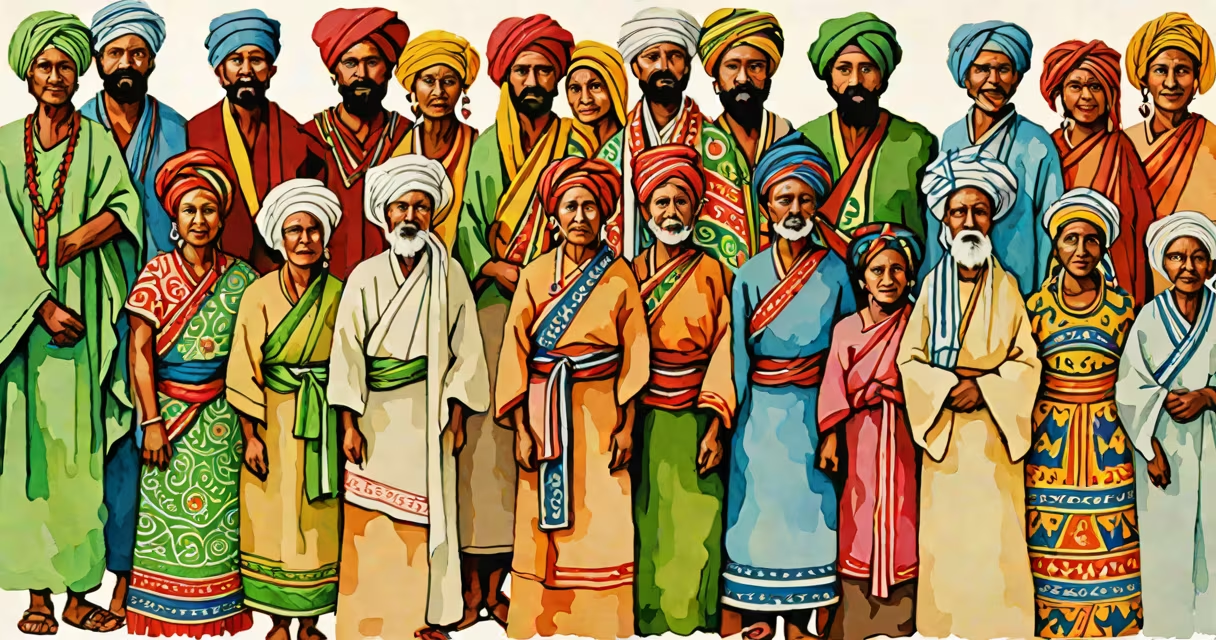
Your ethnic background refers to the cultural and ancestral lineage you inherit through family history, including shared traditions, language, religion, and geographic origins. It is not a single fact but a layered identity shaped by generations of migration, intermarriage, and regional customs.
Unlike race-which is often based on physical traits-ethnicity reflects lived culture and heritage. A person may identify as Black, Asian, or White racially, but their ethnic background could be Nigerian, Japanese, or Polish. These categories do not overlap completely.
For example, someone born in Toronto with parents from Ghana and Jamaica has a dual ethnic background: West African and Afro-Caribbean. Their identity includes elements of Akan, Twi, Yoruba, and Jamaican patois, music, food, and spiritual practices-all passed down through family stories and rituals.
It's formed through intergenerational transmission. Children learn about their ethnic background through family narratives, holidays, cuisine, and even surnames. A child whose grandparents emigrated from Sicily learns to celebrate Ferragosto, eats arancini, and may speak Italian at home-even if they were born in New York.
Genetic testing services like 23andMe or AncestryDNA estimate ethnic background using DNA markers linked to specific regions. These tests compare your genome to reference populations. For instance, a result showing "65% West African, 25% European, 10% Native American" suggests a mixed heritage tied to transatlantic slavery, colonialism, and migration.
However, genetic estimates don't capture cultural practice. A person with 90% Indigenous ancestry might not speak the language or participate in ceremonies unless raised within the community. Ethnic background is both biological and social.
There is no universal list, but common classifications follow geographic and linguistic lines. The U.S. Office of Management and Budget recognizes six major racial categories, but within those, hundreds of distinct ethnic groups.
| Geographic Region | Example Ethnic Groups | Cultural Markers |
|---|---|---|
| East Asia | Chinese (Mandarin, Cantonese), Japanese, Korean | Confucian values, lunar festivals, calligraphy, tea ceremony |
| Sub-Saharan Africa | Akan (Ghana), Zulu (South Africa), Amhara (Ethiopia) | Oral storytelling, drumming, ancestor veneration, communal farming |
| Western Europe | Irish, German, Italian | Christian feast days, regional dialects, pasta or sauerkraut as staple foods |
| Middle East & North Africa | Farsi (Iran), Arabic (Lebanon), Berber (Morocco) | Islamic prayer rhythms, mezze platters, Arabic calligraphy |
Some identities span multiple regions. For example, a person with Portuguese and Indian ancestry-common among descendants of 16th-century traders in Goa-may blend Catholic feasts with Hindu temple visits and speak Konkani alongside Portuguese.
Many assume ethnic background equals nationality. But a person born in France can have Turkish ethnic roots. Nationality is legal status; ethnicity is cultural inheritance.
Another error is equating ethnicity with race. The U.S. Census Bureau distinguishes them: race is about appearance; ethnicity is about shared history and culture. Someone can be Black (race) and Ethiopian (ethnicity), or White (race) and Ashkenazi Jewish (ethnicity).
Even within communities, assumptions persist. Not all people from the same country share the same ethnic background. In India, Tamil, Punjabi, and Bengali are distinct ethnic groups with separate languages, religions, and culinary traditions.
Understanding your ethnic background fosters connection. It influences how you relate to others, interpret experiences, and form community. Research from the American Psychological Association shows that individuals who explore their heritage report higher self-esteem and resilience during identity challenges.
For example, a teenager adopted from South Korea into a Swedish family might struggle with belonging. Learning about Korean Confucian ethics, the significance of ancestral rites, and the history of adoption in Korea helped her reconcile her dual identity.
On a societal level, recognizing ethnic background supports inclusive policy. Schools that teach multicultural history reduce bias. Employers that acknowledge diverse backgrounds see better team cohesion and innovation.
I once hosted a dinner where guests brought dishes representing their ethnic background. One guest, whose family fled Bosnia during the war, prepared burek-a flaky pastry filled with cheese and spinach. She explained that her grandmother taught her the recipe using flour from a refugee camp kitchen. The dish wasn't just food-it was memory, survival, and continuity. That night, we didn't just eat; we witnessed identity preserved through flavor.
Knowing your ethnic background isn't about checking boxes. It's about understanding where you come from-not just biologically, but culturally. It informs how you see the world and how the world sees you. Whether through family stories, DNA tests, or community events, exploring this aspect of identity builds deeper connection.
When you ask "what is your ethnic background," you're not just seeking facts-you're inviting someone to share their story. And every story matters.