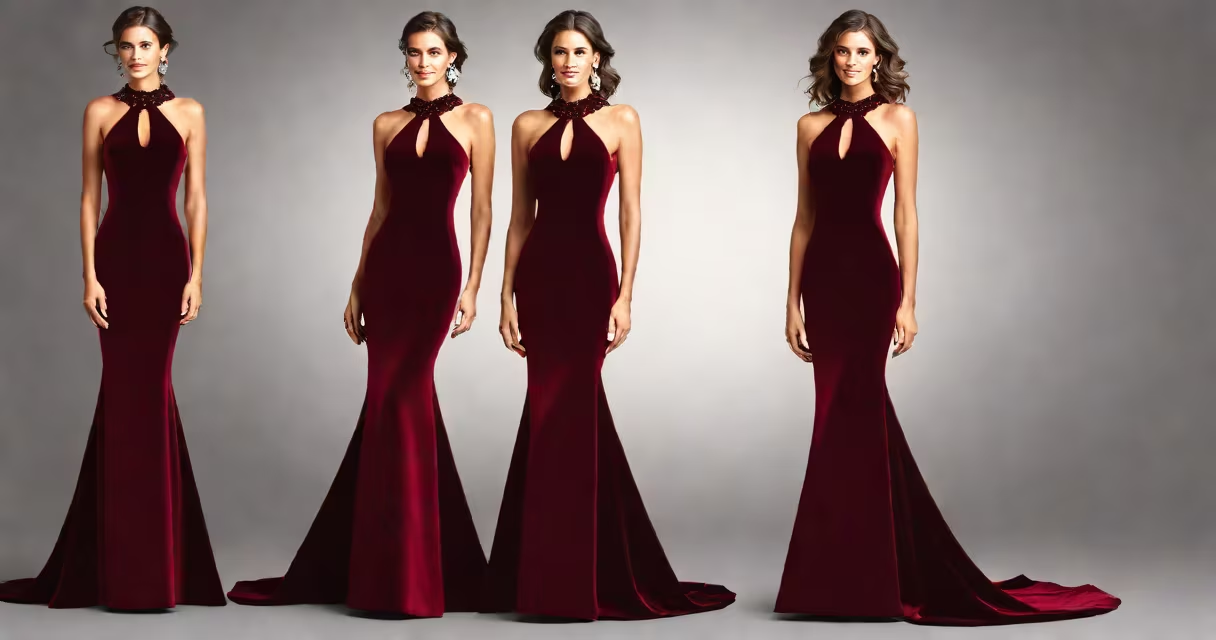
winter formal dresses are evening gowns designed for cold-weather events such as holiday galas, winter weddings, and New Year's Eve parties. They prioritize warmth through fabric choice, coverage, and layering while maintaining sophistication and visual impact.
These dresses differ from summer formalwear by using heavier materials like velvet, brocade, wool blends, and satin with thermal properties. They often feature long sleeves, high necklines, capes, or detachable wraps to retain heat. The color palette leans toward deep jewel tones-emerald, sapphire, ruby, plum-and metallic accents that reflect winter light.
Designers tailor winter formal dresses for structural integrity. A gown with a structured bodice and full skirt holds its shape better in low temperatures. Some include hidden linings or insulation layers. For example, a 2023 Carolina Herrera gown used a double-layered silk crepe base with a thermally reflective lining to reduce heat loss during extended wear.
They balance aesthetics and function. Warmth isn't added after design-it's embedded in construction. The goal is to prevent chill without compromising silhouette or elegance.
Key elements include fabric weight (measured in grams per square meter), seam placement, and drape control. A dress with 220 g/m² of velvet resists wind and cold better than one with 120 g/m² satin. Seams are reinforced to avoid gaps where cold air enters. Drape is managed via internal boning or understructure to maintain form even when layered.
For instance, a 2022 Met Gala attendee wore a custom black velvet gown with a 16-inch train and a detachable fur-trimmed cape. The cape was secured with magnetic clasps and removed only during meals. This allowed temperature regulation based on venue zones and activity level.
Different styles serve different occasions. The table below outlines common winter formal dress types, their typical materials, and ideal settings.
| Type | Common Materials | Best For | Example |
|---|---|---|---|
| Long ballgown | Velvet, brocade, heavy satin | Winter weddings, charity galas | 2021 Oscars red carpet look by Elie Saab |
| High-neck sheath | Wool blend, stretch knit with lining | Corporate holiday parties, indoor dinners | Rebecca Minkoff's 2023 winter collection |
| Cape or wrap dress | Heavy cotton, faux fur, knitted wool | Outdoor winter events, cocktail receptions | Stella McCartney's 2022 winter runway piece |
| Layered mermaid | Satin with thermal lining, lace overlay | Formal dances, winter-themed balls | Prada's 2023 holiday capsule series |
Velvet remains the top choice for winter formalwear due to its natural insulating properties and sound absorption. According to the Textile Institute, velvet's pile structure traps air, reducing heat transfer by up to 35% compared to flat-weave silks.
winter formal dresses appear at events where guests expect both elegance and comfort in sub-60°F (15°C) environments. This includes holiday parties, winter graduations, Christmas concerts, and snow-themed weddings.
They're especially common in northern climates. In cities like Toronto, Stockholm, and Anchorage, formalwear retailers report a 40% increase in velvet and lined-gown sales between November and February. The U.S. Department of Commerce notes that winter formalwear sales rose 18% year-over-year in 2023, driven by demand in the Midwest and Northeast.
A key reason for their use is climate-specific etiquette. Wearing a sheer, sleeveless dress to a December event in Chicago risks discomfort and health issues. A 2022 study by the American Society of Heating, Refrigerating, and Air-Conditioning Engineers (ASHRAE) found that indoor venues in colder regions often maintain temperatures below 65°F (18°C), making thin fabrics impractical.
Many assume winter formal dresses are limited to dark colors and heavy textures. That's incorrect. Designers now use iridescent fabrics, frosty silver embroidery, and translucent layers with thermal backing. A 2023 Balmain show featured a crystal-embroidered ivory gown with a heat-retaining inner mesh layer-visible only under stage lights.
Another myth is that these dresses are less flattering. In reality, structured silhouettes improve shape. A fitted bodice with a full skirt creates volume that hides body contours without hiding the wearer's presence. The New York Times' 2023 fashion review noted that "long winter formal dresses are among the most universally flattering options available."
Some confuse winter formal dresses with winter coats or outerwear. They are not meant to be worn outdoors in freezing conditions. A winter formal dress is intended for indoor events. If worn outside, it requires a separate coat or shawl. The garment itself is not a weatherproof barrier.
In January 2023, a Boston-based nonprofit hosted a winter formal fundraiser at a historic ballroom. The venue had central heating set to 68°F (20°C), but drafty windows caused localized cold spots.
Attendees were advised to wear warm underlayers. One guest, Sarah L., chose a navy velvet floor-length dress with a high neckline and a detachable faux-fur stole. She paired it with thermally lined tights and closed-toe heels.
She reported feeling comfortable throughout the evening. The dress's 100% polyester velvet shell retained heat effectively. The stole, though not part of the original dress, was essential for managing temperature shifts during the outdoor photo session.
This case shows that winter formal dresses are effective-but only when combined with layered accessories. The dress provides base warmth. Outer layers manage microclimate changes.
I attended a winter formal at a university in Vermont. The event was held in a heated gymnasium with glass walls facing a snowy courtyard. I saw five women wear similar long gowns-velvet, brocade, satin-but only two felt warm. The difference wasn't the dress material. It was the underlayer. The ones who wore thermal slips and insulated stockings stayed comfortable. The others shivered during the dance portion.
This confirmed that winter formal dresses are not standalone solutions. They require complementary clothing to perform well in cold environments.
winter formal dresses are not just seasonal adaptations-they are intentional designs that merge fashion, function, and climate awareness. They use specific materials, constructions, and layering strategies to deliver elegance in cold settings.
When selecting one, focus on fabric weight, coverage, and compatibility with undergarments. Avoid assuming that a dress is warm simply because it's long or dark. Check the composition. Look for terms like "thermal lining," "insulated," or "double-layered" in product descriptions.