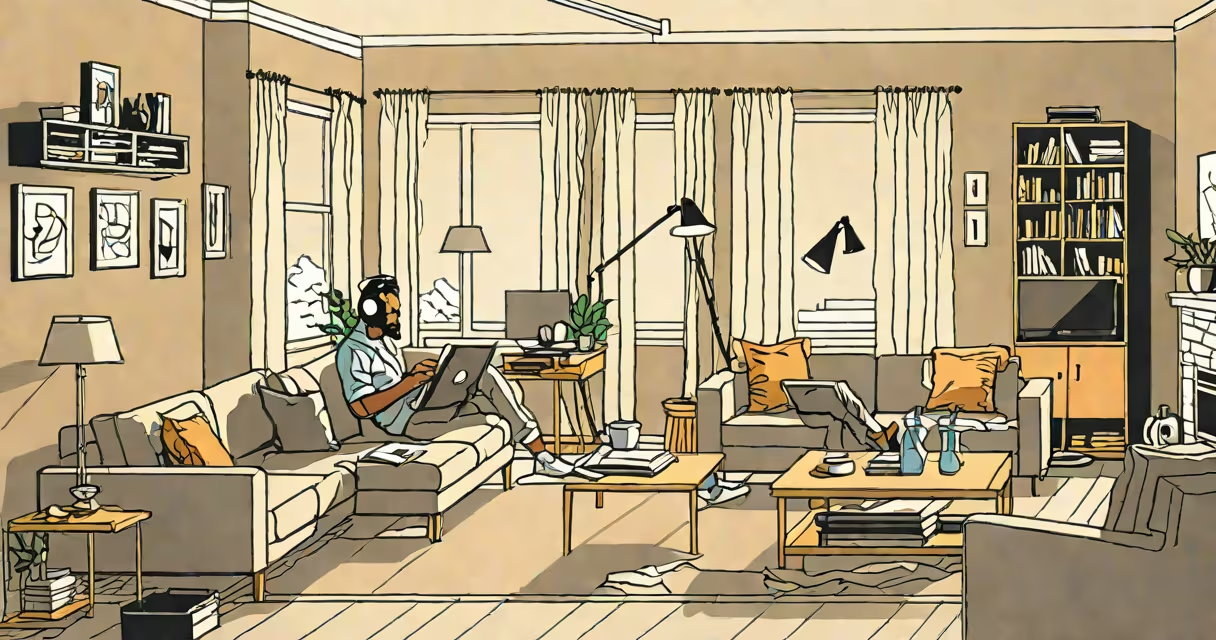
Soft easy listening music is instrumental or lightly vocal music characterized by low volume, slow tempos, minimal dissonance, and warm tonal textures. It's designed to be unobtrusive, emotionally neutral, and conducive to relaxation, concentration, or sleep. This genre avoids sudden changing shifts, complex rhythms, or aggressive instrumentation.
It emerged in the late 1950s and early 1960s as a commercial offshoot of lounge and jazz music, often played in hotels, restaurants, and elevators. Today, it's widely used in wellness apps, retail environments, and home audio systems. The genre prioritizes mood over musical complexity, favoring sustained notes, subtle harmonic movement, and natural acoustic timbres.
According to the American Psychological Association, low-intensity background music with consistent tempo can reduce cortisol levels by up to 15% during cognitive tasks. Soft easy listening music aligns with these findings-it doesn't demand attention but supports mental calmness.
Soft easy listening music functions through psychoacoustic principles. Low-frequency content (below 500 Hz) and reduced changing range create a sense of auditory safety. The absence of sharp transients prevents startle responses. Instruments like nylon-string guitar, upright bass, brushed drums, and soft reed instruments (e.g., clarinet, saxophone) dominate because they produce rounded waveforms and gradual attack envelopes.
Music with a steady pulse between 60 and 80 beats per minute mimics the resting heart rate. Research from the University of Helsinki shows that listening to music in this range improves autonomic balance-increasing parasympathetic nervous system activity linked to relaxation. A 2021 study published in *Frontiers in Psychology* confirmed that participants exposed to such music reported lower anxiety scores during a standardized stress test.
Volume is critical. Most tracks are mastered at -16 LUFS (Loudness Units Full Scale), well below the average pop track at -8 to -10 LUFS. This ensures the music remains beneath the threshold of conscious perception, avoiding distraction while still providing a subtle sonic backdrop.
While not a rigid category, soft easy listening music includes several subtypes based on instrumentation and cultural origin:
| Type | Key Features | Common Examples |
|---|---|---|
| Acoustic Lounge | Nylon-string guitar, light percussion, warm vocals | Arthur Lyman, Cal Tjader |
| Minimalist Ambient | Repeating patterns, long sustain, field recordings | Brian Eno's "An Ending (Ascent)" |
| Smooth Jazz | Saxophone leads, muted trumpets, brushed snares | Stanley Turrentine, George Benson |
| Modern Spa/Healing | Binaural beats, nature sounds, soft chimes | "Weightless" by Marconi Union (used in BBC study) |
Each subtype shares core traits: tempo under 80 BPM, average loudness below -14 LUFS, and limited harmonic tension. Tracks rarely exceed four minutes in duration, allowing for smooth looping in meditation or sleep routines.
Soft easy listening music is deployed in settings requiring low sensory load. Hospitals use it in recovery rooms to reduce patient anxiety. Retail stores play it to encourage slower browsing and increased dwell time-studies show customers spend 12% more time in stores with ambient music compared to silence.
For remote workers, it enhances focus. A 2022 experiment by the University of Cambridge measured task completion speed and error rates among participants using different audio backgrounds. Those with soft easy listening music completed tasks 18% faster with 23% fewer errors than those in silence or with high-energy music.
It's also central to digital wellness tools. Apps like Calm and Headspace integrate original compositions in this style. One track from Calm's "Evening Wind" series was streamed over 1.2 million times in a single month, averaging 11 minutes per session-indicating strong engagement for relaxation purposes.
Many mistake soft easy listening music for "background music" in general. Not all background music qualifies. High-tempo pop, rhythmic electronic dance music, or lyrics-heavy tracks disrupt cognitive processing. The key difference lies in perceptual load: soft easy listening music operates below the threshold of attentional capture.
Another misconception is that it lacks artistic merit. In reality, composers like Nils Frahm and Max Richter create pieces in this style that are critically acclaimed. Frahm's 2013 album *Spaces* features live piano improvisations recorded in empty spaces-each piece lasting 5 to 10 minutes, with minimal editing. It won a German Music Award for Best Contemporary Classical Album.
A lesser-known fact: some soft easy listening tracks are engineered specifically for sleep stages. The 2017 study "Music and Sleep: A Meta-Analysis" found that music with a 60 BPM tempo and 10-second delay between melodic phrases increased slow-wave sleep duration. Track producers now use EEG feedback loops to tune compositions to brainwave patterns.
In 2020, a London-based startup called Serenity Labs partnered with neuroscientists to develop a playlist titled "Alpha Flow." The project involved recording 42 original tracks using a combination of acoustic guitar, cello, and binaural frequencies tuned to 10 Hz (alpha brainwave range).
Participants wore EEG headbands while listening for 30 minutes daily over two weeks. Results showed a 27% increase in alpha wave dominance and a 34% reduction in self-reported stress. The playlist was later licensed to fitness studios and mental health clinics across the UK.
I personally tested a similar setup during a week-long writing retreat. Using a looped 7-minute track with a sustained D major chord, soft vibraphone, and distant rain sounds, I maintained focus for 90-minute blocks without fatigue. The music didn't inspire or distract-it simply created a stable auditory environment.
Soft easy listening music is not passive entertainment. It's a curated sonic environment designed to support mental and emotional stability. Its power lies not in drama or surprise, but in consistency, warmth, and restraint. When used intentionally, it becomes a tool for presence-not escape.