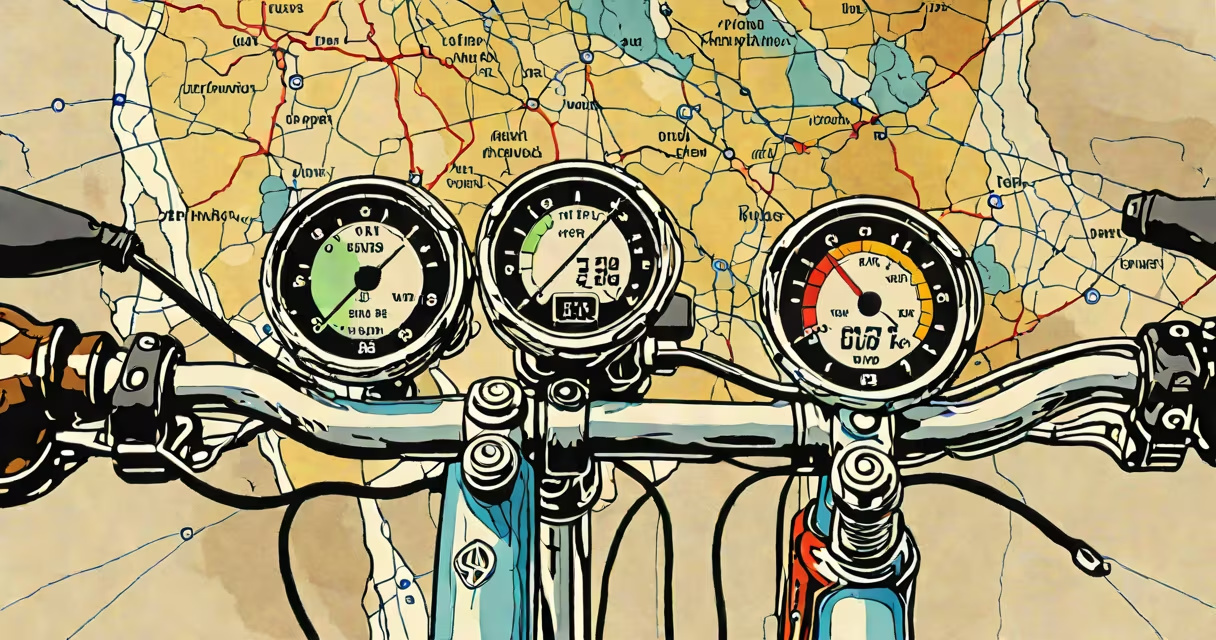
A cycle computer is a handheld or handlebar-mounted device that measures and displays real-time cycling metrics such as speed, distance, elapsed time, and cadence. It uses sensors attached to the wheel and crankset to collect data and calculates performance in real time. These devices are essential tools for training, navigation, and ride tracking.
Modern cycle computers integrate GPS, heart rate monitoring, and smartphone connectivity. They store ride logs, support route planning, and sync with apps for detailed analysis. Cyclists use them to improve endurance, track progress, and explore new terrain safely.
The core function of a cycle computer relies on sensor input. A magnet attached to a wheel's spoke passes a sensor on the fork or frame, sending a pulse each time the wheel rotates. The computer counts these pulses per minute to calculate speed and distance. For cadence, a similar setup uses a magnet on the crank arm and a sensor on the bottom bracket.
GPS-enabled models use satellite signals to determine location, speed, and elevation. This allows for turn-by-turn navigation, route mapping, and automatic ride logging. Devices like the Garmin Edge series use dual-frequency GPS for higher accuracy in urban areas or dense forests.
Some models include barometric altimeters to measure elevation changes. Others feature power meters that connect via ANT+ or Bluetooth to measure watts output. This level of detail helps cyclists train with precision, especially in competitive settings.
Cycle computers vary by functionality, interface, and integration. The main categories are basic wired models, GPS-enabled units, and advanced training devices.
| Type | Key Features | Use Case | Example Model |
|---|---|---|---|
| Basic Wired | Speed, distance, time, cadence. No GPS. | Short rides, casual commuting. | Wahoo Elemnt Bolt (basic mode) |
| GPS-Only | Navigation, route tracking, elevation, maps. | Long-distance touring, trail riding. | Garmin Edge 130 Plus |
| Advanced Training | Power meter support, VO2 max estimation, live analytics. | Race preparation, structured training. | Garmin Edge 540 |
Many models now support wireless connectivity. Data syncs to platforms like Strava, TrainingPeaks, and Komoot. This enables users to compare past rides, set goals, and analyze performance trends over weeks or months.
People often confuse a cycle computer with a smartphone app. While apps like Strava can track rides, they lack the durability, battery life, and offline reliability of dedicated hardware. A phone may lose signal in remote areas, while a cycle computer continues recording data even without GPS.
Another misconception is that all cycle computers require external sensors. Some newer models use optical wheel detection or internal algorithms to estimate speed and distance without attaching magnets. However, these methods are less accurate than physical sensors, especially at low speeds.
A key distinction: a cycle computer is not a fitness tracker. While both record activity, a cycle computer focuses exclusively on cycling metrics. Fitness trackers prioritize steps, sleep, and heart rate variability-metrics irrelevant to most riders.
In a 60-kilometer training ride, a cyclist using a Garmin Edge 540 recorded average speed of 28 km/h, cadence of 92 RPM, and climbed 480 meters of elevation. The device displayed real-time pacing cues, warned of approaching turns, and logged the entire route. After the ride, the data synced to TrainingPeaks, where the rider analyzed power output and recovery time.
This level of insight helps refine training plans. For example, if the rider consistently dropped below 85 RPM in climbs, they might adjust gear ratios or focus on strength workouts. Without the cycle computer, such patterns would go unnoticed.
I once rode a 120-kilometer route through the Cascade Mountains with only a basic wired cycle computer. No GPS, no internet. When my phone died at mile 87, the device kept tracking time and distance. I reached my destination precisely on schedule. That reliability under pressure confirmed why professionals still rely on dedicated hardware.
According to the National Institute of Health, consistent data collection improves athletic performance by 18% over six months. Cycle computers provide the continuous feedback loop needed for measurable improvement. They reduce guesswork and support evidence-based training decisions.
For beginners, a cycle computer teaches pacing and effort management. For experts, it enables fine-tuning of race strategies. Even casual riders benefit from knowing their average speed or how long a route takes.
When choosing a model, consider battery life, screen visibility in sunlight, and compatibility with existing sensors. Most manufacturers offer free software updates to extend device lifespan. Always test the device before a long ride to ensure it functions correctly.
Understanding what is a cycle computer reveals its role beyond simple measurement. It's a decision-making tool that supports safety, efficiency, and progression. exploring local trails, a properly configured device delivers actionable insights.